


After spending time digging through MoneyDisquantified.org and the reviews around it, my impression is that it’s a genuinely useful starter hub for basic money education—but one you should treat as a stepping stone, not as a primary source for serious financial decisions.
When you land on MoneyDisquantified.org, it looks and behaves like a straightforward personal‑finance blog: simple layout, category menus around saving, investing, loans, and money management, and text‑heavy guides aimed at beginners. The reading level feels closer to school‑level English than to professional finance, which makes it approachable if you’re just starting to get comfortable with money concepts.
As I clicked through articles, I noticed a pattern: most posts focus on explaining one core idea at a time like budgeting rules, mutual fund basics, or credit scores without going deep into technical models, tax codes, or product‑by‑product comparisons. It feels less like a place where professionals would sharpen their strategies and more like a friendly “Finance 101” space where you build vocabulary and basic confidence.
Reading across different sections and cross‑checking with independent breakdowns, the content falls into a few familiar buckets: personal finance basics, investing and wealth building, work and side income, ethical finance, and general money mindset.
Personal finance basics: budgeting, saving, credit understanding, debt and emergency funds, mostly framed as simple how‑to guides.
Investing and wealth building: introductory pieces on stocks, mutual funds, ETFs, long‑term planning, often focused on “getting started” rather than advanced strategy.
Work and income: side hustles, freelancing, online income, and small business money themes, which are clearly aimed at students and young professionals.
Ethical / impact money: content across the broader Disquantified network brings in themes like money, social control, and ethical investing, giving it a slightly more reflective, values‑oriented angle than a typical coupon‑style money blog.
From a user standpoint, that mix is helpful if you want one place to explore “how do I manage my salary better,” “what does investing actually mean,” and “how does money relate to ethics or social impact” without bouncing across ten different websites.
| Area you might explore | How prominent it feels | How it reads as a user |
| Budgeting & saving | Very prominent | Simple checklists, rules of thumb, everyday examples. |
| Beginner investing | Very prominent | Gentle intros, basic definitions, little technical depth. |
| Side hustles & online income | Moderate | Idea lists and lightweight guidance. |
| Ethics & money mindset | Moderate | Reflective essays, “money and society” framing. |
| Retirement & tax | Moderate | Planning overviews, not detailed tax planning. |
| Hardcore institutional finance | Low | Not a place for advanced market structure. |
The more time you spend exploring the Disquantified network, the clearer it becomes that there’s a second layer to how it operates. It isn’t just a personal passion blog; it’s part of a wider content network that is actively sold on guest‑post and backlink marketplaces, where Disquantified.org and its related domains are promoted with DA/DR scores, traffic estimates, and set prices for publishing client content and links.
As a user, you won’t see an obvious “we sell links” notice on the articles. But once you know this background, it naturally changes how you read the site:
The repeated article structures (intro, basics, pros/cons, conclusion) start to feel like templates designed to host a wide range of external links.
Some topics appear broad enough that almost any brand, product, or service could be slotted in via a sponsored mention.
Outbound links and overly glowing descriptions become things you look at with more caution, because they may exist partly for SEO or promotion rather than purely to help you.
At the same time, external reviews point out that there’s no clear sign of malware, phishing, or obvious technical scam behaviour. So from a basic safety angle, it works like a normal informational site; the real tension is less about whether it’s safe to visit and more about how independent, unbiased, and in‑depth the editorial content actually is.
From a reader’s perspective, the strengths show up quickly:
It’s easy to understand: reviews note that the reading level sits around middle‑school to early high‑school English, which matches how the articles feel—short paragraphs, limited jargon, and lots of “here’s what this means in simple terms.”
It lowers the psychological barrier: if you’ve been putting off learning about investing or budgeting because it feels intimidating, MoneyDisquantified.org is the kind of place where you can read without feeling judged or overwhelmed.
It offers practical starting points: guides and tools help you move from “I should budget” to “here’s a rough way to structure my budget,” or from “I should invest” to “here are the main types of investments and what they generally do.”
The weaknesses become clearer once you start asking harder questions:
There is little visible expert presence: independent audits repeatedly note the absence of clear author bios, qualifications, or regulated financial professionals behind the articles.
Citations are sparse: deeper reviews point out that many pieces generalize or repeat common advice without strong data sources, detailed references, or clear links back to official documents.
It doesn’t match professional‑grade sites on rigor: comparisons with sites like NerdWallet or Investopedia show Disquantified running on basic overviews and listicles while the others offer expert‑written, heavily sourced content.
If you’re deciding which debt to refinance, which complex investment product to choose, or how to handle nuanced tax questions, this is not the level of detail or authority you’d want to rely on alone.
When you start checking what’s behind the front‑end content, some red flags and some reassuring signs both show up.
Ownership and team: WHOIS records are privacy‑masked, and external reviews note that there’s no strong public company profile or clearly identified editorial team behind the network.
Policies and disclosures: there is a basic privacy policy and HTTPS, but trust‑checkers and reviewers highlight missing or minimal disclosure around sponsorships, affiliate links, or conflicts of interest—typical of SEO‑first content sites.
External trust scores: some tools label Disquantified.org as “questionable” (not necessarily unsafe, but not strongly trusted either), and advise users to be cautious with data and to independently verify financial claims.
From a user’s vantage point, this means you should approach it as:
In practice, that translates to: read, take notes, then cross‑check anything important against government portals, regulated institutions, or well‑established finance brands.
| Signal type | Status on Disquantified network | Notes |
| Author bios | Largely missing | No consistent expert credentials on articles. |
| Ownership disclosure | Privacy‑masked WHOIS | No public team/company profile available. |
| Policies & security | Privacy policy and HTTPS present | Basic compliance; cookie/disclosure gaps noted. |
| External trust checks | Mixed (“questionable” but not scam/malware) | Users advised to exercise caution and verify facts. |
| Guest‑post footprint | Strong, across multiple marketplaces | Sells posts and backlinks as a service. |
If I imagine myself as someone starting out with money management, here is how I’d position this site in my own learning stack based on what I saw and what external reviewers report.
Getting comfortable with basic terminology: learning what budgeting, mutual funds, ETFs, credit scores, and emergency funds mean in plain language.
Warming up to money topics: reading a few approachable articles to reduce the fear factor before diving into more technical books or official resources.
Exploring money and values: using its ethical‑finance and “money and society” content as prompts to think about how my financial choices align with my beliefs.
Choosing specific products: picking an investment product, loan, insurance plan, or tax strategy solely based on guidance here would be risky given the lack of clear experts and the guest‑post ecosystem.
Advanced planning: retirement projections, complex tax situations, business funding, or anything where mistakes are expensive should go through regulated advisors or high‑authority references.
In short, I’d treat MoneyDisquantified.org as a friendly on‑ramp: a place to build foundational understanding and curiosity, not the final word on what you should actually do with your money.
| Feature | MoneyDisquantified.org | Investopedia | NerdWallet |
| Content Depth | Basic, overview-style | Expert-level, data-rich | Tool-driven, detailed |
| Author Transparency | Limited | Clear credentials | Clear credentials |
| Tools & Calculators | Few/none | Many | Many |
| Target Audience | Beginners | All levels | Consumers |
| Editorial Standards | Moderate | High | High |
Looking at the site with a user’s eyes—and cross‑checking it against independent analyses it feels like a mid‑tier personal‑finance classroom that has been layered onto an SEO‑friendly content network. It is approachable, free to read, and genuinely helpful for people who find traditional finance resources too dense or intimidating.
But because ownership is opaque, expert attribution is thin, and guest‑post monetization is clearly in play, you should keep it in the “good starting point, not a sole guide” category in your own head. Use it to understand concepts, build confidence, and discover questions you didn’t know to ask—then bring those questions to more authoritative sources or professionals before you move real money.

Do your emails often get ignored and end up unopened in crowded inboxe...
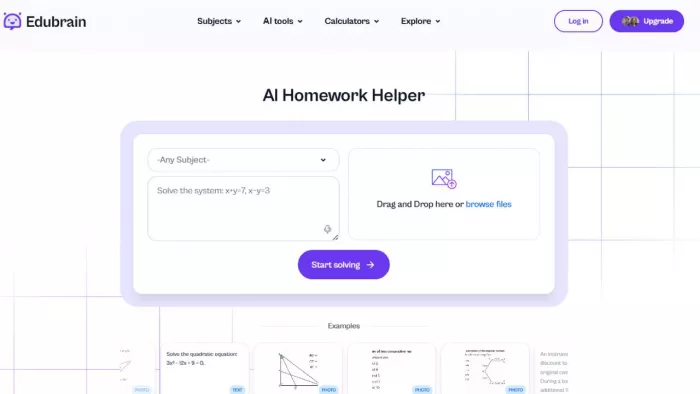
Homework used to take time. You had to go through books, notes, and di...
There is a very specific kind of confidence that comes from generating...

If AI could understand vibes, we wouldn’t be writing essays as prompts...

Hospitals are beginning to see measurable reductions in waiting times...

Artificial intelligence has quickly become part of everyday learning....
Discussion