

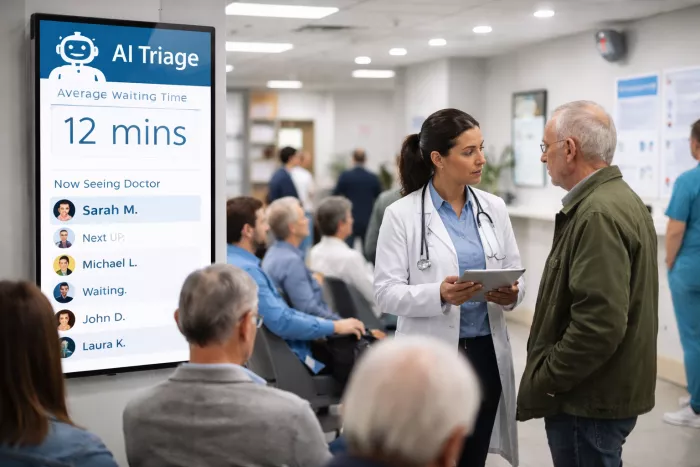
Hospitals are beginning to see measurable reductions in waiting times as artificial intelligence is deployed across triage, scheduling, diagnostics, and patient flow systems, according to recent pilot programs and health system data.
Early results suggest that AI is not just improving efficiency at the margins, but addressing some of the most persistent bottlenecks in healthcare delivery, including missed appointments, slow triage processes, and administrative overload.
The push toward AI adoption comes at a time when healthcare systems remain under significant strain.
In England, NHS waiting lists peaked at more than 7.7 million patients before falling slightly to just under 7.3 million in early 2026. Despite that improvement, delays remain historically high. Emergency departments are also struggling, with some hospitals meeting only 58 percent of the four-hour treatment target against a 78 percent goal.
Behind these figures are structural issues that have proven difficult to fix through staffing alone. Missed appointments, manual triage, and limited administrative capacity continue to slow patient flow at nearly every stage of care.
One of the most visible changes is happening at the entry point.
AI-powered triage systems are increasingly acting as a digital front door, collecting patient symptoms, assessing urgency, and routing individuals to the appropriate level of care. These systems are designed to handle high volumes of non-clinical work, allowing healthcare professionals to focus on more complex cases.
In some deployments, the impact has been significant. AI triage tools have reduced GP waiting times by 73 percent, cutting average delays from 11 days to three. At the same time, peak call volumes, particularly during high-pressure periods like Monday mornings, have dropped by nearly half.
Chatbots are also playing a growing role, handling routine queries and directing patients more efficiently. In certain implementations, they have managed up to 80 percent of initial patient interactions, contributing to shorter consultation wait times.
Beyond triage, AI is being applied to one of healthcare’s least visible inefficiencies, unused appointment slots.
Missed appointments have long been a major contributor to delays, effectively blocking access for other patients. AI systems are now predicting which patients are likely to miss appointments and triggering targeted reminders or rescheduling prompts.
The results have been notable. In some cases, no-show rates have dropped from 35 percent to as low as 6 percent. Predictive scheduling tools have also cut wait times dramatically, with one system reducing median delays from nearly two hours to under 25 minutes while improving overall schedule utilization.
Smart waitlist management systems are also being introduced, automatically filling cancelled slots with patients waiting for care, reducing wasted capacity without requiring additional staff.
Hospitals are also turning to AI to manage real-time demand in emergency departments.
Forecasting models are being used to predict spikes in patient arrivals based on time of day, seasonal trends, and historical data. This allows hospitals to adjust staffing levels and resource allocation before bottlenecks form.
In parallel, AI-assisted triage tools and robotics are being tested to speed up the initial assessment process. The goal is to reduce the time between patient arrival and clinical evaluation, a key factor in perceived waiting times.
While these systems are still in early stages, early indications suggest they can improve throughput and reduce congestion during peak periods.

Another area of impact is diagnostics, where delays often extend patient stays and slow overall system flow.
AI is increasingly being used to analyze medical images, flag urgent cases, and prioritize radiology workflows. By identifying high-risk scans earlier, clinicians can act faster, reducing time to diagnosis and freeing up capacity for other patients.
Similarly, AI-driven clinical decision support systems are helping surface relevant patient data more quickly, allowing doctors to make faster, more informed decisions.
Some of the most immediate gains are coming from relatively simple administrative improvements.
AI-powered check-in systems are reducing registration times, with some hospitals reporting 20 percent faster check-ins and up to 40 percent reductions in waiting times at reception.
Automated lab result notifications are also accelerating workflows, ensuring urgent results are seen and acted upon within minutes rather than hours.
Voice-based AI tools, including ambient documentation systems, are helping clinicians spend less time on paperwork and more time on patient care.
Despite promising results, the rollout of AI in healthcare is not without challenges.
Safety remains a primary concern. Investigations have highlighted instances where poorly supervised AI systems contributed to clinical errors, reinforcing the need for human oversight.
There are also concerns around digital access. Not all patients are comfortable using AI-driven systems, and reliance on digital tools risks excluding those without access or familiarity.
Bias in algorithms is another issue. If not carefully managed, AI systems could reinforce existing inequalities in healthcare access and prioritization.
The broader significance of these developments lies in how they change the mechanics of healthcare delivery.
Rather than relying solely on increasing staff or capacity, AI is being used to make existing systems work more efficiently by:
Together, these changes are beginning to reshape how patients move through the system.
Early evidence suggests that AI can deliver meaningful reductions in waiting times, in some cases cutting delays by double digits or more.
But the technology is still evolving, and its long-term impact will depend on how well it is integrated, regulated, and trusted by both clinicians and patients.
For now, the early results point to a shift already underway, where the focus is not just on adding capacity, but on using intelligence to make every part of the system move faster.
Do your emails often get ignored and end up unopened in crowded inboxe...
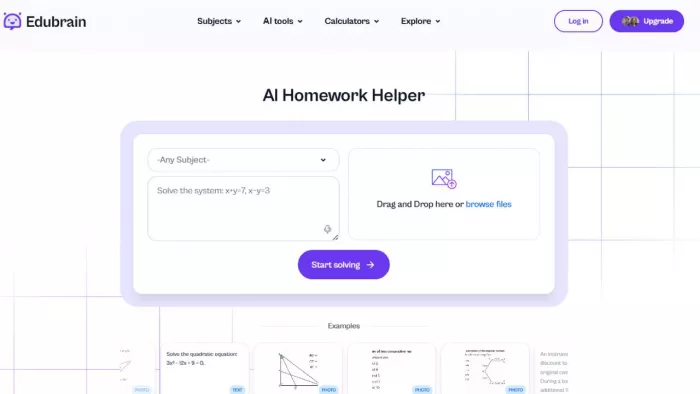
Homework used to take time. You had to go through books, notes, and di...
There is a very specific kind of confidence that comes from generating...

If AI could understand vibes, we wouldn’t be writing essays as prompts...

Artificial intelligence has quickly become part of everyday learning....

Five years is a major milestone in the loyalty where the staff has bec...
Discussion