

In an unprecedented move, Sweden’s official music charts recently banned a song created predominantly with artificial intelligence (AI). The track, titled “I Know, You’re Not Mine” (Swedish: Jag vet, du är inte min), quickly gained millions of streams on Spotify and even topped local charts yet it was excluded from the official rankings. This decision has sparked a global debate about the role of AI in music creation, authorship, and the future of chart eligibility.
| Date | Event |
| Jan 2026 | Song “I Know, You’re Not Mine” released on streaming platforms. |
| Jan 2026 | Song goes viral on Spotify, millions of streams. |
| Mid-Jan 2026 | Investigations reveal AI-generated elements in vocals and production. |
| Jan 2026 | IFPI Sweden bans the song from the official Sverigetopplistan chart. |
| Post-ban | Discussions and debates emerge about AI in the music industry. |
The song, credited to an artist named Jacub, was produced with heavy use of AI, including AI-generated vocals and instrumentation. Despite its popularity among listeners, IFPI Sweden, the organization that compiles the official Sverigetopplistan chart, ruled the track ineligible.
The reason? According to IFPI rules, songs created predominantly by AI cannot appear on official charts, which are intended to reflect human artistry and performance. While the track performed exceptionally well on streaming platforms, chart authorities prioritized the principle of human authorship over streaming numbers.
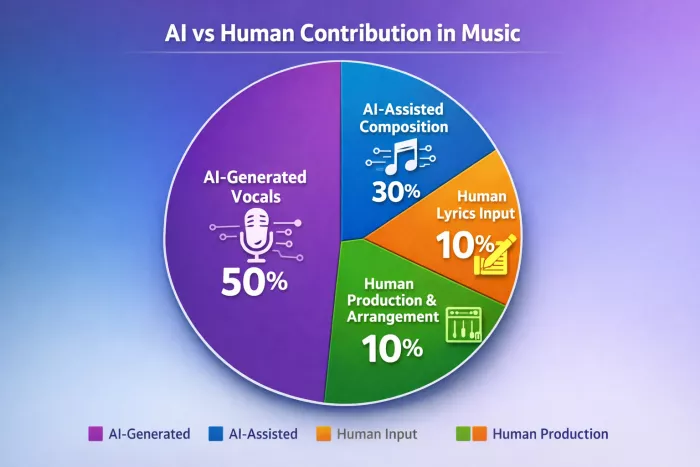
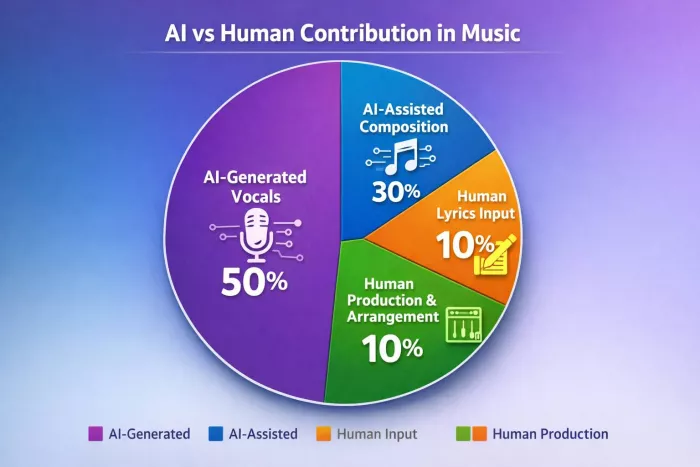
Investigations revealed that the song was registered through a Danish publishing group with links to an AI division, raising questions about whether Jacub is a real artist or a digital persona. The AI tools reportedly contributed to:
● Vocals – The singing voice was synthesized using AI rather than performed by a human singer.
● Composition – Certain melodic elements and harmonies were generated by AI.
● Production – AI-assisted tools helped create beats and instrumental arrangements.
The producers defended the track, saying AI was just a tool in a human-guided creative process, but the heavy reliance on AI elements was enough for chart authorities to reject it.
The ban of “I Know, You’re Not Mine” from Sweden’s official charts is more than just a single case; it signals a major shift in how the music industry perceives AI-generated content. At its core, this decision touches on questions of authorship, creativity, fairness, and the future of music production.
1. Defining Authorship in the Age of AI
Traditionally, music charts celebrate the work of human artists, the singers, composers, and producers who create the songs. AI-generated tracks challenge this model because a machine can perform tasks that were once uniquely human, such as singing, composing melodies, or producing complex arrangements. This raises the fundamental question: Who truly “creates” the music, the AI, the human guiding it, or a combination of both? The Swedish ruling underscores the industry’s insistence on human authorship as a defining standard.
2. Maintaining Fairness in Music Charts
Charts like Sverigetopplistan are meant to reflect the popularity of songs created through human effort. Allowing fully AI-generated songs to compete could distort rankings and potentially give AI tracks an unfair advantage. AI can produce content quickly, optimize it for streaming algorithms, and target audiences precisely. By banning this song, chart authorities are trying to preserve fairness and integrity, ensuring that artists who invest time, emotion, and creativity in their work are not overshadowed by automated production.
3. Setting a Precedent for the Industry
This case also serves as a warning and guidepost for other music markets worldwide. As AI tools become more accessible, artists everywhere can experiment with AI-generated music. Sweden’s decision sets a clear example that official recognition may require significant human involvement, signaling to both producers and listeners that the boundaries between AI and human creativity are being carefully monitored.
4. Stimulating Conversations About the Future of Music
Beyond charts, this event sparks a broader debate about the role of AI in artistic industries. Should AI be seen solely as a tool, like an instrument or software, or can it be considered a co-creator with its own creative agency? For musicians, producers, and fans, this discussion raises questions about authenticity, originality, and the value of human emotion in music.
5. Implications for Listeners and Artists
For listeners, the controversy highlights that not every viral song reflects purely human creativity. For artists, it serves as a reminder that while AI can enhance their workflow, there is still value in human input whether in lyrics, performance, or production to gain recognition in official platforms.
In short, this ruling is a turning point for the music industry. It’s a reminder that AI is reshaping creative boundaries, but human creativity remains a critical standard for recognition, fairness, and authenticity.
AI in music is not new, but it’s evolving rapidly. Musicians use AI for:
● Songwriting and lyrics generation
● Music composition and arrangement
● Vocal synthesis
● Marketing and music recommendations
While AI provides exciting creative possibilities, it also brings ethical and legal questions. How much AI involvement is acceptable? Should AI songs compete on the same charts as human performances? These are questions the music industry is still grappling with.
The Swedish chart ban of “I Know, You’re Not Mine” is more than a single case it’s a wake-up call for the music world. As AI becomes a more integral part of the creative process, artists, producers, and chart authorities must navigate new rules for authorship, originality, and recognition.
For listeners, this development reminds us that technology can create music we love, but the definition of “music made by humans” is being challenged and the industry is responding in real time.
Do your emails often get ignored and end up unopened in crowded inboxe...
Homework used to take time. You had to go through books, notes, and di...
There is a very specific kind of confidence that comes from generating...
If AI could understand vibes, we wouldn’t be writing essays as prompts...

Hospitals are beginning to see measurable reductions in waiting times...
Artificial intelligence has quickly become part of everyday learning....
Discussion