

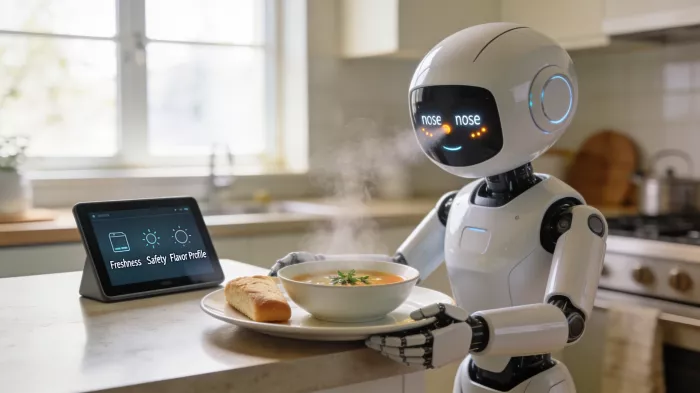
Artificial intelligence has already transformed how machines see and hear. Now it is learning to smell.
A new wave of research and startup activity is pushing forward AI-powered “electronic noses,” or e-noses, systems that combine chemical sensors with machine learning to detect and classify odors with a level of consistency and sensitivity that can exceed human capability. What was once considered one of the most complex human senses is now being translated into data that machines can interpret, compare, and act on.
The shift opens up a new frontier for AI, one that moves beyond screens and microphones into the physical environment, where smell often carries critical information.
At the core of these systems is a simple but powerful idea. Smell can be broken down into measurable patterns.
E-noses use arrays of chemical sensors that react to volatile compounds in the air. When exposed to a scent, these sensors produce electrical signals that form a distinct pattern. Machine learning models then analyze this pattern, comparing it to large datasets of known odors to identify the source and intensity.
Unlike humans, these systems do not suffer from sensory fatigue. They do not adapt or “tune out” persistent smells, and their detection capabilities can reach levels far beyond natural perception. Some systems are already reported to identify odors with precision orders of magnitude higher than the human nose.
This ability effectively converts smell into a machine-readable signal, allowing it to be stored, analyzed, and reused in ways that were not previously possible.
The most immediate impact of AI-driven olfaction is being seen across industries where smell carries important signals.
In healthcare, researchers are exploring how breath analysis can reveal early indicators of disease. Certain infections and metabolic conditions produce distinct chemical signatures, and e-noses can detect these patterns before symptoms become visible.
In industrial settings, the technology is being used to monitor air quality and detect hazardous gases. Factories, hospitals, and public infrastructure systems can deploy these sensors to identify risks in real time, potentially preventing accidents or health issues.
The food and fragrance industries are also adopting e-noses for quality control and product development. From identifying spoilage in food production lines to designing new perfumes, AI systems can analyze scent profiles faster and with greater consistency than human testers.
Some companies are taking this further by standardizing scent itself. Firms like Ainos are working on systems that assign a digital “Smell ID” to odors, creating a consistent framework for identifying and tracking smells across different environments.
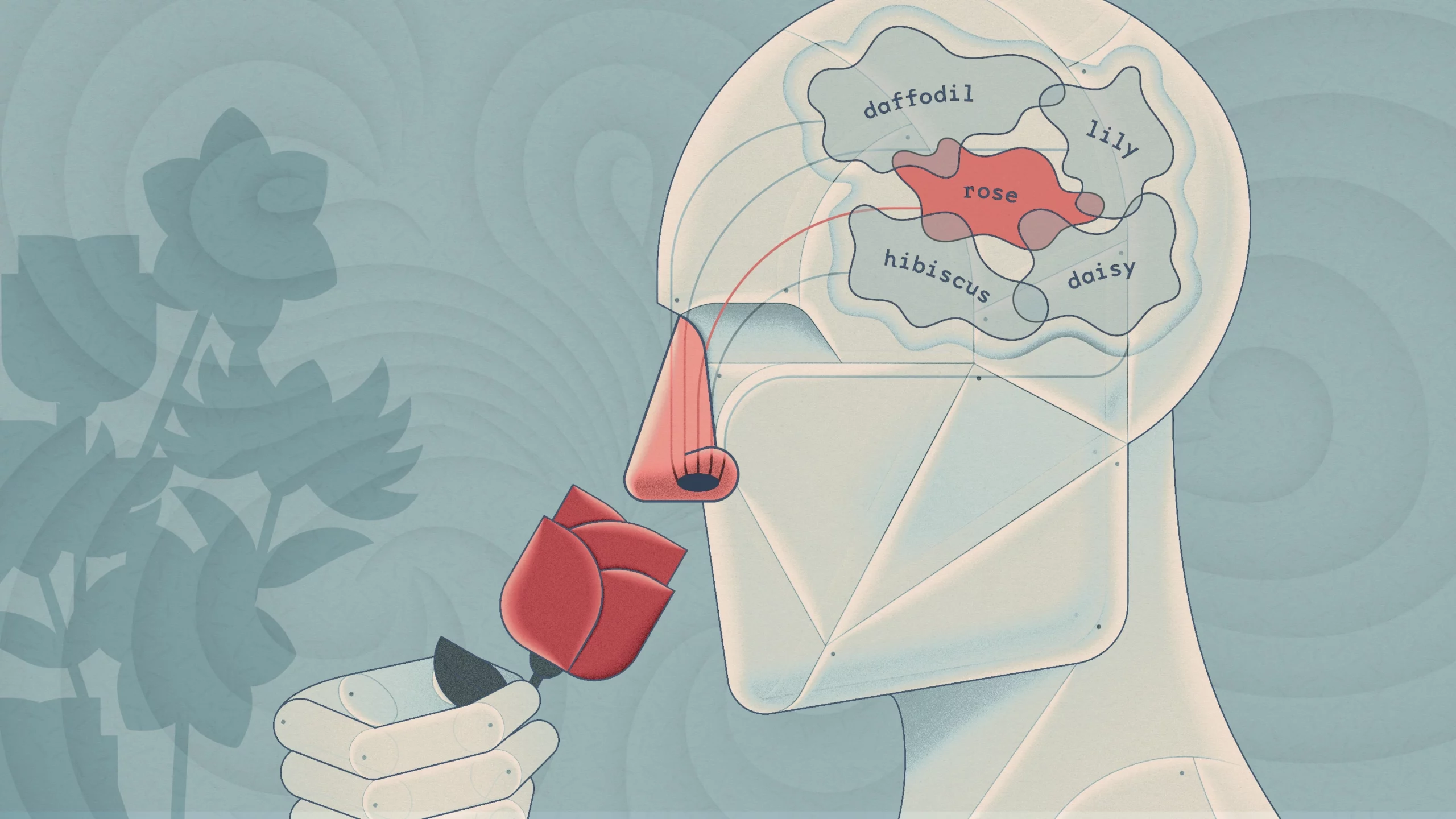
Current e-nose systems rely on a combination of hardware and software working in tandem. Sensor arrays capture the chemical signals, while AI models interpret them using trained datasets.
Researchers are now pushing the field toward more advanced designs inspired by human biology. Biomimetic approaches aim to replicate how the brain processes smell, while neuromorphic computing models attempt to mimic the neural pathways involved in olfaction.
These advances could enable more accurate real-time detection, better differentiation between similar odors, and improved localization of where a smell is coming from. For robotics, this could mean machines that can navigate environments not just by sight, but by scent.
Despite rapid progress, digital olfaction remains a difficult problem.
Smell is highly sensitive to environmental conditions such as humidity, airflow, and temperature. The same odor can produce different sensor readings depending on how it is captured, making it harder to build models that perform reliably outside controlled environments.
Another issue is sensor drift. Over time, chemical sensors can degrade or respond differently, which affects consistency. Developers are working on adaptive algorithms that recalibrate systems dynamically, but maintaining accuracy in long-term deployments remains a challenge.
These limitations mean that while e-noses are already useful in specific settings, broader adoption will depend on improving robustness and reliability.
The long-term implications of AI olfaction extend beyond industrial and medical use cases.
Researchers are exploring whether this technology could help restore the sense of smell for people with anosmia by translating detected scents into electrical signals that stimulate neural pathways. While still experimental, the idea reflects how deeply integrated digital smell could become in human experience.
At the same time, robotics and smart devices are expected to benefit significantly. Machines that can detect gas leaks, identify spoiled food, or monitor environmental conditions through scent could become part of everyday infrastructure.
As smell joins vision and sound in being digitized, AI systems are moving closer to a more complete understanding of the physical world. The result is not just smarter machines, but machines that can interpret the environment in ways that were once uniquely human.
Do your emails often get ignored and end up unopened in crowded inboxe...

Homework used to take time. You had to go through books, notes, and di...

There is a very specific kind of confidence that comes from generating...

If AI could understand vibes, we wouldn’t be writing essays as prompts...
Hospitals are beginning to see measurable reductions in waiting times...
Artificial intelligence has quickly become part of everyday learning....
Discussion