

Let me warn you up front: once you fall into the “Baby Alien Fan Bus” rabbit hole, it’s the kind of internet story that keeps respawning, clips, reaction edits, memes, “where is he now” threads, and people arguing over whether it was wholesome, staged, or both.
So here’s the grounded version: what happened, what we can verify, and what’s mostly internet myth-making.

The Fan Bus (also branded as Fan Van in some contexts) is a content channel built around surprise meetups and interview-style segments in a customized van, often featuring adult creators / influencers and a “fan” guest.
The Baby Alien moment became one of the channel’s most discussed viral arcs because it wasn’t just “shock value.” The reaction became the story.
Stage name: Baby Alien
Real name (reported publicly): Yabdiel Cotto
Location: Often described online as Miami-based.
Known for: distinct physical appearance, exaggerated facial expressions, and an “emotional-but-playful” on-camera persona.
Social footprint (verifiable)
His Instagram profile @babyalien1111 shows a following at the ~1M level (this number can change over time, but it indicates the scale of his audience).
The “Baby Alien Fan Bus” moment most people reference centers around his appearance on The FanBus and the fan-meet narrative involving Ari Electra (spelled various ways across reposts).
What made it viral wasn’t only the setup, it was the emotional reaction and the contrast:
There are multiple related uploads and discussions across YouTube and reaction channels, including a full interview framing him as a “virgin” character arc.
Because TikTok repost counts are messy (clipped, reuploaded, mirrored), YouTube is the easiest place to cite stable stats.
Here are a few measurable markers from The FanBus ecosystem:
Important: This doesn’t mean the overall phenomenon is “only” 100K–300K. It means official/long-form uploads sit in that range while short-form repost networks (TikTok, IG Reels, X) multiply reach in harder-to-verify ways.
This is where the internet splits.
What fans say
What critics say
The “Before They Were Famous” recap leans into the narrative arc framing (viral moment → fame → ongoing attention).
| The Claim / Hype | Reality (based on observable content patterns) |
| “Overnight sensation” | Largely true: the fan-bus moment acted like a growth catalyst. |
| “Totally authentic emotion” | Polarized: fans interpret it as genuine; critics read it as performance (common in viral persona culture). |
| “The virgin storyline is literal” | Unclear: it’s heavily used as a content frame in official uploads, but public perception varies. |
| “He became a standalone creator” | Supported: he appears in interviews and content outside the original viral segment. |
Whether you like him or not, the “Baby Alien” brand is built on repeatable internet mechanics:
1) Meme-ready expressions
His reactions are easy to clip into reaction GIFs and stitched TikToks.
2) A simple narrative hook
The “dating / virgin / glow-up” storyline is easy for platforms to push because it’s:
3) Cross-platform amplification
The same scene becomes:
A lot of repost pages try to over-document him (health claims, personal history, etc.). I’m not treating unverified personal claims as fact. The only identity detail included here (name) is one that’s already widely published by entertainment writeups and recaps.
The “Baby Alien Fan Bus” phenomenon isn’t just one viral clip.
It’s a viral storyline built from:
If you want the most accurate way to frame it:
It’s not “random guy goes viral.”
It’s “a platform format + a persona moment + a remix machine.”
Is Baby Alien a real person or a character?
Real person, but the on-camera persona clearly leans into a “character arc” style presentation.
What channel did the viral moment come from?
The FanBus (Fan Van / Fan Bus branding appears across related uploads).
What’s his real name?
Public sources often report Yabdiel Cotto.
Let’s start with a small truth about storytelling: writing the first s...
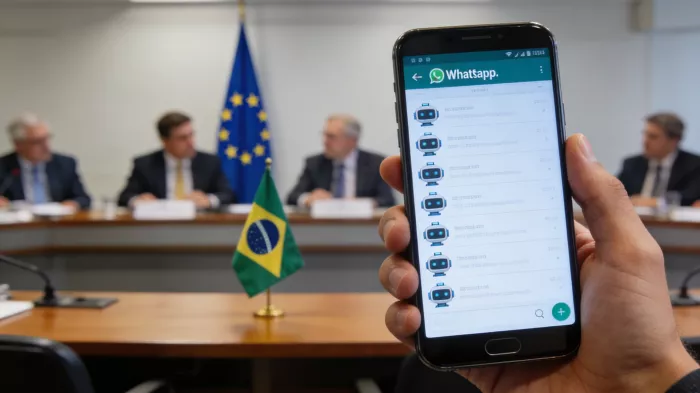
WhatsApp is preparing to allow third-party artificial intelligence cha...
BrandCrowd built its name as a go-to logo tool for small business...
There is a specific kind of disappointment that comes from opening a b...
AI companion apps have moved well beyond novelty status. What started...
Let’s start with an uncomfortable truth. Most people want their photos...
Discussion