

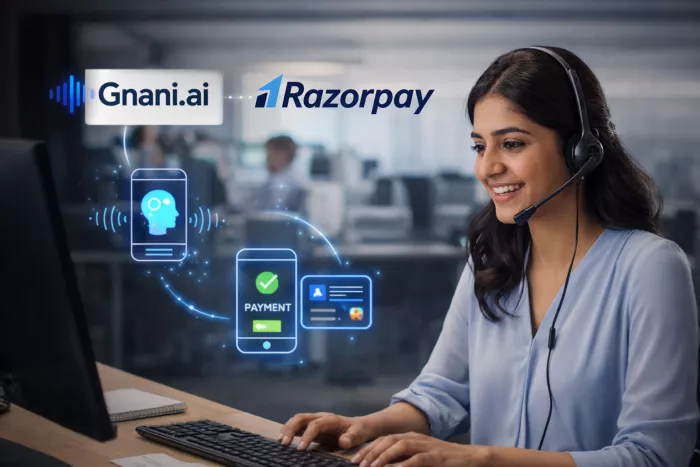
Gnani.ai and Razorpay have introduced an agentic AI collections platform that allows automated voice agents to do more than remind borrowers. The system can now initiate and complete UPI payments during the same phone call. The launch marks one of the first production scale deployments in India where voice bots handle both conversation and transaction in a single workflow.
The offering combines Gnani.ai’s enterprise voice automation with Razorpay’s Model Context Protocol, or MCP, Server. Together, they allow AI agents to generate payment requests, track settlement status, and confirm outcomes in real time without routine human involvement. For lenders and contact centers, the move targets one of the biggest leak points in collections: the gap between payment intent and actual completion.
Historically, automated collection systems have been limited to nudges. Banks and NBFCs could remind customers through dialers or IVR bots, but the actual payment required users to switch apps or manually complete the transaction. That extra friction often reduced conversion.
The new Gnani.ai and Razorpay integration aims to close that gap. Once a borrower verbally confirms readiness to pay, the AI agent can instantly trigger a UPI payment link or UPI Collect request. The system then monitors the transaction through Razorpay’s infrastructure and informs the customer of success or failure while the call is still active.
This shift toward first call resolution could materially improve recovery rates in early stage collections, where intent is high but follow through has historically been inconsistent.
At the architecture level, the two companies have divided responsibilities clearly. Gnani.ai provides the voice agent layer, call orchestration, and automation workflows. Razorpay’s MCP Server exposes payments as callable tools that the AI can invoke during the interaction.
The current rollout supports one time UPI payments as well as UPI SBMD or Reserve Pay mandates for recurring obligations such as EMIs. Support for cards and digital wallets is expected in later phases, which would broaden the system beyond UPI heavy use cases.
Gnani.ai says its collections infrastructure already processes more than 10 million calls per day and supports over 38 Indian languages. That multilingual coverage is particularly relevant for lenders operating across diverse borrower segments.
Both companies are emphasizing that the AI agent does not directly handle sensitive financial credentials. All payment processing continues to run inside Razorpay’s regulated environment, with the MCP layer acting as the secure bridge.
Transaction links generated during calls are single use and parameterized to prevent tampering or replay. For mandate based payments, customers must still authorize through their registered UPI app, preserving standard UPI consent flows.
Gnani.ai also states that its platform meets GDPR and SOC 2 Type II requirements, alongside enterprise governance and analytics controls aimed at BFSI clients.

The partnership reflects Razorpay’s broader push to position itself as infrastructure for AI native commerce rather than only a traditional payment gateway. Since late 2025, the company has been advancing what it calls an agentic payments thesis.
Earlier collaborations with NPCI and OpenAI enabled UPI transactions directly inside conversational interfaces. The Gnani.ai deployment extends that idea into voice driven interactions, where conversations themselves become transaction surfaces.
Razorpay leadership has framed the shift in simple terms: voice is no longer just an input channel. It is becoming an execution layer capable of completing recharges, EMI payments, and purchases in a single flow.
India’s digital landscape gives this model particular relevance. The country already generates massive monthly volumes of voice interactions across customer support lines, IVRs, messaging apps, and multilingual search interfaces.
Razorpay argues that many new internet users will move directly to voice led experiences rather than text heavy workflows. If that assumption holds, embedding payments directly inside voice conversations could unlock higher completion rates, especially in high volume, low ticket scenarios such as early stage loan collections.
For lenders, the potential upside includes better productivity per call, lower contact center costs, and improved recovery performance without expanding agent headcount.
Founded in 2016 and backed by Samsung Ventures, Gnani.ai has been positioning itself as an agentic AI platform across voice, chat, SMS, and WhatsApp channels. The company reports more than 200 enterprise customers across BFSI, insurance, automotive, and government deployments.
Its dedicated collections suite, Collect365, claims significant operational gains through automated voice outreach and analytics driven prioritization. At the India AI Impact Summit 2026, the company also unveiled a five billion parameter voice to voice model developed and hosted entirely in India, with a larger fourteen billion parameter model on its roadmap.
The new Razorpay integration effectively connects that collections focused AI stack to real time UPI rails, allowing reminder calls, promise to pay commitments, payment authentication, and CRM updates to occur inside a single automated loop.
The Gnani.ai and Razorpay collaboration is one of the clearest signals yet that AI in financial services is moving beyond assistance toward execution. Instead of merely guiding users, agentic systems are beginning to complete regulated workflows end to end.
With partners such as Zomato’s Nugget and SuperU also exploring similar patterns, Razorpay is building an ecosystem where AI agents can trigger payments across multiple conversational surfaces. The immediate impact will likely be felt in collections and bill payments, but the underlying model points to a broader shift.
If adoption scales as expected, voice agents that can both talk and transact may soon become a standard layer in India’s digital payments stack, compressing what used to be multi step customer journeys into a single conversation.
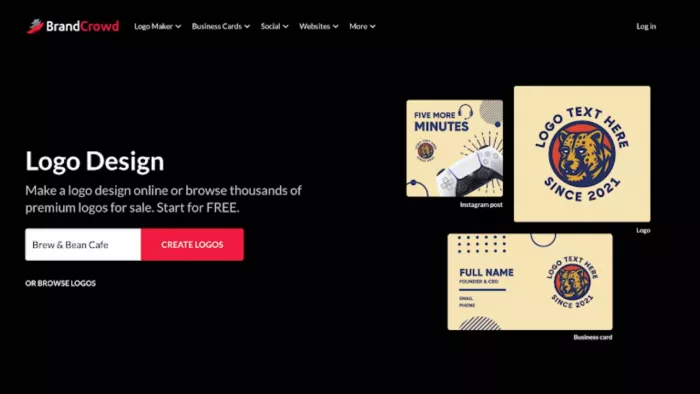
BrandCrowd built its name as a go-to logo tool for small business...
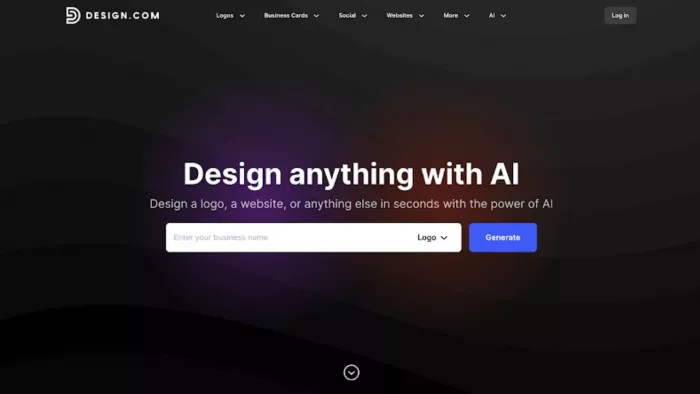
There is a specific kind of disappointment that comes from opening a b...
AI companion apps have moved well beyond novelty status. What started...
Let’s start with an uncomfortable truth. Most people want their photos...

The U.S. Commerce Department is considering a new set of export contro...

Amazon Web Services has introduced Amazon Connect Health, a new health...
Discussion