

Google has quietly rolled out Nano Banana 2, a major upgrade to its consumer image generation stack, and made it the default model across the Gemini app, Google Search AI Mode, Lens, and several creative tools. The move signals Google’s push to tighten quality, speed, and reliability in one of the fastest growing areas of generative AI.
The new model replaces last year’s Nano Banana generation pipeline and is designed to deliver more realistic visuals while maintaining the fast response times that helped earlier versions go viral on social platforms.
Under the hood, Nano Banana 2 is essentially Gemini 3.1 Flash Image repackaged for consumer use. It follows the earlier Nano Banana and Nano Banana Pro releases, which gained traction for highly stylized edits, viral portrait trends, and fast image generation inside Gemini.
Google describes the new version as combining Pro level intelligence with Flash level speed. In practical terms, the company is trying to narrow the gap between high fidelity models and fast everyday generators, an area where many AI image tools still force tradeoffs.
The upgrade is not positioned as experimental. Instead, Google is making Nano Banana 2 the default image engine across most of its mainstream surfaces, indicating confidence in its maturity.
One of the headline improvements is image realism. Google says Nano Banana 2 produces sharper textures, more natural lighting, and better color depth than earlier versions, which occasionally produced flat or overly smooth outputs.
Internal testing cited by the company suggests the model handles more complex lighting scenarios, including reflections and backlit scenes, with fewer artifacts. Early hands on reactions from creators echo that the new model feels less plasticky, particularly in product style renders and portrait work.
The focus here is clear. Google is trying to close the perceptual gap between AI generated images and real photography, an area that has become increasingly competitive across the industry.
Another notable change is deeper world knowledge integration. Because Nano Banana 2 runs through Gemini’s broader intelligence layer, it can pull current information from the web when generating certain visuals.
This allows the model to produce more accurate infographics, branded visuals, and timely references such as updated sports jerseys or recent device designs. Analysts note this could be particularly useful for marketers and designers who need visuals that reflect current reality rather than static training data.
However, Google still advises users to verify factual content in generated images, especially when numbers or real world claims are involved.
Text inside images has long been a weak point for generative models. Nano Banana 2 is specifically tuned to improve this area, with Google highlighting clearer typography in posters, UI mockups, charts, and social graphics.
Early demonstrations show noticeably cleaner headings and labels compared with previous generations, though the company acknowledges that edge cases can still produce distortions. For many practical use cases such as social posts and presentation visuals, the improvement could significantly reduce manual cleanup work.
This upgrade alone may expand adoption among design teams that previously avoided AI images due to unreliable text output.
For storytelling and marketing workflows, Google has also improved visual consistency. Nano Banana 2 can now maintain consistent appearance for up to five characters in a sequence and keep as many as fourteen objects stable within a workflow.
This addresses one of the more frustrating limitations of earlier models, where characters or products could subtly drift between frames. The change is aimed at comic creation, storyboard generation, ad variations, and product visualization pipelines.
While not perfect in every scenario, the improvement moves the model closer to professional design workflows rather than one off image generation.
Google is deploying Nano Banana 2 broadly rather than limiting it to a single product.
It is now the default image model inside the Gemini app across Fast, Thinking, and Pro modes. It also powers image generation in Google’s Flow video editing environment and is integrated into Google Search AI Mode and Lens across more than 140 countries.
Developers can access the same underlying capability through the Gemini API under the Gemini 3.1 Flash Image label. The higher end Nano Banana Pro model remains available for users who need maximum fidelity and are willing to trade speed.
For most everyday users, however, Nano Banana 2 is now the standard experience whether they notice the change or not.
With the upgrade, Google is putting renewed emphasis on provenance and misuse prevention. Every Nano Banana 2 image carries an invisible SynthID watermark, and the outputs support C2PA Content Credentials so downstream platforms can verify origin and edit history.
The company says SynthID verification inside Gemini has already been used more than 20 million times, reflecting rising concern around AI image authenticity.
These safeguards come after earlier criticism of the Nano Banana family. Past reports highlighted issues such as biased outputs in humanitarian imagery prompts and broader fears that highly realistic AI photos could blur the line between real and synthetic media.
Google says it has strengthened bias checks, policy enforcement, and content filters in Nano Banana 2, though it acknowledges that edge case prompts will continue to test system limits.
Within Google’s current lineup, Nano Banana 2 becomes the fast, default workhorse for most image generation and editing tasks. It is aimed at marketers, social creators, designers, and everyday users who need quick, high quality visuals.
Nano Banana Pro remains positioned as the slower, higher fidelity option for studio grade or highly sensitive use cases. Developers can choose between the two depending on latency, cost, and quality requirements.
The broader strategy is clear. Google is trying to make high quality image generation feel native and frictionless across its ecosystem rather than a standalone feature.
Nano Banana 2 is more than a routine update. By making it the default image engine across Gemini and Search, Google is effectively resetting the baseline for its consumer AI imagery.
The model tackles several long standing pain points, including text accuracy, visual consistency, and realism, while attempting to address growing concerns around authenticity through watermarking and provenance tools.
For most users, the shift will be subtle but meaningful. Anywhere Nano Banana previously powered image generation inside Google’s products, Nano Banana 2 is now doing the work behind the scenes, faster and with noticeably sharper results.
BrandCrowd built its name as a go-to logo tool for small business...
There is a specific kind of disappointment that comes from opening a b...
AI companion apps have moved well beyond novelty status. What started...
Let’s start with an uncomfortable truth. Most people want their photos...

The U.S. Commerce Department is considering a new set of export contro...
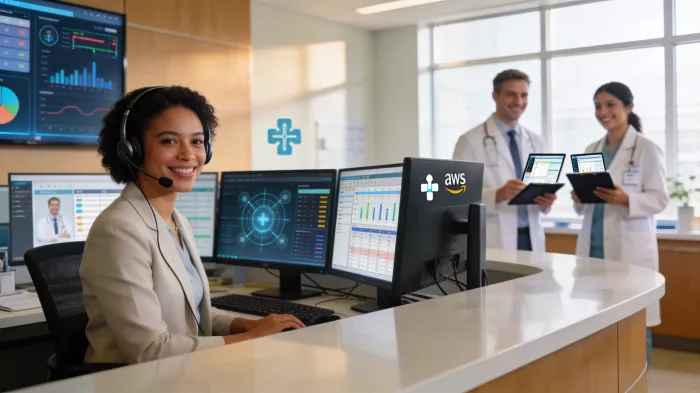
Amazon Web Services has introduced Amazon Connect Health, a new health...
Discussion