

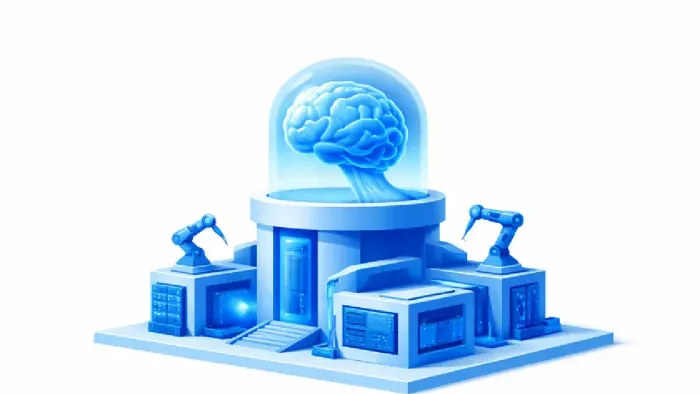
Hiring has always been a combination of art, science, and madness.
If you’ve ever scanned through a bunch of resumes, wondered if you’re overlooking amazing candidates, or felt a twinge of discomfort about the pace of hiring, you’re not alone. But in 2026, something has changed. Artificial intelligence is no longer just assisting hiring professionals in moving quicker – it’s revolutionizing the way talent is assessed and understood.
And no, this is not about replacing human resources professionals with robots. This is about humans getting better tools to make better decisions.
Let’s talk about what’s really going on.

Not too long ago, talent sourcing looked like this: post job ad, wait for applicants, screen applicants, repeat. The problem? You’re only really connecting with people who are actively looking for a job—maybe not necessarily the right person for the role.
In 2026, AI-powered tools have turned this process on its head.
With these new tools, you’re not just looking for people with certain job titles—you’re looking for people with certain skills and experience patterns. You’re looking for people who have learned certain things and have certain career paths. This means that if you’re looking for a “Product Marketing Manager,” you might find someone who doesn’t have that exact title but has experience in growth marketing, customer research, and content strategy—someone you would have never found before.
It’s not just that these tools are more effective—this process has quietly become more inclusive and more realistic.
CVs have never been good indicators of success. They are static, subjective, and often depend on writing abilities rather than actual abilities.
AI screening tools, as of 2026, are less focused on what a candidate says and more on what a candidate can do.
Rather than ranking CVs on keywords, the AI assesses:
And, for jobs that involve collaboration and creativity, some companies will ask a candidate to walk them through their thought process with short video responses. Not based on accent or style, but on structure, reasoning, and clarity.
And, yes, candidates are often prompted with friendly messages – and, on occasion, with visual aids and short explanations, especially if they are new to the process. In a few cases, recruiters have even used tools like the one you can use to create an animation video maker, helping to visually walk the candidate through the process and make it less intimidating.
One of the biggest misconceptions about AI in hiring is that it eliminates the human element.
In fact, it’s the opposite.
By taking the drudge work out of the hiring process, recruiters can focus more on what we’re really good at: listening, understanding, empathizing, and evaluating cultural fit.
Let’s think about it. What can we do when we’re not stuck in the weeds?
In 2026, the most successful hiring teams will not be the ones that use the most AI – it will be the teams that use AI thoughtfully, as an assistant rather than the decider.
Speed used to be the key advantage of AI-based recruitment solutions. Nowadays, it’s quality.
New matching technologies look at the bigger picture. They realize that a gap in employment doesn’t necessarily imply a lack of competence, and that a change of industry can be a sign of flexibility.
Take a person who has changed from working in education to a corporate environment, working on Learning and Development. He or she might not have all the right experience on paper, but an intelligent matching algorithm will realize that there are areas of overlap, like curriculum development, facilitation, and measurement.
This results in a hiring process that is more human, not less.
And it’s a process that candidates will recognize and respect, as long as they are told about the use of technology.
One of the most underrated changes that AI has brought into the hiring process is how it has altered the way companies view the word “qualified.”
The traditional way of hiring was based on how qualified a person was, i.e., how much they already know. However, with the advent of AI, the way companies hire people has changed completely. They are now hiring people based on how qualified they can become in the future.
The difference between recruitment and learning/development is no longer clear-cut.
Hiring teams are now working hand-in-hand with learning/development teams to determine what skill sets are required in the future and how the recruited candidate can develop into those skill sets.
The difference is that now there is less focus on being perfect and more focus on being potential.
Let’s be real: AI has not waved a magic wand to remove bias from hiring.
What AI has done is allow bias to be discovered more easily – and to be less easily ignored.
In the year 2026, ethical hiring teams are regularly auditing their AI. They are monitoring where candidates are falling out of the process, comparing results for different groups, and updating their models if the data doesn’t seem to be pointing in the right direction.
With careful use, AI is a mirror. It reflects an organization’s assumptions and forces them to have difficult but necessary conversations.
The most important thing to take away? That AI ethics is a leadership issue, not a technical one.
Applicants in 2026 are better informed and more discerning. They are not opposed to AI being involved in the process, but they do care about how it is done.
They want clarity. They want feedback. And they want to be treated as human beings, not as data.
The companies that are winning talent today are those that are transparent about what they are doing, keep the lines of communication warm, and do not forget that every applicant is a human being who is dealing with uncertainty.
If you’re currently dealing with AI-powered hiring, then there are two principles that are more important than any tool:
It’s not changed hiring because it’s more intelligent than humans.
It’s changed hiring because it’s making us think more deeply.
The best talent sourcing and screening processes in 2026 won’t be the ones that are most automated – they’ll be the ones that are most thoughtful.
If we get this balance just right, we’ll find that hiring doesn’t just get faster – it gets more just, more clear, and even more human.
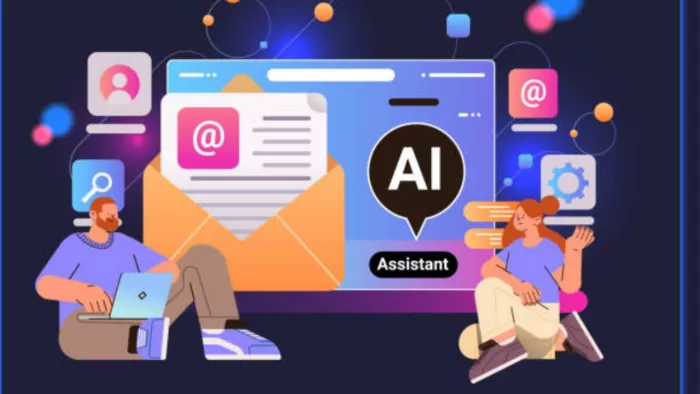
Do your emails often get ignored and end up unopened in crowded inboxe...
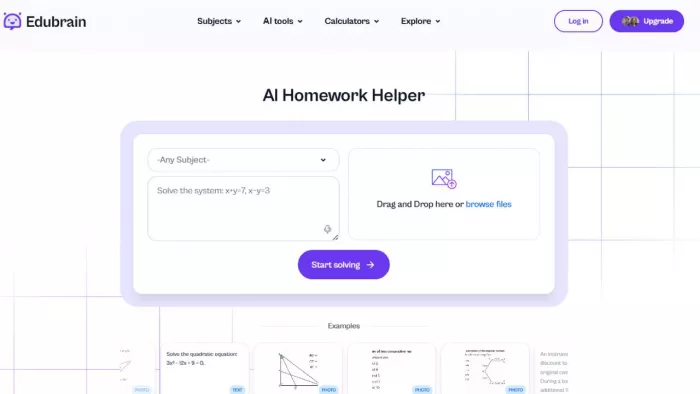
Homework used to take time. You had to go through books, notes, and di...
There is a very specific kind of confidence that comes from generating...
If AI could understand vibes, we wouldn’t be writing essays as prompts...

Hospitals are beginning to see measurable reductions in waiting times...
Artificial intelligence has quickly become part of everyday learning....
Discussion