


The generative AI market is often discussed as a race toward bigger models, stricter safeguards, and enterprise adoption. But that framing misses an important shift happening quietly on the consumer side.
A growing share of users is not looking for productivity assistants, coding copilots, or research tools. They are looking for long-form, emotionally continuous interaction, something closer to entertainment, companionship, or narrative immersion. Platforms like Dittin AI sit squarely in this emerging category.
This article takes a look at what Dittin AI actually is today, how people use it, and what its growth signals say about where consumer AI is heading.
Public analytics snapshots from late 2025 show that Dittin AI is not a fringe experiment anymore, but it’s also not a mass-market utility tool.
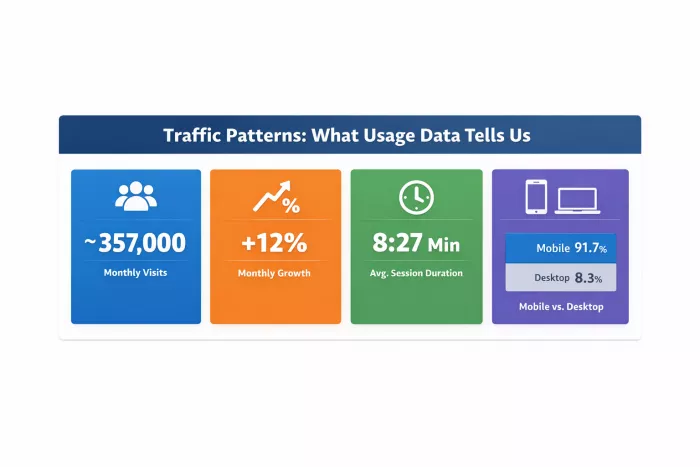
Monthly visits: ~357,000
Growth appears steady rather than explosive, with roughly 12% month-over-month increase.
Average session duration: ~8 minutes 27 seconds
This is unusually high compared to most SaaS tools and even many mainstream chatbots.
Device usage: ~92% mobile
This strongly suggests casual, repeat usage rather than work-driven sessions.
Top regions:
Why this matters
Session duration is often more revealing than raw traffic. Long sessions usually indicate:
In other words, users are staying, not just “checking something.”
Many AI chat platforms function as thin layers over general-purpose language models. Dittin AI appears to be optimized for a different problem set: sustained roleplay realism.
Dialogue-first model tuning
Instead of prioritizing factual breadth, the system emphasizes:
This approach trades encyclopedic accuracy for narrative coherence, which aligns with its observed usage patterns.
Multimodal interaction (by design, not add-on)
Voice output and image generation are built into the interaction loop rather than treated as separate tools. This matters because:
Memory as a Core Feature, Not a Limitation
Most large language models operate with short-term memory constrained by context windows. Dittin AI introduces a different approach commonly referred to as persistent memory.
How this differs from standard RAG
Traditional Retrieval-Augmented Generation (RAG):
Dittin’s memory system focuses on:
The result is not better “answers,” but continuity, characters behave as if they remember previous conversations. This design choice explains why users spend longer per session, even if the underlying intelligence is narrower.
One of the clearest distinctions between Dittin AI and mainstream roleplay platforms is content governance.
| Aspect | Filtered platforms | Dittin AI |
| Content scope | Restricted | Broad |
| Memory depth | Limited | Persistent |
| Session goal | Safe interaction | Immersive interaction |
| Typical use | Casual exploration | Long-form roleplay |
This is not inherently “better” or “worse”, it simply serves a different audience. Data suggests that fewer restrictions often correlate with longer session times, which aligns with Dittin’s engagement metrics.
Public user reviews and discussion threads around Dittin AI tend to focus less on raw AI capability and more on how the platform feels to use over time. Instead of evaluating accuracy or productivity, users consistently frame their experience around engagement, continuity, and immersion.
This aligns closely with the platform’s traffic data, particularly its long average session duration and mobile-first usage.
How Long-Term Users Describe the Experience
Across reviews and community feedback, long-term users frequently mention:
Rather than describing individual conversations as impressive, users often describe return behavior, coming back to the same character over multiple days or weeks. This suggests that perceived value builds cumulatively, not instantly.
Where User Feedback Is Mixed or Cautious
Not all feedback is uniformly positive. Recurrent caution points include:
Some users note that the platform works best when approached as an interactive narrative system, not as a general assistant. When used outside that expectation, satisfaction appears lower.
Community Creation and Economic Signals
Dittin AI also functions as a user-generated character platform.
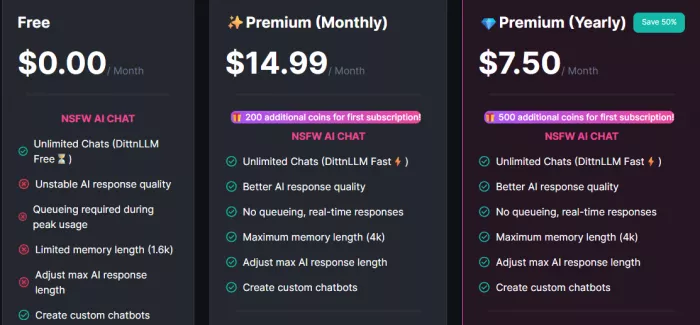
A low monthly entry tier (~$5) positions the service closer to entertainment subscriptions than productivity software. This pricing aligns with:
Dittin AI is less interesting as a single product and more interesting as a signal.
It reflects a broader pattern:
From a design standpoint, the key insight is that persistent state and emotional continuity can matter more than raw model capability in certain consumer contexts.
Dittin AI’s growth does not suggest that unrestricted roleplay is “the future of AI.” What it suggests is something narrower but important:
A meaningful segment of users values continuity and personalization more than correctness or efficiency.
As the AI ecosystem continues to fragment, platforms like Dittin AI illustrate how specialization, not generalization, is driving engagement in consumer-facing applications.

Let’s start with a small truth about storytelling: writing the first s...
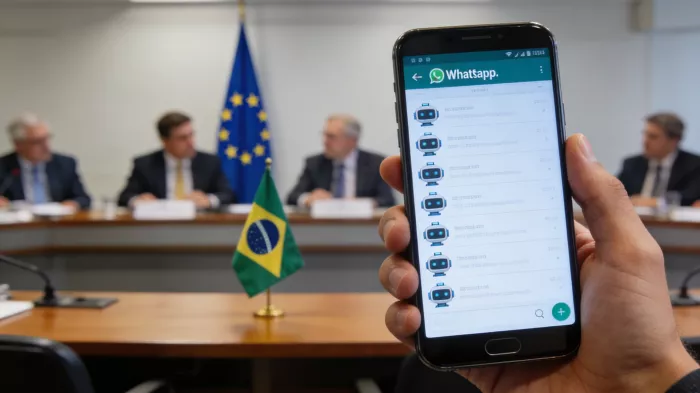
WhatsApp is preparing to allow third-party artificial intelligence cha...
BrandCrowd built its name as a go-to logo tool for small business...

There is a specific kind of disappointment that comes from opening a b...
AI companion apps have moved well beyond novelty status. What started...
Let’s start with an uncomfortable truth. Most people want their photos...
Discussion