

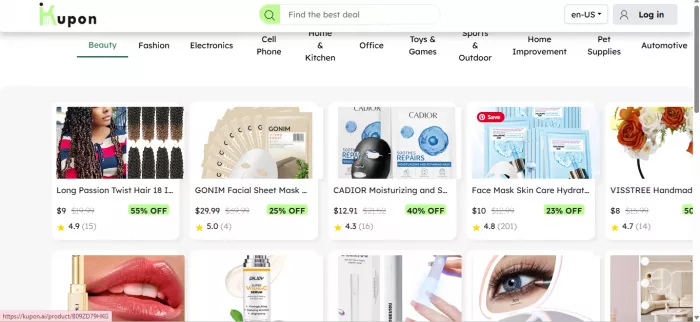
Online shopping is fast, but saving money while shopping can still feel oddly slow. Many shoppers waste time copying promo codes that don’t apply, clicking “exclusive deals” that are expired, or landing on coupon pages that are more ads than actual discounts. Kupon AI positions itself as a cleaner alternative focused on showing discounts in a product-first way rather than dumping endless coupon lists.
The idea is simple: reduce the “trial and error” of coupon hunting and make deal discovery feel more like browsing a curated savings feed than digging through random codes. The question most people have, though, is: does it actually work, and is it legit? We’ll cover both in this guide.
Classic coupon sites usually operate like directories. They collect promo codes, list them, and let users test them. That model often creates frustration because codes expire quickly and many coupons are restricted to specific sellers, categories, or regions.
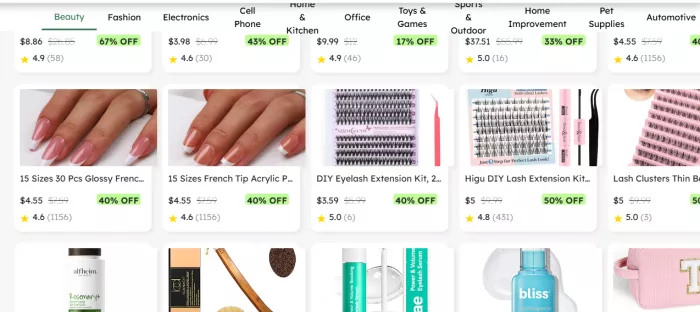
Kupon AI appears to approach deals differently: instead of focusing on coupon code “quantity,” it leans into deal surfacing, showing items that already have visible discounts and promotions tied to them, similar to a marketplace-style deals feed. This aligns with what you actually see on Kupon.ai: product cards and discounted items rather than a plain text coupon directory.
A key shift here is that users aren’t expected to hunt for codes manually first. They browse deals as products, then validate value at checkout like they normally would in any online shopping flow.
In plain terms, Kupon AI works like a deal aggregator that relies on active product listings.
Here’s how the experience generally plays out:
What matters here: the platform functions more as a discovery layer for deals than a checkout system. The deals you see depend on marketplace updates and seller-driven promotions, which is why listings can change rapidly.
This is where most confusion happens because there are multiple sites with overlapping names and similar positioning.
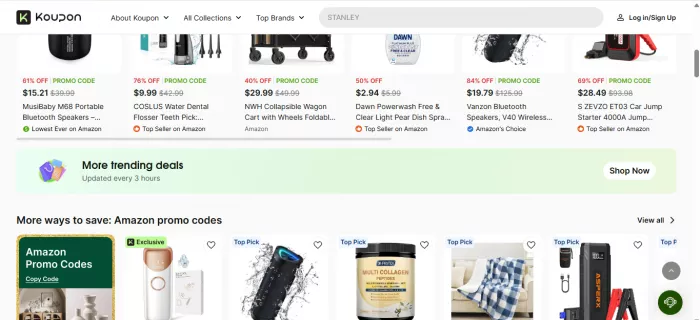
A similarly named platform, Koupon.ai, presents itself as a promo code and deal discovery service and even claims “verified” deals.
However, it looks more like a deal marketplace feed focused on discounted items, while Koupon.ai leans more into “promo code finding” language and brand-level coupon positioning.
Because of their nearly identical names, Kupon AI and Koupon.ai are often confused with each other. While both aim to help users save money online, their underlying models, user experience, and deal presentation differ in meaningful ways.
At a high level, both platforms operate in the same space:
They exist to surface discounts, promotions, and savings opportunities for online shoppers.
Key similarities include:
The real distinction becomes clear when you look at how each platform presents value.
Kupon AI is structured more like a deal discovery feed. Users browse discounted products directly, often seeing items that already have visible price drops or active promotions. The experience feels closer to browsing a curated list of deals rather than searching for individual coupon codes. Its emphasis is on product-level savings visibility.
Koupon.ai, on the other hand, leans more toward a promo code–centric model. It highlights coupon codes, brand offers, and discount claims, positioning itself closer to a traditional coupon platform — though with AI-assisted sorting or verification language layered on top.
Kupon AI’s site experience is generally designed around browsing deals quickly. It shows product-style listings and “deal cards” rather than forcing you into coupon text dumps.
That said, this style of shopping has a tradeoff: deal feeds are great for discovery, but sometimes harder for people who want one exact item right now. This complaint shows up frequently in reviews of deal apps. Generally, users say there are “many deals,” but filtering and finding very specific items can feel harder than standard search-first shopping.
So the best way to use Kupon AI is usually:
Let’s cut straight to it: is Kupon.ai legit, or is it just another coupon site pumping useless codes? Based on actual checks from independent trust‑score sites and real user feedback, here’s what I found:
Trusted site analyzers like ScamAdviser mark kupon.ai as likely legit and safe to use , not a scam or phishing site. It has a valid SSL certificate and a few years of domain age, which are good basic signals.
However: some scanners do give it a medium‑risk label, usually because the domain ownership is private and the site doesn’t get huge traffic yet. That’s not an automatic scam indicator — many small coupon platforms operate this way — but it does mean you shouldn’t treat it as automatically “official” or authoritative.
Here’s the real shopper question: Do the coupons/discounts work in real life?
From what user discussions and community threads show, many people have found working promo codes that apply at checkout — especially on big sites like Amazon, and the deals are indeed valid if used properly.
Some users say that codes update daily and that the site doesn’t require payment info, that’s a good sign because nothing is being charged just to see the coupons.
But here’s the honest part: not every code works 100% of the time. Coupon sites always have a mix of:
So the value you get depends a lot on how patiently you test, just like any deal site. You can save money sometimes, but it’s not guaranteed savings on every product.
From what I’ve seen across reviews and trust checks:
Many users online still emphasize verifying the final price and shipping at checkout, because coupon tools sometimes show a discount that isn’t as big after extra costs.
But here’s the realistic view:
If you want to get real value from Kupon AI without wasting time:
If you’re price sensitive, compare the discounted item against:
Kupon AI fits best as a deal discovery tool, not a magic coupon generator. Its strength is making discounted products easier to browse in one place, and helping shoppers stumble onto real savings faster than traditional coupon pages.
On legitimacy, public checks do not show obvious scam behavior, and the presence of standard policy pages strengthens credibility, but users should still apply common sense verification (final pricing, shipping, seller reliability).
The biggest practical risk isn’t “scam,” it’s confusion with similarly named platforms and reading reviews meant for a different domain. If you treat Kupon AI as a browsing-first deals feed and verify the purchase details where the transaction happens, it can be a useful add-on for people who like hunting bargains without the coupon-code headache.

Do your emails often get ignored and end up unopened in crowded inboxe...
Homework used to take time. You had to go through books, notes, and di...
There is a very specific kind of confidence that comes from generating...

If AI could understand vibes, we wouldn’t be writing essays as prompts...

Hospitals are beginning to see measurable reductions in waiting times...

Artificial intelligence has quickly become part of everyday learning....
Discussion