

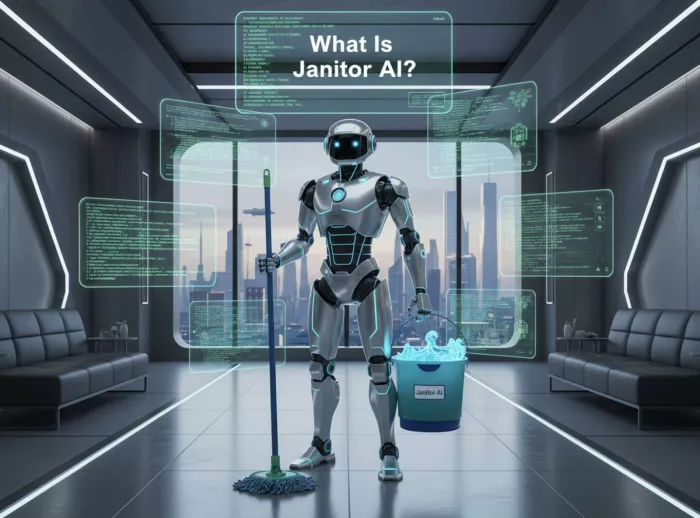
Janitor AI is a character-chat platform built for immersive conversations, the kind where you talk to an AI “character” with a persona, backstory, tone, and boundaries, rather than a generic assistant. The appeal is simple: you can discover community-made characters, create your own, and tune how the bot behaves so chats feel more like roleplay, storytelling, or companionship than “Q&A.”
That said, it’s also the kind of tool where your experience depends heavily on which model you’re using behind the scenes, how well the character is written, and whether the platform is having one of its “queue / downtime” days (more on that later).
When you first land in Janitor AI, you’re essentially choosing between two workflows:
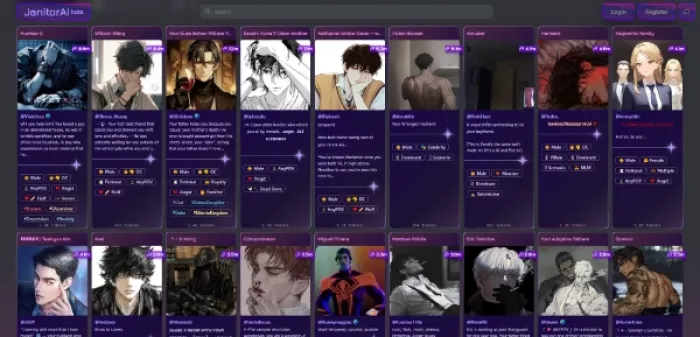
1. Browse a huge library of characters and jump straight into chat
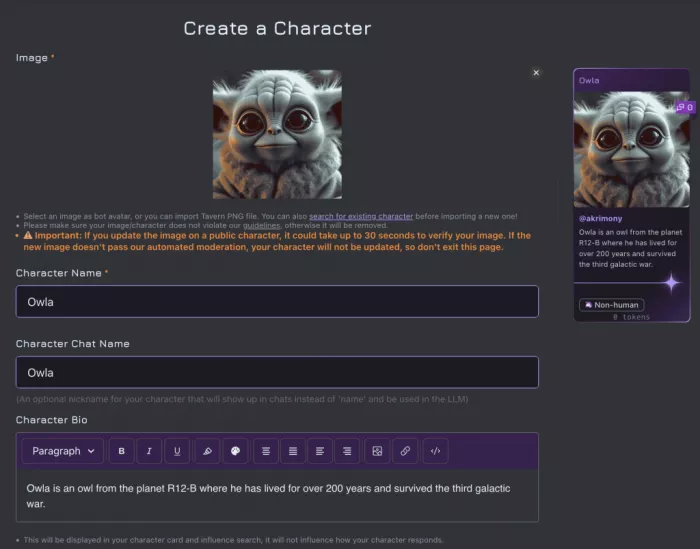
2. Build your own character (persona + greeting + style rules), then iterate until the conversation “clicks”
In real use, the “wow” moment usually comes when:
● a character stays consistent in tone,
● remembers your preferences within the active context,
● and responds in a way that feels emotionally coherent (not just clever text).
But the friction shows up fast if:
● you hit rate limits / queues,
● the character prompt is weak (generic personality, repetitive replies),
● or the model drifts (suddenly changes mood, breaks the scene, gets overly verbose, etc.).
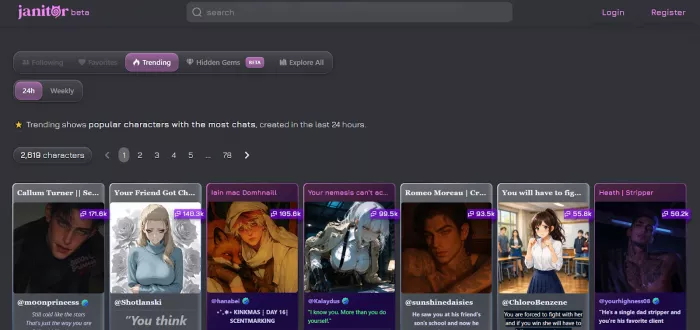
Janitor AI’s biggest strength is the community ecosystem: lots of characters, lots of niches, and a steady stream of new creations. In practice, discovery is what keeps people experimenting, one good character can make the platform feel “addictive,” while a few bad ones make it feel pointless.
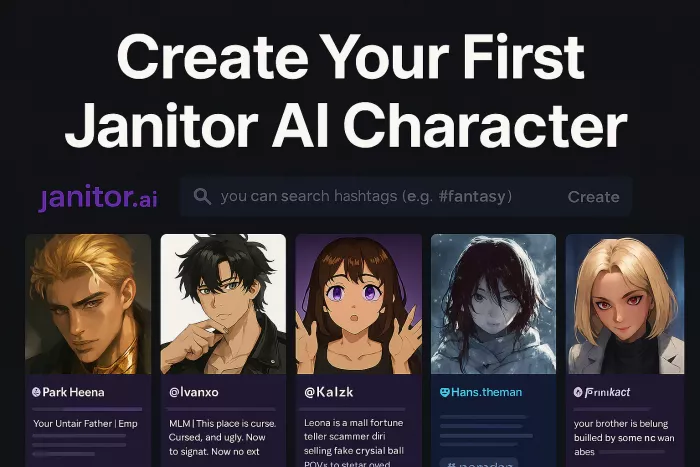
This is where Janitor AI can feel more flexible than many “closed” character chat apps. You can define:
● persona and backstory
● speaking style (short/long, formal/casual, etc.)
● boundaries and scenario setup
● greeting message that sets the tone immediately
The quality of your experience rises dramatically when you treat character creation like writing a mini spec (who they are, what they want, what they won’t do, and how they speak).
A recurring theme across guides and user discussions is that your chat quality depends on whether you’re using the platform’s built-in model (often referenced as JanitorLLM / JLLM) or connecting to third-party model options. Some users accept the quirks of the free/beta model because it costs nothing; others prefer paid models for more nuance.
Janitor AI is commonly discussed in the context of fewer content restrictions than some competitors, but it still has moderation and safety controls (including “Safe Mode” referenced in some guides). This matters because it affects:
● what characters are allowed to be published
● what kinds of scenes the platform may restrict or soften
● whether your character gets shadowed/flagged
1) It can feel more “alive” than normal chatbots
When you find a well-written character + a good model pairing, the conversation feels less like prompts and more like scene flow. That’s the core reason people stick around.
2) Strong creator/community energy
The platform lives or dies by the community library, and that’s where it tends to punch above its weight—more variety, more experimentation, more “you can actually find something specific.”
3) Customization gives you control over the experience
Unlike many apps where you’re stuck with a fixed bot personality, Janitor AI rewards you for tweaking the character setup and learning what changes actually improve output.
1) Reliability + queues can break immersion
Nothing kills roleplay faster than waiting. Users have repeatedly discussed queue systems and access issues during spikes or service instability.
2) Output quality varies wildly by character (and by model)
A “top” character can feel incredible; a mediocre character feels like generic AI filler. Also, some users report quirks with the beta model (odd stylistic habits, drift, etc.).
3) Privacy clarity is something you should not hand-wave
With any character-chat platform, you should assume you’re sharing text that could be logged/processed. Different sources make different claims about privacy practices, and some commentary specifically criticizes unclear privacy disclosure—so the practical advice is: don’t share sensitive personal info and treat chats like they may be stored/processed.
Pricing details can vary by time/channel, but multiple recent sources consistently describe:
● a free tier (often tied to the platform’s built-in model/limits)
● a Pro plan around $9.99/month (and sometimes ~$99.99/year)
| Platform | Avg Rating | #Reviews (used) |
| Apple App Store (Janitor AI – AI Roleplay Chat) | 3.8/5 overall; example user 4/5 | 134 ratings total; 1 detailed review sampled |
| Trustpilot (janitorai.com) | ~3.0–3.5/5 (early) | 7 reviews |
| Knoji (brand-level score) | 3.6/5 | 7 reviews |
| Community forums (Reddit etc.) | No stars; mixed sentiment | Dozens of threads; 3–5 key ones sampled here |
● “First off, this is a great app. Almost like C. AI, but with less of a filter… it’s still a great app overall. I like how premium is cheaper than the CHAI app.” apple
● “Technically, it’s just a chatbot platform. But when you play with it, you’ll find it is highly realistic… includes all kinds of content – SFW and NSFW… It’s like talking to a human.”
● “It was once better than its predecessors, but nowadays it is heavily let down by a lot of technical problems. It’s one of the most glitching paid AI platforms… I don’t see what is there worth paying for.” sitejabber
● “I gave it a shot, and I found their AI to be somewhat unpredictable, plus there can be lengthy wait times… I often find myself pushed back to the end of the queue.” reddit
● roleplay/story users who enjoy tuning characters
● creators who want a community library and iteration loop
● people okay with occasional instability if the “high moments” are worth it
● users who want a reliable “work assistant”
● people who dislike experimenting with prompts/settings
● anyone wanting strong guarantees around privacy/compliance (you’ll want enterprise-grade tools instead)
| Platform | Janitor AI | Character.AI | Chub.ai |
| Trustpilot | 3.0 / 5, very few reviews | 2.0–2.5 / 5, many reviews | 3 / 5 |
| Futurepedia | 4.0 / 5 | 4.2 / 5 | 4.0 / 5 |
| Reddit communities | roughly balanced but leaning positive on creativity, negative on censorship and stability | many users, strong criticism of filters and downtime | positive among adults seeking fewer restrictions, concerns about safety/moderation |
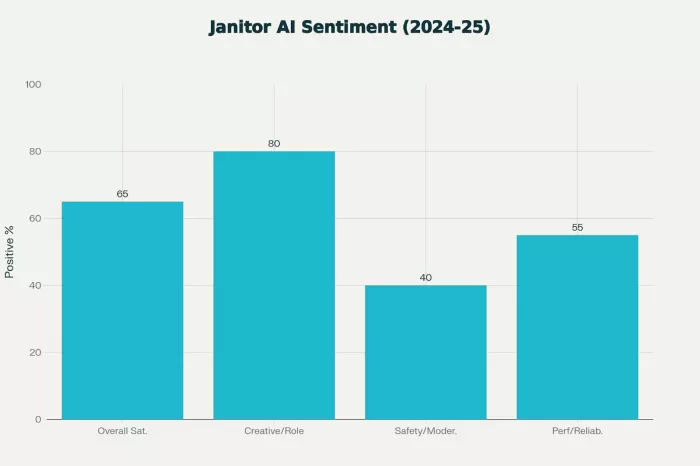
Janitor AI is a powerful but risky choice, it is excellent for adults who want highly creative, customizable AI roleplay, and a poor fit for anyone who needs strong safety, clear boundaries, or a family‑friendly environment.
● Delivers engaging, imaginative roleplay with deep and flexible characters
● Offers strong customization of personas and scenarios, plus an active community sharing characters and tips to enhance the experience.
● Struggles with safety and boundaries around NSFW content and minors
● Draws growing criticism over censorship, inconsistent moderation, and occasional performance problems like queues or slow replies.
For adult users who understand the risks and want a creative NSFW-capable roleplay platform, Janitor AI can be very satisfying; for parents, younger users, or anyone prioritizing robust safety and clear content standards, it is better viewed as unsafe and not recommended.

Traditional call center quality assurance (QA) was built for a world w...

In 2026, the conversation around AI customer support tools has fundame...

Hiring has always been a combination of art, science, and madness.If y...

Cloud Storage Is Now Infrastructure, Not a UtilityBy 2026, cloud stora...

Not long ago, having a side hustle meant staying up late doing freelan...

Using Suno AI regularly changes the way you think about music creation...
Discussion