


Jungle AI is an AI-assisted study application that focuses on turning existing learning material into questions, flashcards, and quizzes. It is often mentioned note-taking tools and spaced-repetition systems, though its workflow appears closer to study automation than traditional note management.
Based on its structure and feature set, Jungle AI seems oriented toward students who already have:
Rather than helping users discover information, the platform appears to focus on re-expressing existing material in ways that can support active recall. Whether this approach is effective largely depends on how clearly the source material is organized.
Publicly available data and app-store metrics suggest that Jungle AI has reached a sizable student audience.
Usage patterns and review language indicate that:
These figures suggest sustained usage rather than short-term experimentation, though they do not by themselves indicate learning outcomes.
Jungle AI does not replace lectures, reading, or note-taking. In practice, it tends to be used after those steps.
A typical sequence appears to be:
Whether this process improves retention depends on how actively the questions are reviewed and whether the generated material is corrected when needed.
Accepted Formats
Jungle AI accepts several content types:
This range suggests an attempt to accommodate real-world student material, which is often fragmented and inconsistent.
How the Platform Processes Material
After upload, the system attempts to:
The platform does not appear to independently verify content accuracy. Its outputs generally reflect the structure and clarity of the source material, which means poorly organized inputs can produce confusing questions.
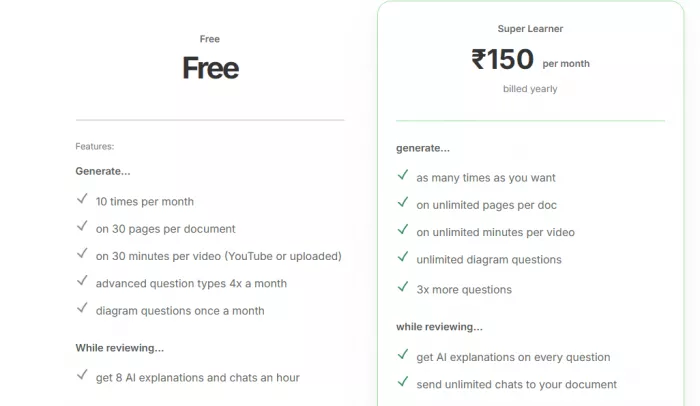
How Flashcards Are Generated
The flashcards generated by Jungle AI tend to be:
This format may be suitable for repetition, though it may not provide enough explanation for first-time learners.
Observed Strengths and Constraints
What seems to work well:
What appears to require attention:
As a result, flashcards often function best as draft material, rather than final study content.
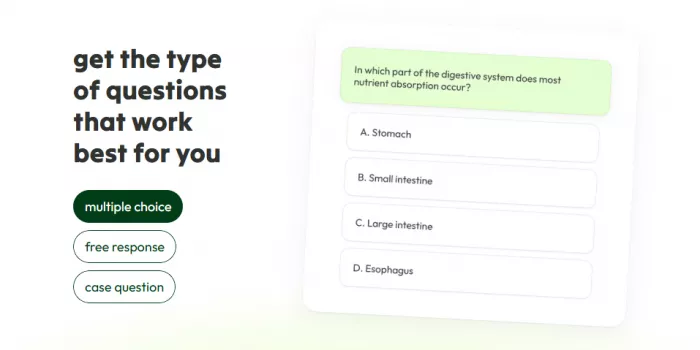
Purpose and Behavior
MCQs generated by Jungle AI typically include:
These questions appear intended for self-checking understanding rather than formal assessment.
Practical Observations
MCQs can be useful for identifying weak areas quickly. However:
Their usefulness tends to increase when paired with active review rather than passive clicking.
What the Feature Does
The image occlusion tool hides portions of an image to prompt identification. This is commonly used for:
Where It Appears Helpful
For visually dense subjects, this feature can reduce the manual effort typically required to create similar cards in tools like Anki. That said, users still need to check whether:
Functional Overview
The document chat feature allows users to:
This design suggests an emphasis on traceability, which may help users verify answers.
Limitations
The chat does not introduce new material. Its responses are bounded by what exists in the uploaded document, which means:
Jungle AI includes a visual progression system (tree growth) that responds to correct answers.
This feature appears intended to:
It does not seem to significantly alter study mechanics, and can be ignored without affecting functionality.
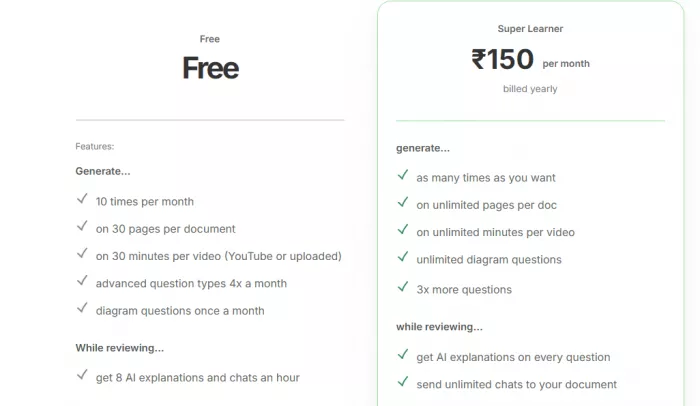
Jungle AI uses a freemium model with paid tiers that remove limits.
Pricing levels (as of late 2025) are positioned within a typical student budget range. The free tier allows experimentation, while paid tiers mainly increase scale rather than introduce fundamentally new features.
Whether paid plans are worthwhile depends on:
Based on documented usage and reviews, Jungle AI tends to:
Users frequently note that:
These issues appear more pronounced when source material is disorganized or conceptually dense.
Jungle AI appears to function best as a study support system, not as a teaching tool. Its effectiveness seems to depend less on the AI itself and more on how thoughtfully the outputs are reviewed and used.
For students already committed to active recall, it can reduce mechanical workload. For those seeking understanding without effort, its limitations become more visible.
Whether it is useful ultimately depends on study habits rather than features.

Let’s start with a small truth about storytelling: writing the first s...

WhatsApp is preparing to allow third-party artificial intelligence cha...
BrandCrowd built its name as a go-to logo tool for small business...

There is a specific kind of disappointment that comes from opening a b...
AI companion apps have moved well beyond novelty status. What started...
Let’s start with an uncomfortable truth. Most people want their photos...
Discussion