

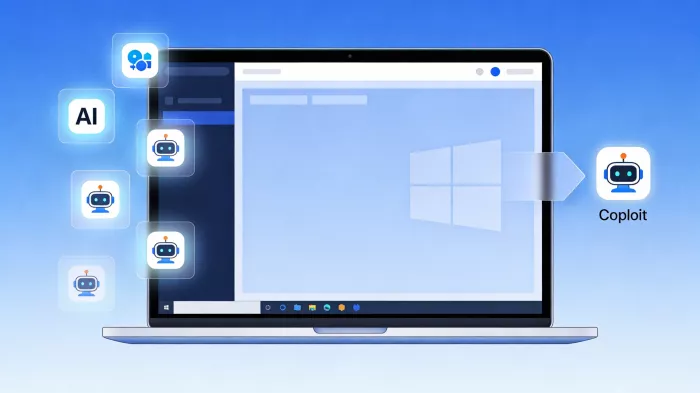
Microsoft is quietly dialing down one of its most aggressive recent pushes: embedding Copilot across nearly every corner of Windows 11. What once looked like a full-scale effort to turn the operating system into an AI-first experience is now being rebalanced, following months of user frustration and criticism.
The company has begun scaling back Copilot’s visibility in system interfaces and built-in apps, removing or cancelling several integrations that had started to feel excessive. While the changes may appear small individually, together they signal a clear shift in strategy.
Instead of placing Copilot in as many places as possible, Microsoft now appears to be focusing on where it actually adds value.
The rollback is not a single feature removal, but a series of adjustments across Windows 11. Some of these changes are already visible, while others are reported to be in progress.
One of the most notable reversals is the decision to scrap earlier plans to integrate Copilot into Notifications and Settings. These system-level placements had been previewed but are no longer moving forward, at least for now.
Microsoft is also stepping back from adding Copilot branding and entry points across core interfaces. In recent updates, users had started seeing Copilot buttons appear in everyday apps such as Photos, Widgets, and Notepad. Many of these additions are now being removed or reconsidered.
The overall direction is consistent. Copilot is no longer being pushed into every available space, particularly in areas where it offered limited practical benefit.
This shift follows sustained criticism that Windows 11 was becoming cluttered with AI features that users neither needed nor requested. The backlash came from multiple fronts, including power users, developers, and the broader tech community.
A major concern was what many described as “AI bloat.” The increasing number of Copilot buttons and integrations gave the impression that AI was being layered onto the system as a marketing feature rather than a functional improvement.
The situation was further complicated by the controversy around Microsoft’s Recall feature. Designed to track user activity for AI-powered recall, it quickly raised serious privacy and security concerns. The backlash forced Microsoft to delay and rethink the feature, and it appears to have influenced a more cautious approach to future AI rollouts.
At the same time, there are signs that Microsoft is trying to rebuild trust with its user base. Reports suggest that upcoming Windows 11 updates are intended to emphasize stability, usability, and responsiveness to feedback, rather than pushing new AI features at any cost.
Despite the rollback, Copilot itself remains central to Microsoft’s long-term plans. The assistant will continue to exist within Windows 11 and across Microsoft’s broader ecosystem, including its productivity tools.
What is changing is not the presence of Copilot, but how it is integrated.
Instead of appearing in every possible interface, Copilot is expected to be used more selectively. The focus is shifting toward scenarios where AI can provide clear, practical benefits, rather than serving as a constant visual element throughout the system.
In practical terms, this means fewer unnecessary Copilot buttons in simple utilities and less intrusive integration into core system areas.

The new direction suggests a more deliberate approach to AI integration. Rather than treating Copilot as a universal layer across Windows, Microsoft appears to be refining where and how it should be used.
This includes removing Copilot from areas like Notifications and Settings, where its usefulness was questionable, and scaling back its presence in lightweight apps that do not require advanced AI functionality.
The emphasis is shifting toward quality over quantity. Instead of making Copilot unavoidable, Microsoft is aiming to make it relevant.
For Windows users, the change could lead to a noticeably cleaner experience. The reduction in Copilot-related elements may make the operating system feel less cluttered and more focused on its core functions.
It also gives users more control. By limiting where AI appears, Microsoft is making it easier for those who do not want constant AI interaction to simply ignore it.
Perhaps more importantly, the rollback demonstrates that user feedback still has influence. The strong reaction to Copilot overuse and privacy concerns appears to have directly shaped Microsoft’s decisions.
Microsoft is not stepping away from AI. Copilot remains a key part of its strategy, and the company continues to invest heavily in AI-driven features across its products.
What this moment represents is a course correction. The initial approach of embedding AI everywhere has given way to a more balanced strategy, one that acknowledges the limits of user tolerance.
If Microsoft follows through, Windows 11 in 2026 could feel less like an AI showcase and more like a stable operating system that includes AI where it genuinely helps.
The lesson is clear. When AI feels like clutter instead of value, users push back. And in this case, Microsoft appears to be listening.

Do your emails often get ignored and end up unopened in crowded inboxe...
Homework used to take time. You had to go through books, notes, and di...

There is a very specific kind of confidence that comes from generating...

If AI could understand vibes, we wouldn’t be writing essays as prompts...

Hospitals are beginning to see measurable reductions in waiting times...

Artificial intelligence has quickly become part of everyday learning....
Discussion