

Minga is not a generic “school app.” It sits at a sensitive intersection of student behavior tracking, attendance control, discipline workflows, and digital rewards. That alone makes it worth closer scrutiny.
On the surface, Minga markets itself as a platform to improve school culture, reduce tardiness, eliminate unsafe meetups, and boost engagement. But when a tool is used daily by minors, and influences movement, behavior, and disciplinary records, the real questions aren’t about features. They’re about data, power, accuracy, and safeguards.
This article examines Minga as it exists in real school environments.
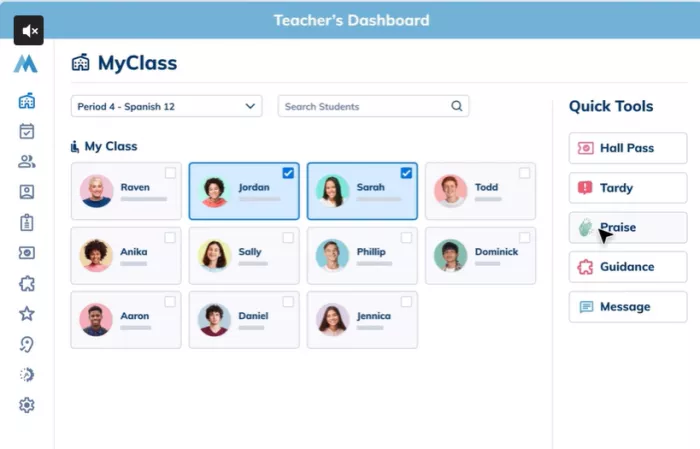
According to its own positioning on the Why Minga section of minga.io, the platform focuses on:
Unlike LMS tools (Google Classroom, Canvas), Minga is not about academics. It is about behavioral logistics.
In practical terms, schools use Minga to:
This makes Minga operationally powerful, but also behaviorally influential.
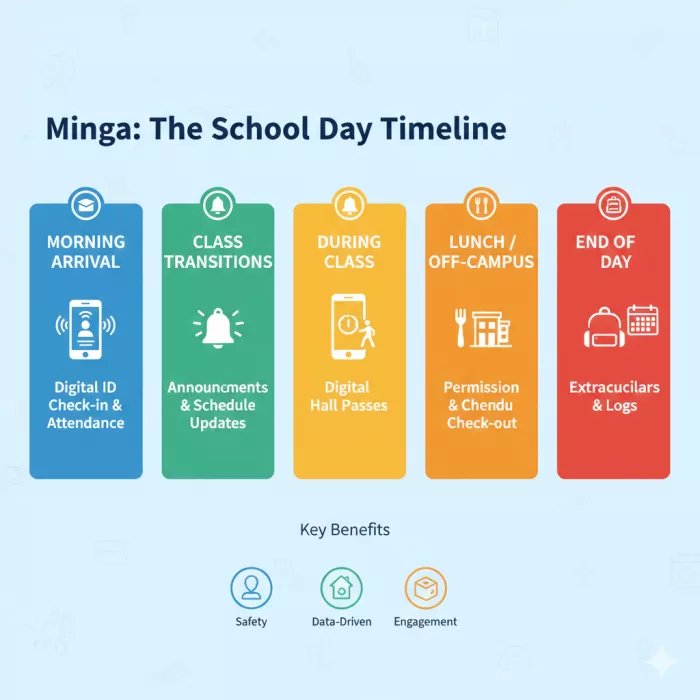
Based on screenshots, demos, and educator reviews on platforms like G2 and Capterra, Minga is typically active all day, not just during class transitions.
Common real-world use cases include:
Teachers often interact with Minga from a dashboard, while students use the mobile app on Android or iOS (via the Google Play and Apple App Store listings).
One consistent pattern across reviews is a split perception.
From the administrative side, Minga is praised for:
From the student side, feedback is more mixed:
This tension matters, because behavior tools shape school culture whether intended or not.
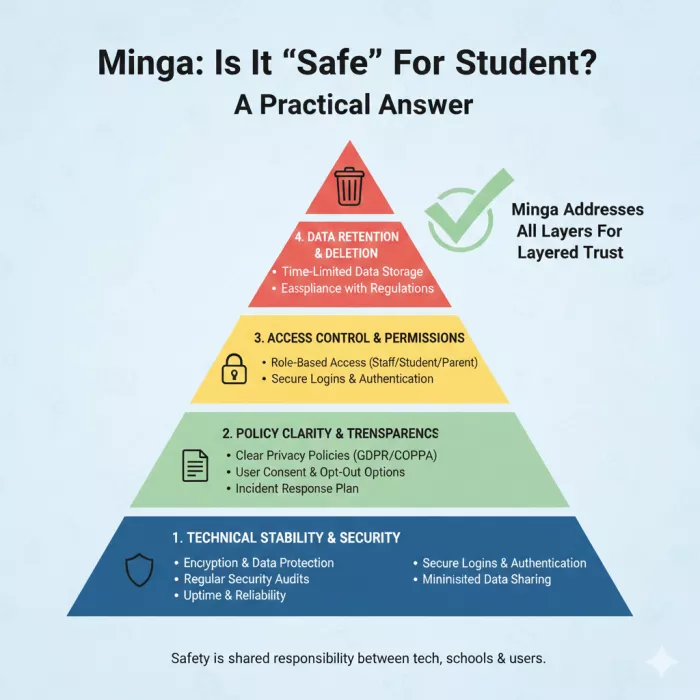
This is one of the most searched questions: Is the Minga app safe? What data does it collect?
From its app store disclosures and privacy explanations, Minga typically collects:
Importantly, this data is school-managed, not student-owned. Parents and students generally do not control how long records persist or how they are interpreted later.
This doesn’t automatically mean misuse, but it does mean data longevity matters.
Minga is not spyware. It is not a consumer tracking app. It is a school-mandated system, which changes the risk model entirely.
The real safety questions are:
Reviews on GetApp and G2 suggest that while the system is technically stable, policy clarity varies by school, not by Minga itself.
In other words, the tool is neutral, but its impact depends on how administrators use it.
One of Minga’s headline features is student rewards and points. In theory, this encourages positive behavior. In practice, it can also:
Several educator reviews mention that reward systems work best when paired with discretion, not automation. When schools rely too heavily on point totals, nuance disappears.
This is not a software flaw, it’s a usage risk.
From App Store and Play Store reviews, common technical complaints include:
These aren’t catastrophic issues, but in a school setting, small delays can have social consequences for students.
Despite concerns, Minga does solve real problems:
This explains why districts adopt it, and why usage continues to grow.
Minga becomes problematic when:
These are governance issues, not app bugs, but the app enables them.
Minga is neither a villain nor a magic fix.
It is a high-leverage behavioral infrastructure tool. Used thoughtfully, it improves safety and efficiency. Used rigidly, it can erode trust and autonomy.
Bottom line:
Minga works best in schools that value context, discretion, and transparency.
In environments that prioritize control over understanding, the same features can feel oppressive.
That duality is the real story, and the reason Minga deserves careful evaluation, not blind adoption.
BrandCrowd built its name as a go-to logo tool for small business...
There is a specific kind of disappointment that comes from opening a b...
AI companion apps have moved well beyond novelty status. What started...
Let’s start with an uncomfortable truth. Most people want their photos...

The U.S. Commerce Department is considering a new set of export contro...

Amazon Web Services has introduced Amazon Connect Health, a new health...
Discussion