


When I first stumbled across Muke AI, I didn’t think much of it. It felt like one of many AI tools that surface briefly, get tested once, and then fade from memory. But Muke AI didn’t disappear. It kept reappearing, on AI directories, traffic comparison sites, tool lists, and conversations about controversial image generation. Over time, I stopped treating it as a “tool to try” and started seeing it as something to observe.
What follows isn’t based on a single session or a quick scan. It’s based on repeated exposure, spaced out over weeks, noticing how my reaction changed, and what the platform consistently failed or succeeded at revealing.
The first few times you encounter Muke AI, curiosity dominates. You’re focused on what it can do. After repeated exposure, curiosity fades and something else takes its place: evaluation.
You begin noticing what doesn’t change.
The interface stays minimal. The explanations stay thin. The positioning stays vague. Over time, this starts to feel less like simplicity and more like avoidance. The platform doesn’t evolve in the way productivity tools do. There’s no sense of refinement, no visible learning from user behavior, no clearer communication as the audience grows.
It begins to feel static, even as the underlying AI models clearly aren’t.
It would be dishonest to say Muke AI doesn’t work. Technically, it does what it claims, quickly and without friction.
Over time, a few strengths become clear:
Consistency in speed: Results are generated fast, almost every time.
Low cognitive load: You don’t need to understand AI to use it.
Accessibility: No install, no configuration, no commitment.
For users who want immediate output without thinking too deeply, this reliability matters. The platform rarely breaks, rarely crashes, and rarely overwhelms. In that narrow sense, it’s stable.
But stability alone doesn’t create trust.
After weeks of seeing the platform, one thing stands out sharply: there’s no visible sense of progress.
Most AI tools, even experimental ones, gradually add clarity:
Muke AI doesn’t.
There’s no sense that the platform is trying to mature. It doesn’t explain itself better over time. It doesn’t contextualize its capabilities. It doesn’t acknowledge criticism or ethical tension.
That absence starts to feel deliberate.
Repeated exposure exposes the biggest weakness: shallowness.
There’s nothing to grow into. No advanced mode. No deeper controls. No explanation layer. No insight into how results are generated or why they vary.
After a while, the experience stops feeling “interesting” and starts feeling closed. You can trigger the same process again and again, but you don’t feel like you’re learning anything new, about the tool or about AI itself.
This is where the novelty wears off.
One unexpected realization after prolonged exposure is emotional detachment.
At first, outputs provoke reaction. Later, they provoke very little. Because the system doesn’t invite reflection, context, or understanding, the results feel disposable. You don’t build attachment to them. You don’t feel ownership. You don’t feel responsibility.
That emotional distance may be intentional, but it also limits long-term engagement.
Spending weeks around a platform usually leads to one of two outcomes: trust or rejection.
With Muke AI, neither fully happens.
You don’t see obvious red flags, but you also never feel reassured. Questions linger without answers:
Who is accountable if something goes wrong?
Where does uploaded data actually go?
What safeguards exist beyond disclaimers?
Over time, the absence of answers becomes louder than any feature.
After months of exposure, the pattern becomes clear:
Muke AI feels built for drive-by usage.
It’s optimized for:
It’s not optimized for:
That’s not necessarily a flaw, but it defines the ceiling of what the platform can become.
Early on, Muke AI felt provocative.
Later, it felt revealing.
Eventually, it felt predictable.
The biggest shift wasn’t in how the tool behaved, it was in how I responded. The more time passed, the more the platform felt like a symptom rather than a solution.
A symptom of:
From a long-term perspective, the main gaps are clear:
Without these, the platform remains stuck in its initial form, functional, but flat.
Spending weeks around Muke AI doesn’t make you like it more or hate it more. It makes you understand it more clearly.
It’s not trying to be trusted.
It’s not trying to be loved.
It’s not trying to grow with its users.
It exists to demonstrate what’s possible, then steps back.
In the end, Muke AI feels less like a product someone is building and more like a capability someone has released and left to exist on its own.
And that, more than any feature or controversy, is what stays with you after time.

Do your emails often get ignored and end up unopened in crowded inboxe...
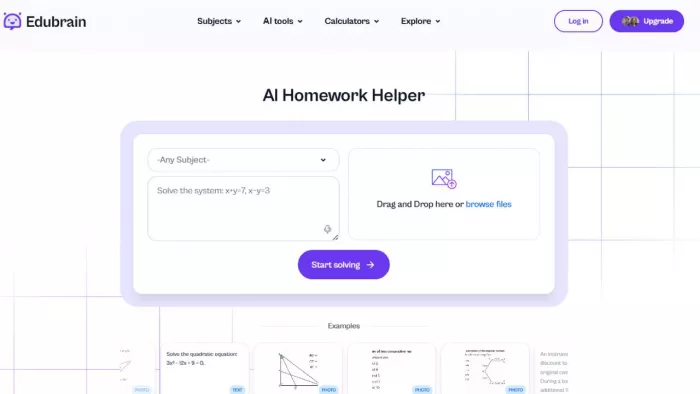
Homework used to take time. You had to go through books, notes, and di...
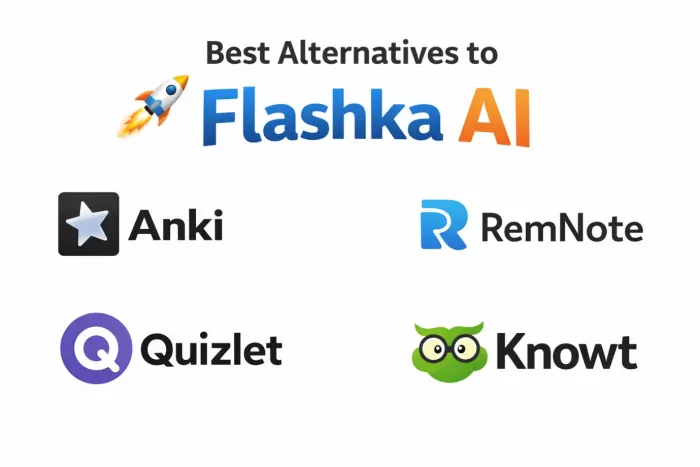
There is a very specific kind of confidence that comes from generating...
If AI could understand vibes, we wouldn’t be writing essays as prompts...

Hospitals are beginning to see measurable reductions in waiting times...

Artificial intelligence has quickly become part of everyday learning....
Discussion