

Museland AI was an AI-powered role-play and storytelling platform aimed at people who loved immersive, character-based conversations. The core idea is to let users create or pick AI characters (with custom personalities, backstories, even supernatural/fantasy traits), and then chat or role-play with them and sometimes like having a living story or visual novel at our fingertips.
● Custom character creation: We could build a character from scratch by choosing their background, personality, look (style/genre), and narrative role. That made it ideal for writers, creative role-players, or anyone who enjoys building fictional worlds.
● Role-play & storytelling: Rather than simple Q&A with a bot, Museland offered more story-driven interactions. That made it appealing to fans of anime, fantasy, romance, and narrative fiction.
● Casual chat / companionship: For users who just wanted someone to talk to — a virtual friend or companion — Museland allowed “free-form” chats, giving flexibility to explore emotional, friendly, or relationship-style conversations.

● Creative outlet: For writers or content creators, Museland could function as a sandbox to test dialogues, character arcs. This made it appealing as a creative brainstorming tool.
Because of this mix of features i.e., customization, creative storytelling, role-play, companionship, Museland was more than a chatbot: it was a virtual storytelling playground.
● Freedom & flexibility: Users weren’t limited to pre-set personalities. We could imagine anyone and craft their story.
● No rigid conversation caps: Reports indicated that Museland offered “unlimited or free messaging/chat” (before shutdown), which meant we could really dive into long conversations or long-form storytelling without worrying about message limits.
● Appealing to imagination & fandoms: It attracted writers, gamers, and creative folks who liked narrative immersion rather than standard bots.
● Community & variety (when active): Because we could create and share our own characters, there was a diverse pool of personas and stories available.
Despite its promise, Museland AI also had serious drawbacks — and ultimately, as of 2025, it ceased operations.
● Stability / Continuity problems: Role-play conversations that began interesting could degrade and memory of context might get lost, replies could feel generic or derailed, reducing immersion.
● Lack of long-term support / shutdown: Museland shut down means stories, characters and everything are at risk of being lost if not saved externally. For many, this abrupt end broke trust and continuity.
● Risk of over-reliance / emotional attachment: users may form emotional attachments or rely on the AI for companionship. When the platform shuts down, that can be painful. This is a common caution in analyses of AI-roleplay tools.
● No guarantee of quality across all characters: Because many characters were user-generated, quality varied a lot. Some bots had rich backstories and engaging dialogue; others were simplistic or poorly maintained.
As of 2025, sources confirm that Museland AI shut down around March 2025.The closure left many former users disappointed, searching for alternatives that could deliver similar creative, flexible role-play experience. But the demand remains.
| Alternative Tool | What They Offer / Strengths |
| Character.AI | strong general chat, good memory for conversations, widely used and maintained |
| Janitor AI | More freedom — including unfiltered / uncensored roleplay, high customization, flexible character creation. |
| Joyland.ai | Anime-style characters, creative roleplay focus, both pre-made and custom bots |
| Chai AI | Lightweight, mobile-first, quick chats — good for casual conversations or quick roleplay sessions without heavy commitment |
| Replika AI | More focused on companionship, emotional support, long-term “friendship-style” |
If I were you and exploring AI-roleplay tools today, here’s how I’d pick based on what I want:
● Creative writing / storytelling: If you enjoy writing stories, use Character.AI, Joyland, or Janitor.
● Roleplay / fanfiction / fantasy / anime-style chats: For anime-style or imaginative fantasy chats Joyland or Janitor are best.
● Casual conversation, quick chats, emotional support: For lighter, emotional or friendly interactions, Replika or Chai are good.
● Experimental freedom (less censorship, more customization): Janitor AI stands out for users who want minimal filters and maximum flexibility.
● Safe, stable, maintained experience: Character.AI or Replika with active development and more consistent performance.
● Writers, storytellers, world-builders, creatives
● Fans of anime / fantasy / sci-fi / romance / roleplay
● People seeking companionship or casual conversation (without pretension)
● Users comfortable with the experimental nature of AI — aware of limitations & privacy concerns
● Those needing stable long-term support
● Individuals sensitive to emotional attachment or seeking real human relationships
● People expecting perfect “human-like” empathy or psychological support
Having looked at Museland’s rise and eventual shutdown, I thought that
Museland AI was less a “chatbot” and more a digital storytelling sandbox somewhere between a visual novel engine, a role-playing game, and a creative writing assistant. Its shutdown reveals a key reality that such niche AI-roleplay platforms are inherently fragile, especially if they rely on community content, heavy backend, and user-generated customization.
To me, the “Museland era” was a meaningful experiment in what human-AI interaction could be: personal, imaginative, creative. While it ended prematurely, it paved the way for better, more stable successors and showed there’s a real audience for AI companions beyond simple Q&A bots.
If I were you I’d pick one of the active alternatives (Character.AI, Janitor AI or Joyland) depending on what I want and treat it as fun, creative entertainment, not as a replacement for real human relationships.
Do your emails often get ignored and end up unopened in crowded inboxe...
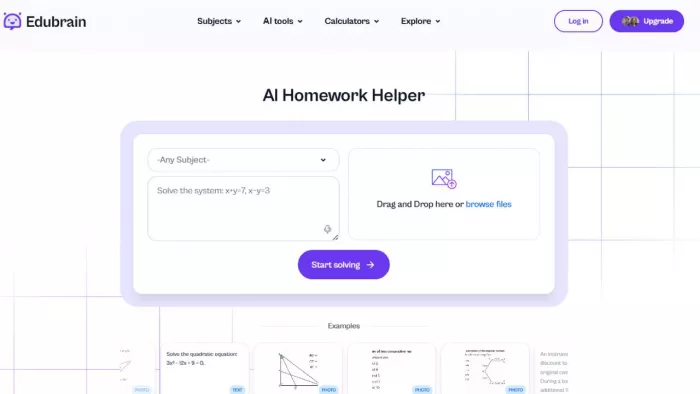
Homework used to take time. You had to go through books, notes, and di...
There is a very specific kind of confidence that comes from generating...
If AI could understand vibes, we wouldn’t be writing essays as prompts...

Hospitals are beginning to see measurable reductions in waiting times...
Artificial intelligence has quickly become part of everyday learning....
Discussion