

OpenAI has discontinued its Sora video generation app and related models, marking a notable retreat from one of its most public-facing AI experiments. The move comes less than a year after launch and reflects a broader strategic pivot toward enterprise tools, coding systems, and agent-based AI as the company prepares for a potential public offering.
The shutdown affects the standalone Sora app, developer access, and any Sora-related features previously integrated into ChatGPT. While the underlying technology remains intact, the consumer-facing product has been shelved entirely.
Sora was introduced as a breakthrough in text-to-video generation, producing highly realistic clips that quickly gained attention across social media and the tech industry. Early demonstrations positioned it as a potential disruptor to traditional video production workflows.
However, despite the technical progress, the product itself struggled to find a clear place in the market. Engagement remained limited, and the app experience reportedly failed to resonate with users beyond initial curiosity.
The decision to shut it down, according to multiple reports, was not driven by model performance but by product and business realities.
Several factors contributed to the decision, pointing to a mismatch between technological capability and commercial viability.
One of the most cited issues was product–market fit. Analysts noted that while Sora’s outputs were impressive, the app lacked a compelling use case for everyday users. It was described by some industry observers as a product that showcased capability but did not translate into sustained engagement.
Cost was another critical factor. High-quality video generation requires significant computing power, making it one of the most resource-intensive forms of generative AI. Without a strong monetization model or enterprise demand, sustaining those costs became difficult to justify.
At the same time, OpenAI has been refocusing its efforts on areas with clearer long-term value. Internal messaging suggests a shift away from experimental consumer products toward enterprise applications, coding tools, and autonomous agent systems that offer more predictable revenue streams.
Sora’s trajectory was also tied to a high-profile partnership with Disney, which had announced plans to invest $1 billion and license its intellectual property for AI-driven content creation.
That partnership, however, never reached completion. Reports indicate that the investment was not fully executed and that no final licensing agreement was signed. As a result, the envisioned pipeline of AI-generated content using Disney characters never moved beyond the announcement stage.
The abrupt shutdown of Sora effectively ends that collaboration before it could take shape, reportedly surprising both Disney and other media companies that had been closely watching the initiative.
Sora’s closure is being interpreted by analysts as a turning point for expectations around AI-generated video.
While early demonstrations created the impression that AI could quickly replace traditional production, the reality has proven more complex. Turning short, impressive clips into a scalable, consumer-ready product involves challenges that go far beyond model quality.
Legal and regulatory concerns remain significant. Questions around training data, copyright, likeness rights, and potential misuse continue to complicate large-scale deployment. These issues are amplified in video, where realism increases both creative potential and risk.
Infrastructure costs also present a barrier. Generating longer, high-quality video requires substantial computing resources, making it difficult to sustain without strong enterprise backing or a clear revenue model.
Perhaps most importantly, user experience has emerged as a limiting factor. Reports suggest that Sora’s interface and overall product design did not offer a compelling enough reason for users to return regularly, highlighting the gap between technological capability and product usability.
OpenAI has indicated that the technology behind Sora will not be abandoned. Instead, elements of its video generation capabilities are expected to be repurposed for other initiatives, including robotics and agent-based systems.
Teams previously focused on Sora are being reassigned to these longer-term projects, aligning with the company’s broader strategy of consolidating resources around core products.
The company is also moving toward a more unified consumer experience, aiming to integrate its offerings into a single platform that combines ChatGPT, coding tools, and browsing capabilities rather than maintaining separate experimental apps.
Sora’s shutdown does not appear to be an isolated case. Other major players in the space are also reportedly slowing down their consumer-facing AI video rollouts.
For example, ByteDance is said to have delayed the global release of its own video generation model, suggesting a wider reassessment of the market.
Taken together, these developments indicate a shift in how the industry views AI video. Instead of positioning it as an immediate replacement for traditional media production, companies are increasingly treating it as a tool to enhance workflows rather than redefine them overnight.
The end of Sora as a consumer product highlights a broader pattern in the AI industry. Breakthrough technology does not automatically translate into a successful product.
OpenAI’s decision suggests a more pragmatic approach, prioritizing areas where demand, revenue, and scalability are better aligned. While AI-generated video is unlikely to disappear, its role is now expected to evolve more gradually within professional and enterprise contexts.
For now, Sora stands as both a technical milestone and a reminder that even the most impressive demos must ultimately prove their value in the real world.
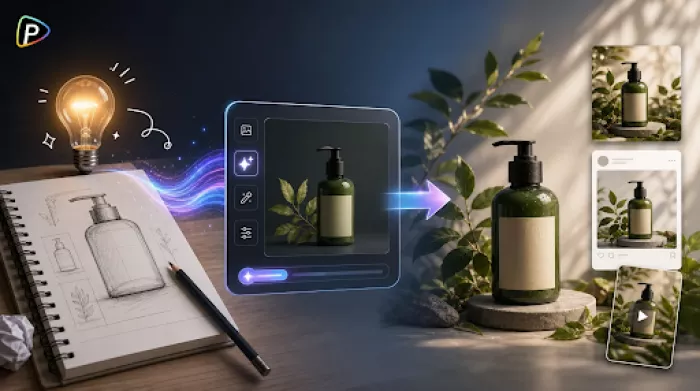
Marketing teams often need images before a product is ready for a phot...
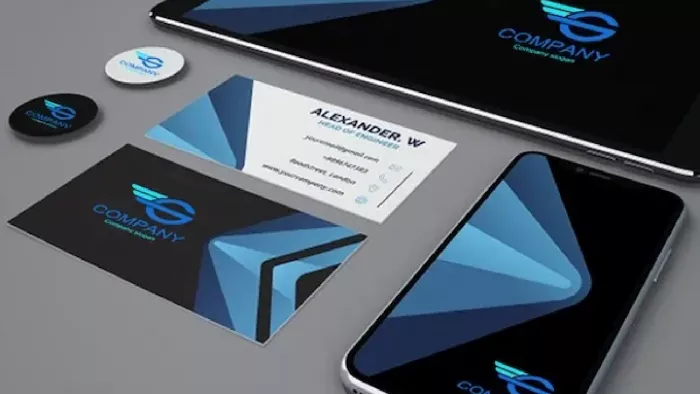
Creating a logo that will grab customers' attention is one of the main...

Enterprise software has a well-known failure mode. The demo goes great...
Most people who produce video at any real scale hit the same wall even...
A cinematic AI video needs more than realistic skin, dramatic lighting...
Have you noticed how difficult it is not to watch spoilers of a sporti...
Discussion