

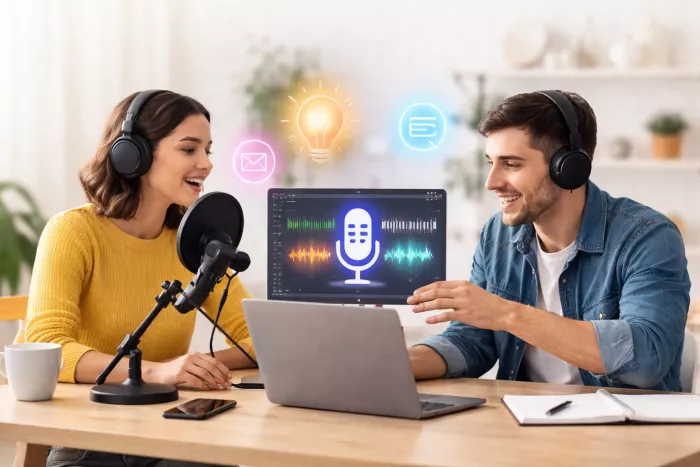
A new startup is attempting to do for podcasting what Canva did for design.
Rebel Audio, unveiled at SXSW 2026 in Austin, has launched an AI-powered podcast creation and hosting platform aimed squarely at beginners and early-stage creators. The company’s pitch is simple: remove the complexity that has historically made podcasting feel fragmented and technical.
Instead of juggling separate tools for recording, editing, hosting, and promotion, Rebel Audio combines everything into a single interface. The goal is to turn podcast production into a streamlined, one-tab experience where creators can move from idea to published episode without switching platforms.
The approach reflects a broader trend in creator tools, where AI is being used not just to assist workflows, but to collapse them entirely.
Rebel Audio positions itself as a fully integrated production environment rather than a standalone tool.
Within a single interface, users can record episodes directly in their browser or mobile device, edit audio using both waveform and transcript-based controls, generate transcripts automatically, and publish content to major platforms such as Spotify and Apple Podcasts.
The platform also includes tools for creating social media clips, generating cover art, and managing show pages. For newer creators, this eliminates the need to learn multiple tools or piece together a workflow from different services.
This simplicity is central to Rebel Audio’s positioning. The company is targeting users who are not limited by ideas, but by the complexity of execution.
At the core of Rebel Audio’s offering is a set of AI-assisted tools designed to handle repetitive or technical tasks.
The platform can automatically clean audio, remove filler words, and adjust pacing, reducing the need for manual editing. Transcript-based editing allows creators to modify content by editing text, which then reflects in the audio.
It also includes automated clip generation for short-form platforms like TikTok, Instagram Reels, and YouTube Shorts, a feature intended to help new podcasts gain early visibility.
Higher-tier plans introduce more advanced capabilities, including voice cloning for ad reads and translation tools that allow shows to be dubbed into multiple languages. These features suggest an ambition to support not just creation, but also monetization and global distribution.
Rebel Audio officially announced its platform on March 11, 2026, entering the market through an invite-only beta phase tied to SXSW.
The company has raised $3.8 million in an oversubscribed seed round, with backing from industry figures connected to MGM and DreamWorks. Television producer Mark Burnett, known for shows such as Survivor and The Voice, is serving as an advisor.
A broader public rollout is planned for May 30, 2026, following the current testing phase.
The involvement of media industry veterans signals an interest in bridging traditional entertainment production with newer creator-driven formats.

Rebel Audio is not taking a freemium approach.
Instead, it is launching with a tiered subscription model aimed at creators who view podcasting as more than a casual hobby.
| Plan | Monthly Price | Key Features |
|---|---|---|
| Basic | $15 | AI production tools, hosting, distribution |
| Plus | $35 | Adds video hosting and voice cloning |
| Pro | $70 | Includes ad insertion, subscriptions, translation and dubbing |
The pricing suggests that the platform is targeting users who are building consistent shows or exploring monetization, rather than those experimenting casually.
Rebel Audio enters a rapidly expanding podcast industry.
Global podcast revenue is projected to reach $114 billion by 2030, with the listener base expected to grow from 584 million in 2025 to over 619 million in 2026.
Despite that growth, production workflows have remained largely unchanged. Many creators still rely on a combination of recording software, editing tools, hosting platforms, and manual processes for promotion.
Rebel Audio’s founders argue that this fragmentation creates unnecessary barriers, particularly for new entrants. By integrating these steps into a single platform, the company aims to make podcasting more accessible and scalable.
Rebel Audio’s strategy reflects a broader shift in creator tools toward consolidation.
Instead of offering specialized software for each step, platforms are increasingly attempting to provide end-to-end solutions powered by AI. The challenge is balancing simplicity with flexibility, ensuring that tools remain accessible without limiting more advanced users.
For Rebel Audio, success will depend on whether it can deliver a smooth experience for beginners while still supporting creators as they grow.
As the platform moves toward its public launch, several questions remain.
Will creators adopt an all-in-one system over established multi-tool workflows?
Can AI-driven editing and production match the quality expectations of experienced podcasters?
And will features like voice cloning and automated clipping provide real value beyond novelty?
Rebel Audio is entering a crowded but evolving space, where ease of use is becoming as important as capability.
For now, it represents a clear attempt to lower the barrier to entry for podcasting, at a time when the audience for the medium continues to expand.

Do your emails often get ignored and end up unopened in crowded inboxe...
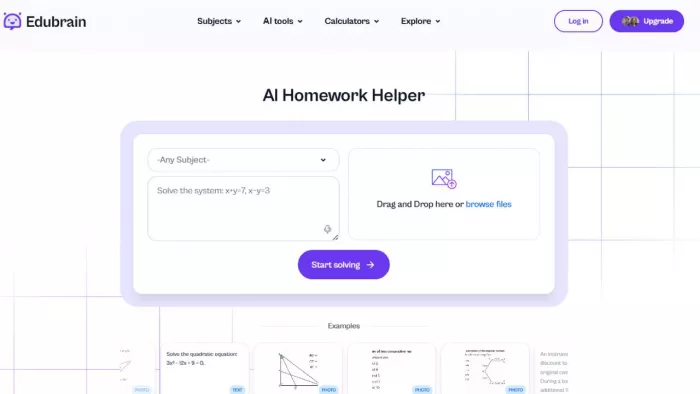
Homework used to take time. You had to go through books, notes, and di...
There is a very specific kind of confidence that comes from generating...
If AI could understand vibes, we wouldn’t be writing essays as prompts...

Hospitals are beginning to see measurable reductions in waiting times...

Artificial intelligence has quickly become part of everyday learning....
Discussion