


AI video generation has reached a point where quality differences actually matter. In 2025, Runway ML, Pika Labs, and Kling AI are no longer experimental tools. They are being used for marketing videos, short films, ads, and social content that real audiences watch.
But when people ask which one has the best video quality, the honest answer is not simple. Each tool excels in a different interpretation of quality. Some prioritize cinematic control, others focus on motion realism, and some optimize for speed and visual appeal.
This article compares Runway ML vs Pika Labs vs Kling AI purely from a video quality perspective, not hype, not feature lists, and not marketing promises. The goal is to help you understand which tool produces the best-looking video for your specific use case.

Before comparing tools, it helps to define what video quality means in practice. For AI-generated video, quality is not just resolution.
It usually comes down to five things:
● Visual realism, including lighting, textures, and depth
● Motion consistency, meaning objects and people move naturally
● Character stability, especially across multiple clips
● Artifact control, such as flickering, warping, or distortion
● Usability in real projects, not just single impressive clips
Each of these tools optimizes a different mix of these factors, which is why opinions vary so widely online.
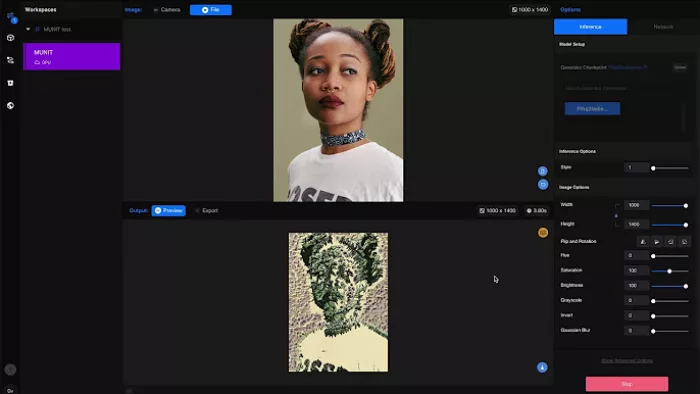
When it comes to professional-grade video quality, Runway ML still sets the benchmark. Its strength lies not just in how good a single frame looks, but in how reliably it produces clean, editable footage.
Runway’s latest models generate videos with strong depth, realistic lighting, and minimal flicker, even in complex scenes. Motion tends to feel grounded. Hair, fabric, smoke, and liquids behave with believable weight, which is critical for cinematic shots.
Another major advantage is consistency across shots. Runway performs better than most tools when you need the same character, object, or environment to appear logically across multiple clips. This makes it suitable for short films, brand videos, and hybrid workflows where AI clips are mixed with real footage.
The trade-off is complexity and cost. Runway expects users to think like editors and filmmakers. You get more control, but you also need more patience and credits, especially for higher resolution output.
Best for creators who care about cinematic quality, editing control, and professional workflows.

Pika Labs approaches video quality from a very different angle. It focuses on immediate visual appeal rather than deep technical realism. The result is video that often looks stylized, energetic, and film-like, especially for short clips.
Pika excels at prompt adherence. When you ask for dramatic camera movement, vibrant lighting, or creative motion, it often delivers something visually exciting on the first try. This makes it popular for social media, concept art, and creative experiments.
However, motion realism can break down in fast or complex scenes. You may see morphing, distortion, or subtle inconsistencies when characters move aggressively or interact with objects. These issues are less noticeable in short clips, which is exactly where Pika performs best.
For creators who value speed, accessibility, and visual flair, Pika offers strong perceived quality, even if it falls short of strict realism.
Best for creators making short-form content, visual concepts, and social videos where style matters more than physical accuracy.

Kling AI has surprised many creators with how strong its motion quality has become. Where other tools struggle with flicker or unstable movement, Kling often delivers fluid motion, stable poses, and coherent action, even at higher frame rates.
One of Kling’s biggest strengths is character consistency. Faces, body proportions, and clothing tend to remain stable across frames and across clips. This makes Kling especially effective for character-driven videos, human actors, and serialized content.
Visually, Kling leans toward photorealism. Lighting and textures are often less stylized than Pika but more natural. Action scenes, water movement, and physical interactions feel grounded, which helps maintain immersion.
The main limitation is flexibility. Kling offers fewer editing and refinement tools compared to Runway. It is powerful at generation, but less adaptable in post-production workflows.
Best for creators who need realistic motion, stable characters, and coherent scenes, especially for ads or narrative content.
| Quality Factor | Runway ML | Pika Labs | Kling AI |
| Cinematic look | Excellent and controlled | Stylized and energetic | Natural and realistic |
| Motion realism | Strong and physically grounded | Creative but less stable | Very smooth and fluid |
| Character consistency | Very strong across scenes | Improving but inconsistent | Excellent and reliable |
| Artifact control | Minimal flicker and distortion | Some morphing in motion | Very low flicker |
| Best clip length | Short to medium sequences | Very short clips | Short to extended clips |
| Overall quality focus | Professional production | Visual appeal and speed | Realism and motion |
If the question is strictly which tool produces the highest quality video, the answer for most professional use cases is Runway ML.
Runway offers the most balanced combination of realism, control, consistency, and post-production usability. It produces video that not only looks good in isolation but also holds up when edited, color graded, or combined with other footage.
That said, quality is contextual.
If you care most about smooth motion and character realism, Kling AI may look better to your eye.
If you want fast, visually exciting clips for social platforms, Pika Labs often feels more impressive right away.
This is why many advanced creators use more than one tool. They generate cinematic base shots in Runway, motion-heavy sequences in Kling, and experimental visuals in Pika.
The debate around Runway ML vs Pika Labs vs Kling AI is not about which tool is objectively best. It is about which one aligns with how you define quality.
● Choose Runway ML if you want professional, cinematic output that fits real editing workflows
● Choose Kling AI if motion realism and character stability matter most
● Choose Pika Labs if speed, creativity, and visual punch are your priorities
AI video quality has matured enough that all three tools can produce impressive results. The real advantage comes from understanding their strengths and using them intentionally rather than expecting one tool to do everything.
Let’s start with a small truth about storytelling: writing the first s...

WhatsApp is preparing to allow third-party artificial intelligence cha...

BrandCrowd built its name as a go-to logo tool for small business...

There is a specific kind of disappointment that comes from opening a b...
AI companion apps have moved well beyond novelty status. What started...
Let’s start with an uncomfortable truth. Most people want their photos...
Discussion