

Meta Description:
An honest, practical analysis of the Top AI Tools for Resume & Portfolio Design in 2026, comparing ATS-focused resume builders and modern portfolio tools based on real hiring workflows—not marketing claims.
In 2026, resumes and portfolios serve very different gatekeeping functions, and AI tools reflect that split.
Resumes are primarily filtered by Applicant Tracking Systems (ATS) before a human ever sees them. Their job is compliance: correct keywords, readable structure, and predictable formatting.
Portfolios, on the other hand, are evaluated after interest already exists. They are judged by clarity, narrative, responsiveness, and increasingly, by measurable outcomes such as engagement or conversions.
Lumping both into “career tools” misses the point. The most effective AI tools today specialize—either in machine readability (resumes) or human persuasion (portfolios).
This distinction matters when deciding which tools are worth using—and which ones quietly hurt your chances.

Modern ATS platforms no longer just scan for keyword presence; they assess keyword placement and contextual alignment. A skill listed without measurable impact carries less weight than the same skill embedded in an achievement.
This is where AI resume tools add value: they rewrite bullets to align language with job descriptions. However, they still depend on human judgment to ensure claims are accurate and not inflated.
Despite advances in AI, ATS systems remain conservative. Tables, icons, columns, and excessive color still cause parsing issues—especially when resumes are uploaded as PDFs.
That’s why most effective AI resume tools in 2026 intentionally limit design freedom. It’s not laziness; it’s compatibility.
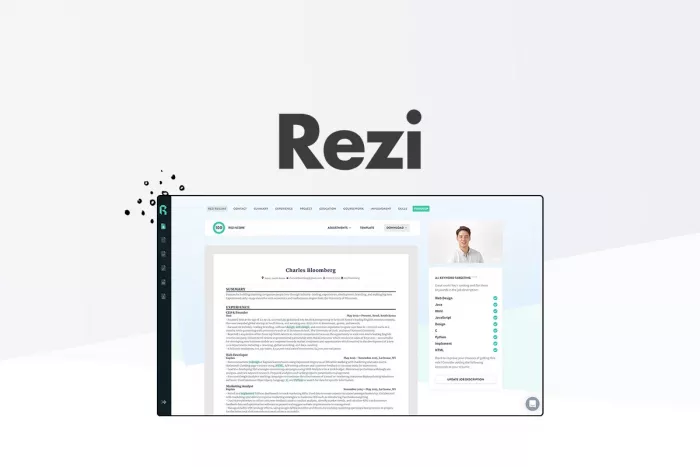
Rezi is designed around a single assumption: if ATS can’t read your resume, nothing else matters.
Its 23-point resume scoring system analyzes keyword alignment against job descriptions in real time. Instead of suggesting generic phrasing, it adjusts bullets to mirror industry-specific language patterns, which improves match rates in automated screenings.
The trade-off is obvious. Templates are intentionally plain, with minimal visual customization. For creative roles, this can feel restrictive—but for corporate, technical, or analytical positions, the restraint is strategic.
Rezi works best when accuracy matters more than expression, and when users are willing to manually review AI-generated bullets to keep them honest.
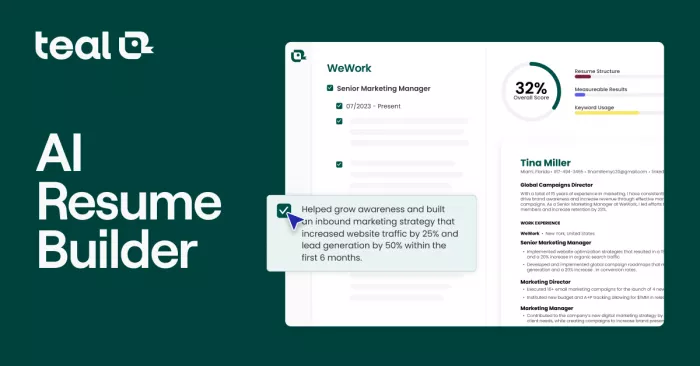
Teal approaches resumes differently. Instead of treating them as static documents, it embeds resume writing into the application process itself.
Its keyword scanner compares resumes directly against job postings, while its job tracker helps manage applications across multiple boards. This makes Teal particularly useful for candidates applying at scale.
Design flexibility is limited, and spacing issues still appear in some templates. But Teal’s value lies in contextual relevance—helping users adapt one resume to many roles without starting over each time.
For job seekers juggling multiple applications, this integration often matters more than visual polish.
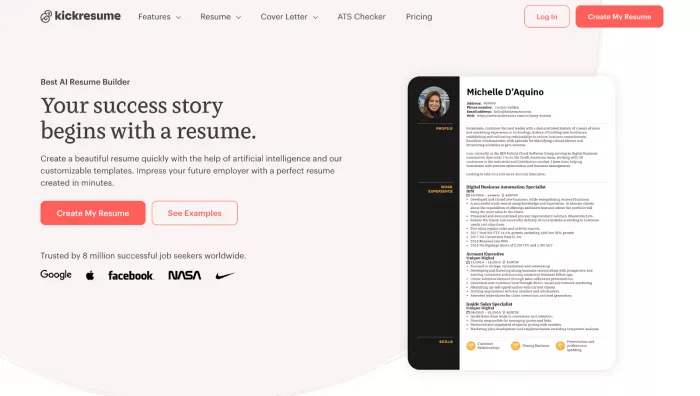
Kickresume sits between ATS discipline and creative freedom.
Powered by GPT-4, it generates resume drafts from job titles and improves grammar and clarity. Its template library is far broader than Rezi or Teal, which appeals to users who want visual differentiation.
However, this is also where risk enters. Some of Kickresume’s more vibrant templates can reduce ATS readability if used without care. The tool works best when users select ATS-optimized layouts and resist unnecessary design flourishes.
Kickresume is most effective for candidates who understand when to prioritize structure over style.

Jobscan focuses almost entirely on resume-to-job comparison. It scores resumes against postings and highlights missing keywords. While useful as a diagnostic tool, it offers limited flexibility in actual content creation.
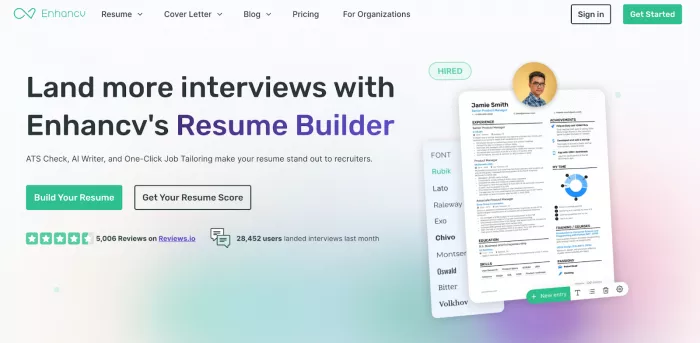
Enhancv emphasizes customization and tone, offering AI-driven suggestions and flexible sections. However, some users report that its AI suggestions feel formulaic, requiring manual rewrites to sound natural.
Both tools are useful as secondary editors, not primary resume writers.
Even in 2026, AI resume tools struggle with:
● Accurately representing nuanced experience
● Distinguishing real impact from inflated phrasing
● Avoiding repetitive sentence structures
● Understanding organizational context beyond keywords
Recruiters increasingly recognize AI-generated patterns. Editing remains non-negotiable.
Portfolios are no longer just galleries. They are decision-support tools—used by hiring managers, clients, and stakeholders to assess problem-solving ability.
AI portfolio tools now focus on responsiveness, narrative structure, and performance analytics rather than decoration.
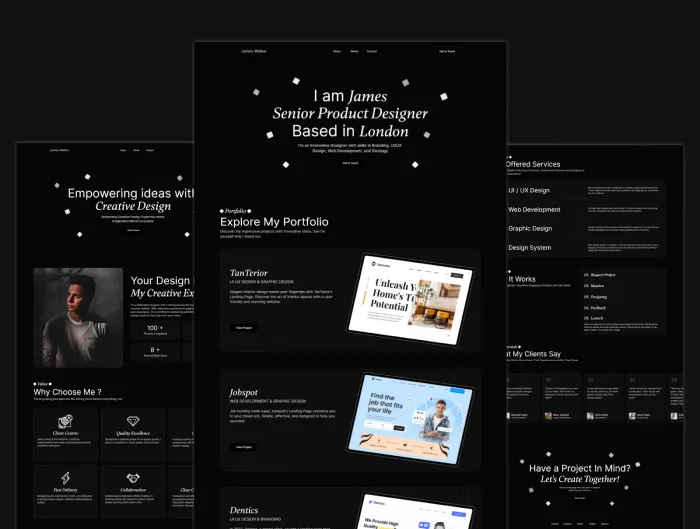
Framer’s AI wireframing turns text prompts into responsive layouts, allowing designers to focus on content rather than scaffolding. Its built-in CMS, analytics, and no-code editing make it suitable for evolving portfolios.
Recent updates introduced vector tools and A/B testing, signaling a shift toward conversion-oriented portfolios rather than static showcases.
The learning curve is real, especially for non-designers, but Framer rewards time investment with flexibility and control.
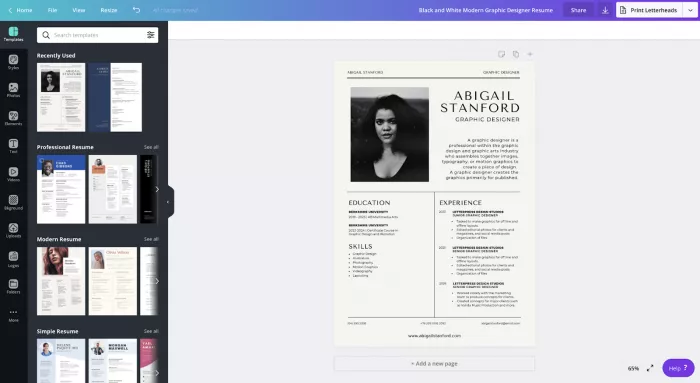
Canva’s Magic Studio excels at rapid visual assembly. With thousands of templates and assets, it lowers the barrier to entry for non-technical users.
However, its strength is also its limitation. Canva portfolios can feel templated, and visual-heavy layouts may conflict with ATS when used for hybrid resume-portfolio documents.
Canva works best for quick presentations, not nuanced storytelling.
Decktopus automates presentation-style portfolios, making it useful for pitch decks or branded case studies. It prioritizes speed over depth.
Figma Make integrates AI directly into design workflows, converting project descriptions into visual galleries. It’s effective for teams already embedded in Figma, but less suitable for standalone portfolio sites.
In practice, the strongest combinations are purpose-driven:
● ATS-focused resume + Framer portfolio for technical and design roles
● Teal resume + analytics-driven portfolio for business and data roles
● Simple resume + Canva visuals for short-term or freelance work
The goal is consistency, not duplication.
● Publishing AI output without editing
● Using visual templates that break ATS parsing
● Repeating identical phrasing across applications
● Treating portfolios as decoration instead of evidence
AI accelerates drafting—not judgment.
The Top AI Tools for Resume & Portfolio Design in 2026 are not about automation—they’re about alignment.
The best tools respect how hiring systems actually work. They support clarity, relevance, and structure, while leaving final judgment to the user. When used critically, they save time. When trusted blindly, they undermine credibility.
In 2026, AI is a drafting partner—not a decision-maker.
1. Are AI resumes flagged by recruiters?
Not automatically, but repetitive phrasing is noticeable.
2. Do ATS systems penalize AI-written content?
They evaluate structure and keywords, not authorship.
3. Can one tool handle both resumes and portfolios well?
Currently, no. Specialization matters.
4. Is paying for AI tools necessary?
Free tiers work for one-offs; professionals benefit from paid plans.
5. Are creative resumes ever ATS-safe?
Only when simplified versions are used for applications.
6. Should portfolios include analytics in 2026?
Yes, especially for freelance and product roles.
Do your emails often get ignored and end up unopened in crowded inboxe...
Homework used to take time. You had to go through books, notes, and di...
There is a very specific kind of confidence that comes from generating...
If AI could understand vibes, we wouldn’t be writing essays as prompts...

Hospitals are beginning to see measurable reductions in waiting times...

Artificial intelligence has quickly become part of everyday learning....
Discussion