

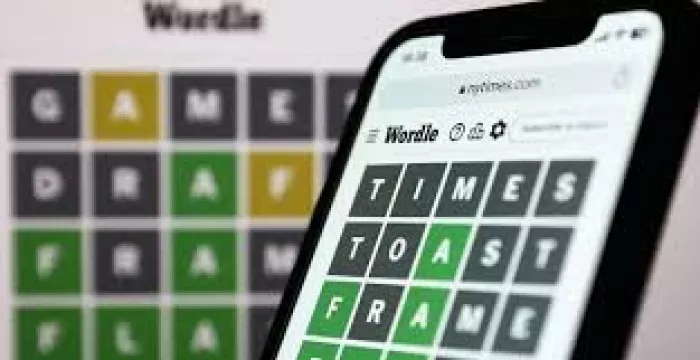
Search trends around gaming help sites tend to spike around two moments: when a popular game launches and when daily puzzle mechanics reset. Try Hard Guides consistently appears in both contexts. It is frequently surfaced for Roblox codes, puzzle answers (Wordle-style games, crosswords), and short game guides. As a result, many users encounter the site not through brand recognition, but through problem-driven searches like “daily puzzle answer” or “how to unlock item X.”

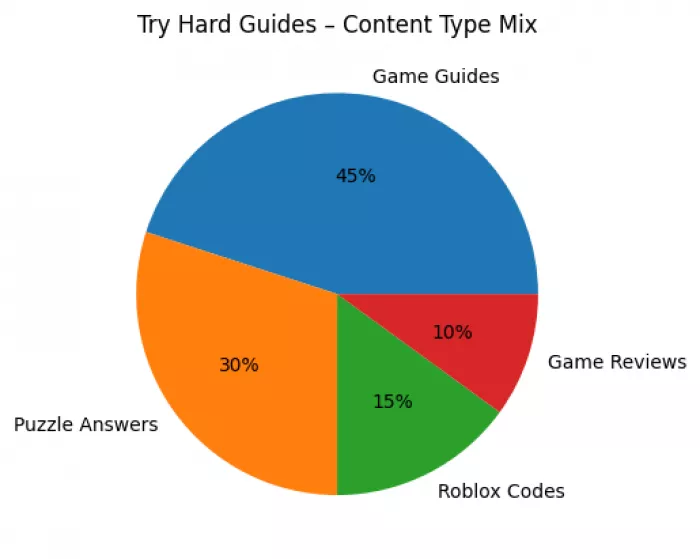
Try Hard Guides is primarily a utility-driven gaming website. Its content categories include:
● Game guides and walkthroughs
● Puzzle answers and solvers
● Roblox codes and updates
● Occasional game reviews
Unlike traditional gaming publications, its core mission is task completion, not editorial commentary. The site exists to answer specific questions quickly.
Based on long-term content patterns, Try Hard Guides is not structured as:
● An investigative gaming journalism outlet
● A long-form critique or narrative analysis platform
● A personality-driven review brand
Understanding this distinction matters when evaluating its reviews. Many negative perceptions come from comparing it to sites with entirely different editorial goals.
When Try Hard Guides publishes a game review, it generally follows a consistent structure:
● Overview of the game and platform tested
● Gameplay mechanics
● Visual and audio presentation
● Performance considerations
● Overall impressions with a numeric score
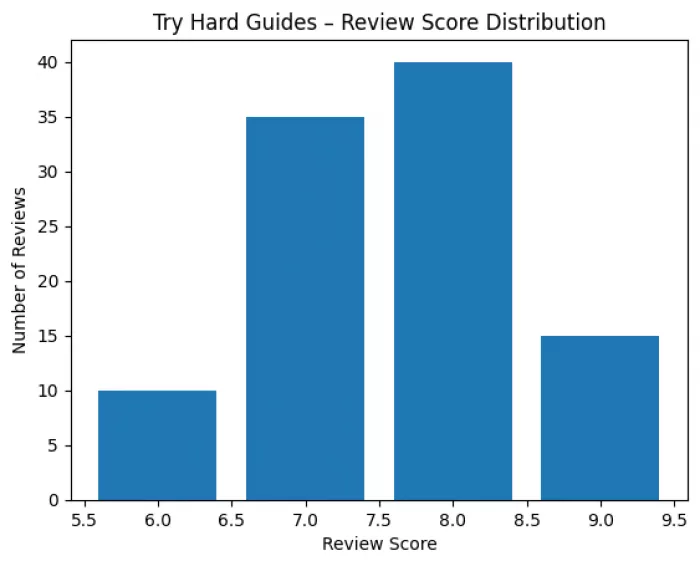
The scoring system typically uses a 1–10 scale, which aligns with common industry norms. Scores are often conservative rather than extreme, clustering in mid-to-high ranges.
In practical reading scenarios, these reviews tend to prioritize clarity over depth. They answer questions like:
● Is the game playable as advertised?
● Does it run well?
● Are there obvious technical or design issues?
They are less focused on:
● Cultural impact
● Narrative symbolism
● Industry-wide comparisons
In real-world usage, Try Hard Guides performs well when speed matters. Pages load quickly, and answers are usually placed near the top of the article.
For example:
● Daily puzzle answers are updated close to reset times
● Roblox code pages are refreshed frequently
This has made the site a habitual bookmark for users who prioritize immediacy over exploration.
One of the most consistent user-reported patterns is that Try Hard Guides favors reliable formatting over expansive explanation. This means:
● Guides are easy to scan
● Steps are rarely ambiguous
● Context is sometimes minimal
This trade-off benefits users who already understand the game mechanics but can frustrate beginners looking for foundational explanations.
For puzzle solutions and time-sensitive content, accuracy tends to be high. Errors do occur, but they are usually corrected quickly once identified.
Based on observed update patterns:
● Incorrect puzzle answers are often fixed within hours
● Expired Roblox codes are marked or removed regularly
This responsiveness contributes to a perception of operational reliability, even if editorial depth is limited.
When compared with aggregate review scores from broader platforms, Try Hard Guides’ review scores typically fall within expected ranges. This suggests that while reviews may be concise, they are not significantly misaligned with broader critical consensus.
However, the reviews should be read as practical assessments, not definitive judgments.
The site excels at answering very specific questions:
● “What is today’s answer?”
● “Where is this item?”
● “Does this mechanic work?”
This focus reduces cognitive load for users who are not looking to browse.
There is minimal opinion padding. Readers encounter fewer tangents, fewer anecdotes, and fewer attempts at emotional framing.
For users who prefer neutral language, this is often a benefit.
In categories like Roblox and daily puzzles, content freshness is a measurable advantage. Many users return specifically because older pages are not left unmaintained.
The most common critique is that reviews can feel surface-level, particularly for complex or narrative-driven games.
This is not necessarily a flaw, but it is a limitation. Readers looking for thematic or artistic analysis will likely need supplemental sources.
Some users report inconsistencies in mobile layout, particularly on pages with frequent updates or embedded tables. While generally usable, the experience is not uniformly polished across all devices.
Try Hard Guides works best when users know what they are looking for. It is less effective as a platform for discovering new games, trends, or long-form insights.
This assumption often arises due to high publishing volume. However, volume alone does not define content quality. In practice, many pages are updated, corrected, and maintained over time — which is not typical of purely disposable content operations.
There is no consistent evidence that Try Hard Guides systematically inflates scores. Scores tend to align with industry averages rather than skewing unusually high.
That said, brevity can sometimes be mistaken for bias, especially when criticism is not extensively elaborated.
● Casual gamers looking for fast answers
● Puzzle players seeking daily solutions
● Roblox players tracking active codes
● Users who prefer neutral, concise explanations
● Readers seeking long-form editorial criticism
● Players who want deep lore or narrative breakdowns
● Users who enjoy personality-driven reviews
Understanding this fit is essential to evaluating the site fairly.
Try Hard Guides is best understood as a functional gaming reference site. Its reviews are not designed to persuade or entertain, but to inform quickly and reliably.
For users who approach it with the right expectations, it serves its purpose well. For those seeking depth, narrative insight, or opinion-driven critique, it should be viewed as a supplementary source rather than a primary one.
In that context, most reviews of Try Hard Guides both formal and informal converge on a similar conclusion:
it is useful, consistent, and limited by design rather than by negligence.

Let’s start with a small truth about storytelling: writing the first s...
WhatsApp is preparing to allow third-party artificial intelligence cha...
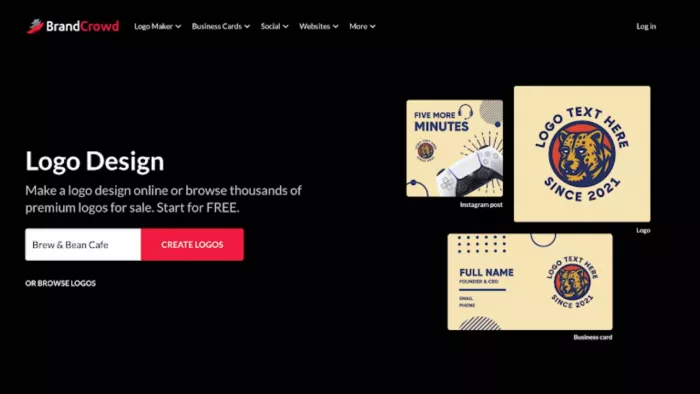
BrandCrowd built its name as a go-to logo tool for small business...

There is a specific kind of disappointment that comes from opening a b...
AI companion apps have moved well beyond novelty status. What started...
Let’s start with an uncomfortable truth. Most people want their photos...
Discussion