


HubSpot is easy to recommend and hard to leave. That is exactly why people get annoyed with it.
At the start, it looks almost unfairly generous. The free CRM is real, not a fake trial, and the Starter tier now begins around $15 per seat per month on HubSpot’s sales side and $9 to $15 per seat per month for the Starter Customer Platform promotion, depending on billing. But HubSpot’s structure is modular by design. As teams add sales, marketing, service, automation, reporting, and extra seats, the bill and the operational complexity rise together.
That does not make HubSpot a bad platform. It makes it a platform with a very specific logic: centralize everything, then let you expand hub by hub. For some teams, that becomes the perfect operating system. For others, it becomes a very polished way to pay for functions they do not fully use. The better question is not “What is the best HubSpot alternative?” It is “What part of HubSpot are you actually trying to replace?”
This article follows that logic. Instead of listing random CRM brands, it maps alternatives to the friction points that usually push companies away from HubSpot: rising cost, sales-first simplicity, marketing automation depth, ecommerce email economics, inbox and calling workflows, and enterprise CRM control. It also pulls in what review platforms and users consistently say, because star ratings matter less than the pattern inside the complaints.
Before looking elsewhere, it is worth stating what HubSpot still does unusually well. It gives small teams a real on-ramp with a free CRM, then layers sales, marketing, service, and content into one shared data model. That is the part competitors still struggle to match cleanly. Even Capterra review pages and HubSpot’s own product materials show the same appeal coming up repeatedly: user-friendly interface, strong automation, and a broad all-in-one footprint.
People usually start looking beyond HubSpot for three reasons. First, pricing expands faster than expected once more hubs, seats, or limits enter the picture. Second, some teams do not need a full customer platform and would rather buy a simpler sales tool or a deeper automation tool. Third, HubSpot’s broadness can become a form of overhead when the actual job is narrow. A two-person outbound sales team and a five-person ecommerce lifecycle team do not need the same kind of software spine.
| Tool | Best replacement angle | Starting point | Review / sentiment signal | Main tradeoff |
| Salesforce Starter Suite | For teams leaving HubSpot because they need enterprise runway | $25/user/month | Market leader, broad ecosystem | Heavier setup and governance |
| Zoho CRM | For budget-conscious teams that still want breadth | Free for 3 users | Strong value-for-money sentiment on Capterra | Interface depth can feel dense |
| Pipedrive | For sales teams that want less software and more pipeline clarity | Pricing varies by plan; Essential is the entry tier | 4.5 on Capterra, 4.2 on G2 via Pipedrive | Marketing features are not the center |
| ActiveCampaign | For email and automation teams who feel HubSpot is too expensive for lifecycle work | $15/month Starter | Strong CRM and automation reputation on G2 | CRM becomes useful only on higher tiers |
| Freshsales | For sales teams that want calling, lead scoring, and lighter CRM complexity | Starts from $9 on Freshworks pricing | 4.5-rated in Capterra listings | Less elegant for full-funnel marketing |
| Brevo | For send-volume-heavy teams who want email economics without HubSpot pricing logic | Free, then from $9/month Starter | Known for cost efficiency as email volume rises | CRM depth is lighter than HubSpot |
Salesforce is the obvious answer for companies that are not actually trying to get simpler. They are trying to get more control. HubSpot often starts to feel limiting when a business wants deeper customisation, more structured permissions, or a longer enterprise runway. Salesforce Starter Suite begins at $25 per user per month, and Pro Suite is priced much higher at $100 per user per month, which makes the product ladder clear: this is not a budget escape hatch, it is a scale play.
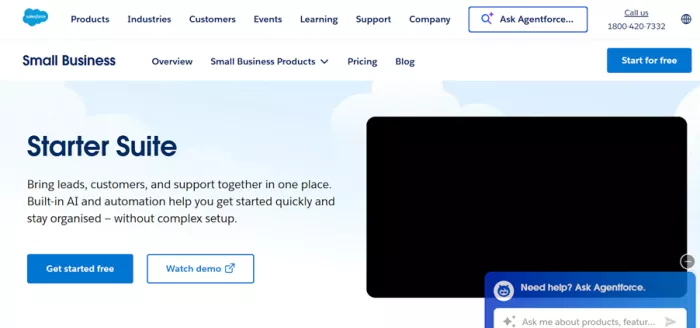
What Salesforce does better than HubSpot is not friendliness. It is architecture. Small teams can begin in Starter, but the real attraction is that the system can grow into something much more customized across sales, service, and automation. If your complaint with HubSpot is that it feels expensive, Salesforce may not solve that. If your complaint is that HubSpot feels too opinionated about how your CRM should work, Salesforce is a more serious answer.
What review platforms and users imply: Salesforce remains one of the top-rated CRM names on G2’s broader CRM category pages, largely because it is powerful and extensible. The user tradeoff is equally consistent: it is rarely the system praised for being the easiest. It is the one teams graduate into when process control starts to matter more than fast onboarding.
Zoho CRM is what people usually mean when they say they want “something like HubSpot but cheaper.” That instinct is mostly justified. Zoho still offers a free edition for up to three users, then moves into low-cost paid tiers. Search results and Zoho pricing pages show a structure that stays far below what many teams end up paying in an expanded HubSpot setup.
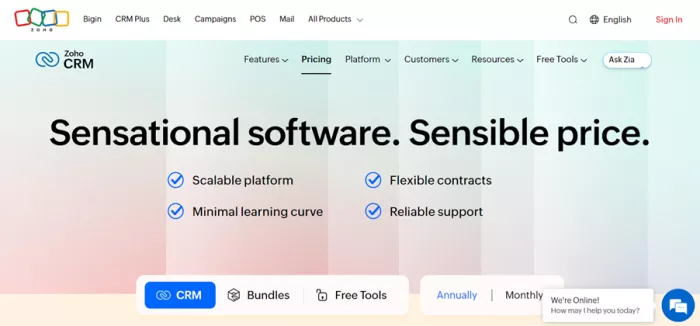
The reason Zoho is a credible HubSpot alternative is not just price. It has real CRM breadth: sales automation, workflows, reporting, email management, and a large surrounding ecosystem if you go deeper into Zoho’s product family. That makes it one of the few lower-cost platforms that still feels like a system rather than just a pipeline board.
What review platforms and users say: Capterra’s Zoho CRM review pages consistently surface a familiar theme: good value, strong sales-and-marketing coverage, and occasional complaints about support or interface friction. One verified review even frames it plainly as a “really good low priced alternative.” That is probably the most accurate short description of its role in this category.
Pipedrive is the alternative for teams that have looked at HubSpot and concluded that half the platform is not relevant. Its identity is clearer and narrower: it is a sales CRM built around pipeline visibility and activity management. That focus is exactly why so many sales teams like it. Pipedrive’s own review page lists a 4.5 Capterra rating and 4.2 G2 rating, and the praise is predictable: intuitive UX, clear deal stages, and fast onboarding.
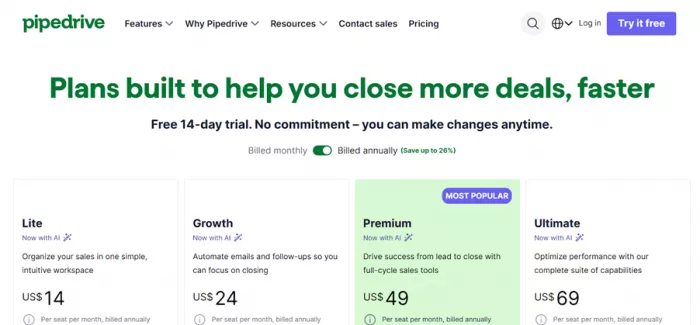
This is also where it differs from HubSpot most sharply. HubSpot tries to make sales part of a wider customer platform. Pipedrive wants sales to be the center of the room. If your team lives in deals, activities, next steps, and rep discipline, that narrower focus is an advantage. If your team wants stronger native marketing depth, content journeys, or a broad service layer, you will feel the edges quickly. Even some pricing commentary around Pipedrive notes that email marketing remains an add-on rather than the product’s heart.
What review platforms and users say: Capterra reviewers repeatedly praise the UX and pipeline clarity, while one recurring complaint is that dashboards and reporting can feel less flexible than expected. That mirrors the product’s philosophy. Pipedrive is optimized for momentum, not for becoming a full revenue-operating system by default.
If HubSpot feels too broad and too expensive for what is really an email and lifecycle marketing problem, ActiveCampaign is usually the smarter direction. Its Starter plan begins at $15 per month, with Plus at $37 to $49 depending on source context and contact assumptions, and higher tiers adding deeper automation and reporting. The important point is not the sticker price. It is that ActiveCampaign prices around contacts and automation depth rather than around a wide hub model.
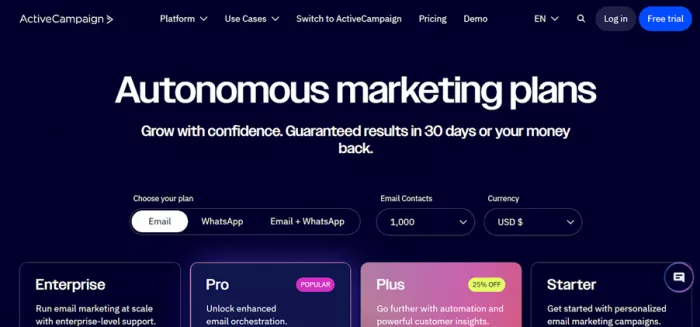
This makes ActiveCampaign especially attractive for businesses where the core growth engine is email, SMS, segmentation, and behavioral automation. It is less polished as a general CRM replacement than HubSpot, but stronger in the exact area where many HubSpot users hit cost frustration: they are paying for a broad platform while using it mainly as an automation engine.
What review platforms and users say: G2’s CRM and automation-adjacent listings keep ActiveCampaign near the top-rated set, and alternative pages regularly surface it as a strong competitor in automation-heavy buying decisions. The review pattern is straightforward: users love the automation power, but many smaller teams only unlock the “real” version of the product once they move beyond the lowest tier.
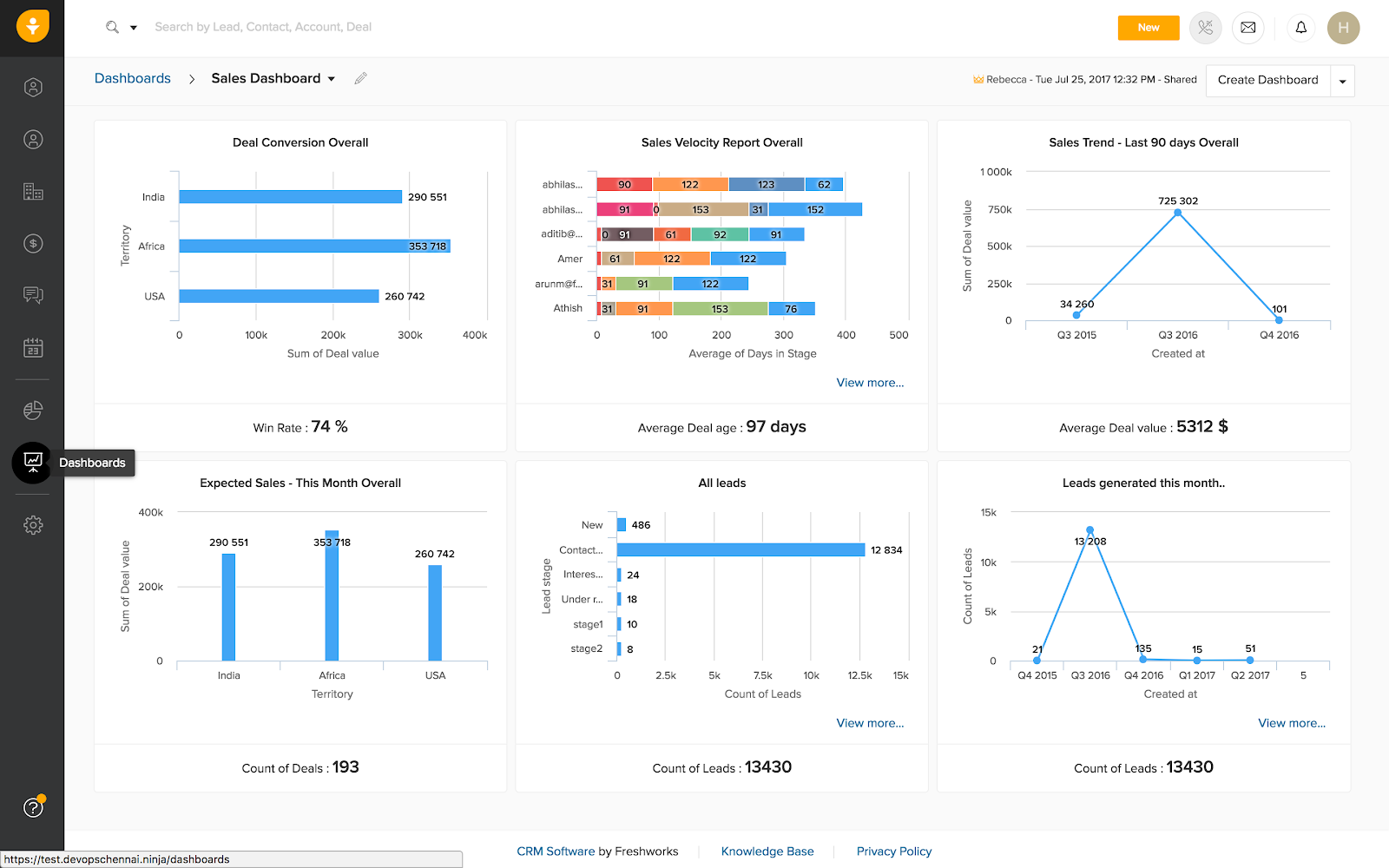
Freshsales occupies a useful middle ground. It is lighter than HubSpot, more rounded than Pipedrive in some sales workflows, and often more affordable than people expect. Freshworks’ pricing pages show a free plan and paid pricing starting from $9, while review-oriented pricing pages place entry tiers a bit higher depending on packaging and region. Either way, it starts well below the cost structure many growing HubSpot users run into.
Where Freshsales becomes compelling is sales execution. It has long been associated with built-in calling, lead scoring, pipeline management, and a cleaner balance between functionality and complexity. For teams that want to replace HubSpot’s sales workflow without buying a marketing-heavy platform, Freshsales often lands in the sweet spot.
What review platforms and users say: Capterra and review summaries around Freshsales point to a 4.5-range reputation, with praise for usability and lead tracking. The recurring caution is that once teams try to stretch it into a larger all-in-one system, it can feel rigid. That is useful context. Freshsales is strongest when you let it be a focused CRM, not when you force it to impersonate HubSpot’s full platform sprawl.
Brevo is the alternative for businesses that have realized HubSpot’s contact and hub logic is not their biggest issue. Their biggest issue is send economics. Brevo still stands out because it prices heavily around email volume rather than pure contact growth, and its own pricing materials and support docs show a free plan, Starter from $9, and Standard from $18. That can change the economics dramatically for businesses with large databases but more controlled send patterns.
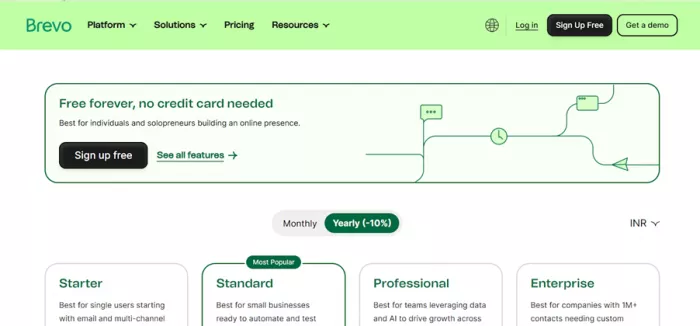
This makes Brevo a particularly strong alternative for newsletter businesses, lean ecommerce brands, and SMB marketing teams that want email, SMS, basic automation, and sales add-ons without stepping into HubSpot’s broader commercial model. What it does not do as well is replace the feeling of HubSpot as a unified CRM plus sales plus service operating system. Brevo can cover a lot of practical ground, but the center of gravity is still messaging and campaign economics.
What review platforms and users say: Third-party review and pricing analysis around Brevo keeps surfacing the same reason people switch: as contact counts rise, the pricing often remains easier to justify than more traditional marketing automation platforms. The tradeoff is obvious as well. Brevo is excellent when your main question is “How do I market affordably at volume?” It is less convincing when your question is “How do I rebuild HubSpot’s full CRM operating model?”
If you zoom out from individual products, the review-platform pattern becomes clearer than any one star rating. Review sites consistently reward usability, fast setup, and value for money. Users complain when pricing expands unpredictably, when marketing features are too shallow, or when CRM tools are too heavy for the actual job. That pattern explains why HubSpot alternatives are so fragmented. People are not replacing one product with a better one. They are replacing one broad system with a narrower system that aligns better with the real work.
| What pushes teams off HubSpot | Better-fit alternative |
| “We need enterprise CRM depth and a longer runway.” | Salesforce |
| “We need something broad but much cheaper.” | Zoho CRM |
| “We only really need sales pipeline clarity.” | Pipedrive |
| “We mainly need automation and lifecycle marketing.” | ActiveCampaign |
| “We want lighter sales CRM with calling and lead tools.” | Freshsales |
| “We need email economics that do not punish contact growth.” | Brevo |
The best alternative to HubSpot depends on what you think HubSpot is supposed to be.
If you see it as a CRM backbone with long enterprise legs, Salesforce is the more natural migration. If you see it as a too-expensive all-rounder, Zoho is usually the sharper budget answer. If you are tired of paying for platform breadth when all you really need is sales discipline, Pipedrive or Freshsales make more sense. If HubSpot is mostly functioning as your automation and email layer, ActiveCampaign or Brevo usually create a cleaner cost-to-value story.
That is the real conclusion. There is no universal “best alternative to HubSpot.” There is only the platform that best replaces the part of HubSpot you actually use, and just as importantly, the part you are tired of paying for.

Marketing teams often need images before a product is ready for a phot...

Creating a logo that will grab customers' attention is one of the main...

Enterprise software has a well-known failure mode. The demo goes great...

Most people who produce video at any real scale hit the same wall even...

A cinematic AI video needs more than realistic skin, dramatic lighting...

Have you noticed how difficult it is not to watch spoilers of a sporti...
Discussion