

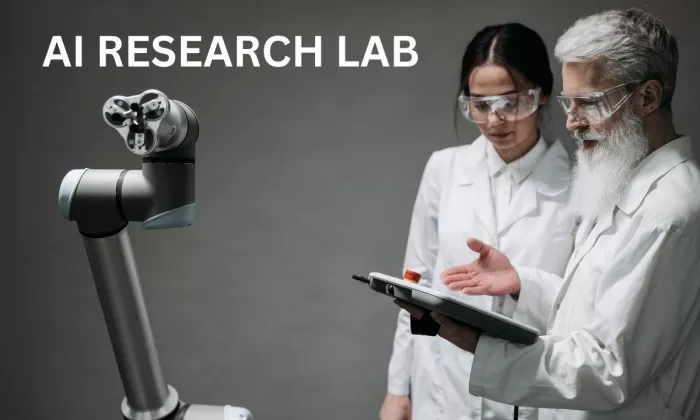
Airbnb Chief Executive Brian Chesky is planning to launch a new artificial intelligence lab, marking his most direct foray into the AI race beyond adopting external models and tools. The move, first reported by Bloomberg and confirmed by multiple tech outlets, comes at a moment when competition among AI startups and corporate labs for talent, innovation, and next‑generation interfaces is intensifying.
Sources familiar with the situation say Chesky who will remain CEO of Airbnb is in the early stages of funding and shaping the new lab, which will operate as a separate venture rather than as a division inside Airbnb itself. While strategic details remain fluid, discussions suggest the lab may focus on user interaction, design and AI models tailored for next‑generation experiences, potentially spanning beyond the travel industry to broader consumer and digital interface challenges.
Airbnb, like many technology companies, has integrated AI in areas such as customer service, search and recommendation systems, but Chesky’s reported plan represents a shift toward building foundational AI technologies rather than relying solely on external providers. Last year, Chesky noted that Airbnb had not yet struck a partnership with a major large language model provider because existing products weren’t fully aligned with the company’s needs. His own AI lab could signal a bet that custom research will be more effective for long‑term product innovation.
Industry analysts say the move places Chesky among a growing group of consumer tech founders who believe future competitive advantage will come not just from applying AI but from shaping it at a fundamental level. Unlike hiring AI tools or integrating off‑the‑shelf models, the new lab could allow experimentation with novel interfaces and human‑centric AI behaviors that reflect Chesky’s longstanding emphasis on design and experience.
People familiar with the development note that the lab’s funding and structure are still being defined, and Chesky is not expected to serve as its direct head. Instead, he would act as a backing founder while recruiting leaders and researchers with deep expertise in machine learning, human‑computer interaction and product design. This approach mirrors how some tech leaders incubate independent AI research ventures to pursue ambitious goals without immediate commercial pressure.
The lab comes at a time when AI investment is booming: startups, big tech labs, and academic institutions are all racing to build larger, more capable models and more intuitive interaction paradigms that go beyond text generation. By positioning a dedicated research organization outside Airbnb’s operational constraints, Chesky may be looking to compete in this evolving landscape while insulating his core travel business from short‑term AI execution risks.
This move adds Chesky’s name to a crowded field of tech leaders venturing into AI research. Companies like OpenAI, Anthropic, Google DeepMind and Meta have made substantial investments in both large models and agent‑based frameworks, while venture investors continue to fund ambitious independent labs. Chesky’s reported focus on interaction and design may set his lab apart, as many current efforts emphasize raw model scale or multimodal processing rather than refined user experience and human‑AI synergy.
Although the new AI lab will be a separate entity, its technologies could eventually influence Airbnb’s core products, from personalized travel recommendations and automated planning to more intuitive search and host‑guest interactions. It may also serve as a talent magnet, drawing researchers who are interested in fundamental questions about how AI should understand and interact with humans in real‑world settings.
As the lab takes shape, the broader AI ecosystem will be watching to see whether Chesky’s vision, one rooted in experience, design and next‑generation interface thinking, can carve out a distinct space in a competitive field dominated by massive cloud‑scale models and compute‑intensive labs.

Marketing teams often need images before a product is ready for a phot...
Creating a logo that will grab customers' attention is one of the main...

Enterprise software has a well-known failure mode. The demo goes great...
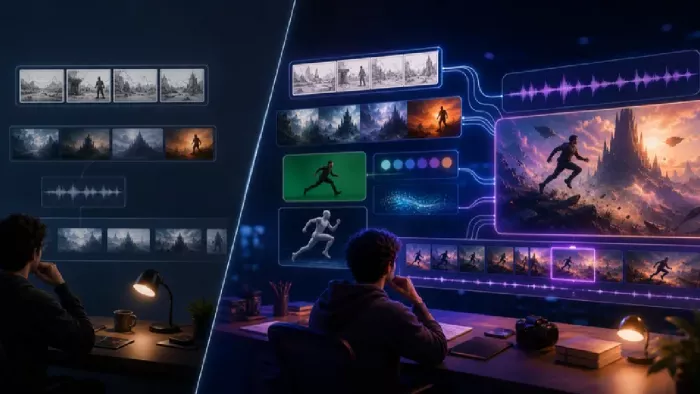
Most people who produce video at any real scale hit the same wall even...

A cinematic AI video needs more than realistic skin, dramatic lighting...

Have you noticed how difficult it is not to watch spoilers of a sporti...
Discussion