

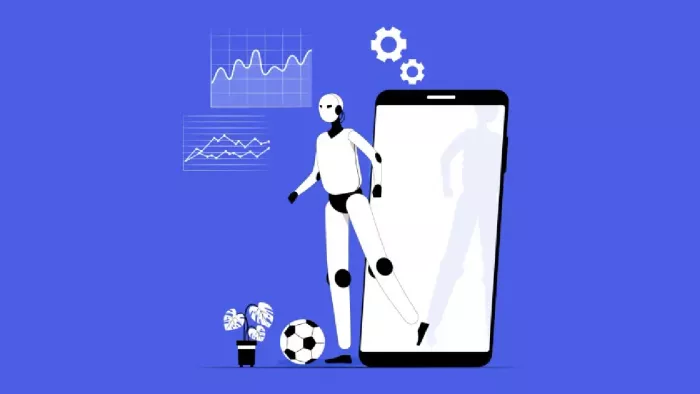
Have you noticed how difficult it is not to watch spoilers of a sporting event on social media? Even when the race or the match is still live, there are thousands of videos flooding social media, and it seems like the algorithm already knows that you want to watch that game and keeps them in your feed.
That’s not magic. That’s the new sports content machine.
Back in the day, sports used to move a lot slower and in a simple order. The game happened, and reporters wrote about it. Editors cut highlights, and broadcasters packaged the best moments.
Nowadays, it seems like content creation around a sporting event happens live, and AI is a big reason why. Not because robots suddenly understand sport better than fans, but they can produce content at a much faster rate than manually watching, clipping, and sharing the moments.
As it turns out, AI is very good at speed, tagging, clipping, making captions, finding viral moments, and repackaging. Let’s take a look at how AI is really transforming sports creation.
The biggest change in content creation is scale. A single game is no longer one broadcast and one recap. AI makes it a content factory.
Before AI, people had to manually find content from a match or a horse race, buy rights to use that content, find the best moments, and share them online. That took time. In fact, too much time.
Nowadays, things are different, especially with the entire clipping industry on the rise. There is the full broadcast; then there are highlights, usually posted by official broadcasters. But in the meantime, fans are not sitting with their hands crossed. They are already clipping the best moments, putting the content into AI automation systems that produce thousands of different pieces that are flooding social media as the match is live.
Then the fantasy update. Then the betting angle. Then the “did you see this?” moment is designed for people who did not even watch the game. Nowadays, people want to consume more content tied to a certain event. If it is a horse racing game, they want expert analysis, the best slow-mo moments, behind-the-scenes content, and even expert analysis on odds in horse racing.
In other words, AI is the best solution to keep up with all this demand.
Automated highlights are one of the clearest uses of AI in sports media.
The idea is simple. Instead of waiting for a producer to search through a full match manually, AI can help detect the moments most likely to matter scoring plays, near misses, big saves, crashes, submissions, knockdowns, celebrations, controversial calls, and dramatic crowd noise.
This does not mean every AI highlight is automatically good.
Sometimes a technically important moment is not emotionally interesting. Sometimes the best clip is not the goal, but the pass before the goal. Sometimes the real story is a player’s reaction, a coach’s face, or a fan losing all control of their body in row six.
AI can drastically reduce the time it takes to find the raw material. Then human editors can shape it into something fans actually want to watch.
Sports content creation has changed because platforms have changed.
A traditional television highlight package was built for viewers sitting down after the game. Short-form social content is built for someone standing in line, pretending to listen in a meeting, or scrolling at midnight when they absolutely should be sleeping.
Different audience. Different format.
That means sports organizations need clips in multiple shapes, lengths, and tones. The same moment may need a 16:9 broadcast clip, a vertical TikTok edit, a square Instagram post, a captioned version for silent viewing, a player-focused version, and a version with extra context for casual fans.
Doing all of that manually is slow. On top of that, AI is not really good at creating long-form content, yet. First, it faces the issue of finding the content, then the rights, and the entire production behind long-form content is much more difficult.
But AI can definitely help you automate the entire content creation workflow. It can help resize, caption, identify moments, recommend thumbnails, generate metadata, suggest titles, and create variations for different platforms. That does not make the content automatically good, but it makes the production process much more efficient.
Sports content used to rely mostly on what people saw and what players said after the game.
Now, data is part of the story from the beginning. This data allowed micro narratives to be born, and according to studies, they are driving social media engagement.
Tracking data, player movement, shot quality, expected goals, speed, distance covered, workload, lineup combinations, serve reaction time, win probability, and hundreds of other metrics can all be turned into content.
This creates better storytelling when used properly.
This is the part people get wrong.
AI does not remove the need for human creativity in sports content. It changes where human creativity matters most.
Instead of spending hours finding the clip, an editor can spend more time shaping the story. Instead of manually writing 20 basic recaps, a writer can focus on analysis, voice, interviews, and angles that AI cannot properly understand. Instead of guessing which platform wants what format, a social team can test more versions and learn faster.
As you can see, the slow and boring work got automated, but this didn’t remove the human factor. In fact, judgement now becomes more valuable. You still need to give the AI the right prompt and structure to operate smoothly.

Creating a logo that will grab customers' attention is one of the main...

Enterprise software has a well-known failure mode. The demo goes great...
Most people who produce video at any real scale hit the same wall even...
A cinematic AI video needs more than realistic skin, dramatic lighting...

Most investors building around AI stocks are chasing growth, and that...

Artificial intelligence is changing how we use video. It used to be a...
Discussion