

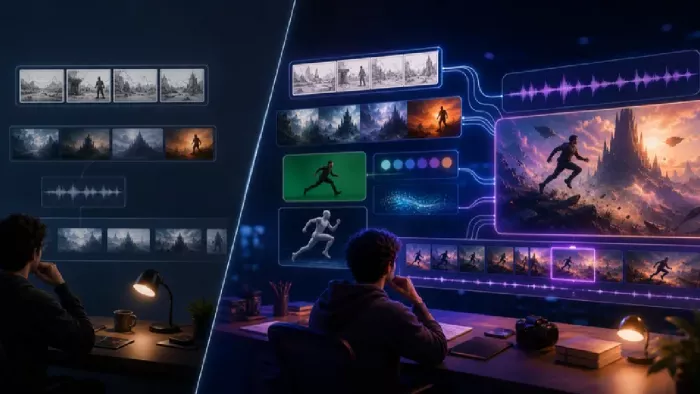
Most people who produce video at any real scale hit the same wall eventually. The ideas are there. The strategy is clear. What runs out is time, and more specifically, the hours it takes to turn a concept into something watchable. That's the problem AI video generation is actually built around, and it's worth looking at what tools like the Seedance 2.5 video generator are doing differently.
Demand for video has grown faster than most teams' capacity to produce it. Brands are expected to publish across social platforms, run paid campaigns, maintain a presence on YouTube, and still have content left over for email and their own website. Educators are building course libraries. Agencies are managing five clients at once, each with their own publishing calendar.
Traditional production methods haven't changed that much. You still need a script, a shoot or animation pass, an edit, and several rounds of revision before anything goes live. That process takes time even when everyone involved is experienced. AI-assisted workflows are trying to compress the early stages of that process without breaking the quality of what comes out the other end.
The most recent version focused less on adding new capabilities and more on making existing ones reliable. That's a meaningful shift. Early AI video tools were exciting in controlled conditions and inconsistent in practice. Scene continuity broke down. Prompts produced unexpected results. Running the same generation twice gave you different output with no clear reason why.
The Seedance 2.5 video generator addresses this by improving prompt interpretation, so what you type has a more predictable connection to what renders. Scene consistency across a generated sequence is noticeably better, which matters if you're producing anything with a through-line rather than a standalone clip. Faster generation times also reduce the cost of experimentation, because testing a different angle on a concept no longer means waiting long enough to lose momentum.
For teams under deadline pressure, that reliability is the actual selling point. A tool you can count on to produce a usable draft is more valuable than one with impressive ceiling output that varies wildly.
Marketing teams are the most active users of AI video generation right now, and for straightforward reasons. Running campaigns across multiple channels requires a steady supply of video assets. A product launch might need a 15-second cut for paid social, a longer version for YouTube pre-roll, and a clean loop for a landing page hero. Producing three separate edits from scratch for every campaign is unsustainable at volume. AI generation lets teams produce initial versions of each format faster, then spend editing time on refinement rather than starting from zero.
Social media creators face the same math. Posting consistently means the pipeline never fully stops. Anything that reduces the time between concept and rough draft changes how many ideas a creator can actually test in a week.
Corporate training and internal communications teams are another practical fit. Onboarding videos, process explainers, and compliance training clips don't need cinematic production. They need to be clear and fast to produce, and AI generation handles that category well without requiring a specialist.
There's a persistent assumption that AI video tools are trying to replace editors and directors. That's not how most production teams use them. The more common workflow is generative, not replacement. You use the tool to produce a rough draft, then a human decides what's working, what needs changing, and what the audience actually needs to see.
AI-generated content serves as a starting point. The creative judgment about pacing, tone, message priority, and audience fit remains a human call. What changes is how long it takes to get to the point where those decisions can be made. Producing three rough versions of a concept to choose between is far more useful than trying to decide between three concepts that only exist as text descriptions.
That's the real workflow shift the Seedance 2.5 video generator enables. Not replacing the creative process, but moving the starting line closer to the decisions that actually matter.
The current capabilities in AI video generation are not the finished version. Prompt handling, motion quality, and editing flexibility are all still improving at a visible pace. Teams getting familiar with how these tools fit into production now will be better positioned when the next round of improvements arrives, because the integration question gets harder to answer the longer you wait.
The practical outcome for organizations producing video at scale is faster testing, more content variations, and less time spent on mechanical production tasks. That's a real efficiency gain, and it's already available in tools like the Seedance 2.5 video generator for teams willing to build it into how they work.

Marketing teams often need images before a product is ready for a phot...
Creating a logo that will grab customers' attention is one of the main...

Enterprise software has a well-known failure mode. The demo goes great...
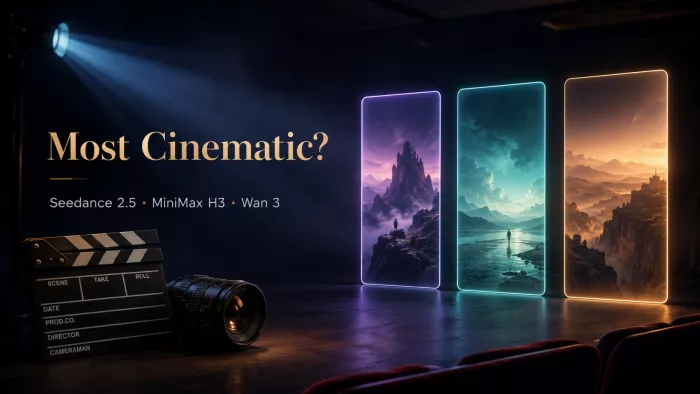
A cinematic AI video needs more than realistic skin, dramatic lighting...
Have you noticed how difficult it is not to watch spoilers of a sporti...

Most investors building around AI stocks are chasing growth, and that...
Discussion