

So you want to make AI videos. Maybe a talking-head explainer for your course. Maybe personalized sales pitches at scale. Maybe just a quick LinkedIn post where a digital "you" says something clever.
You've narrowed it down to two names: Vidnoz and HeyGen.
And now you're staring at two pricing pages, two demo reels, and a thousand "best AI video tool of 2026" articles that all sound suspiciously like ads.
I've used both. Paid for both. Made real videos with both, for clients, for my own projects, for testing. Here's the honest, no-fluff breakdown of where each one wins, where each one falls flat, and which one I'd actually recommend depending on what you're trying to do.
Let's get into it.
If you're in a hurry, here's the short version:
HeyGen is the polished, premium option. Better avatars, better lip-sync, faster rendering, deeper enterprise features. You'll pay for it.
Vidnoz is the budget-friendly workhorse. Decent avatars, more free stuff, more bonus tools, lower monthly cost. You'll edit a bit more.
Still here? Good, the details actually matter. Let's break it down round by round.
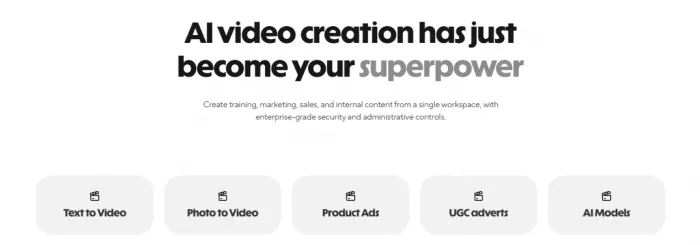
HeyGen is a US-based AI video platform that exploded into the mainstream in 2023 and has become the default name people drop when they say "AI video." It's used by over 15 million people globally and powers video for around 100,000+ business teams, including a sizable chunk of the Fortune 500.
Its claim to fame is Avatar IV, a hyper-realistic avatar engine that handles micro-expressions, subtle gestures, and lip-sync at a level that genuinely tricks people into thinking they're watching a real human. It also does AI dubbing across 175+ languages, talking photos, and interactive avatars you can have actual conversations with.
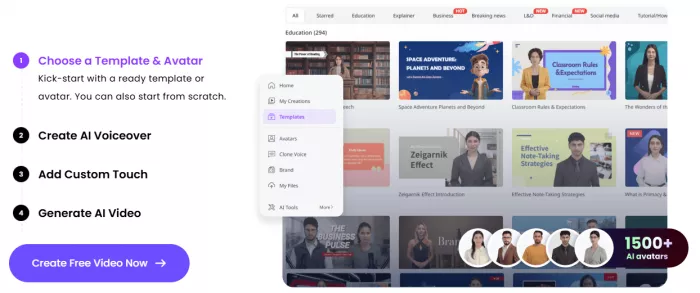
Vidnoz is a younger, scrappier alternative built by the team behind iMyFone. It positions itself as "AI video for everyone", meaning you don't need to be a marketing department with a budget to use it.
It boasts 1,900+ stock avatars (more than HeyGen on paper), supports text-to-speech in 140+ languages, and bundles a bunch of bonus tools you don't get with HeyGen: face swap, AI headshot generator, cartoon generator, and an AI script writer. Plus, the free plan is genuinely usable, 3 minutes of free video per day, with no credit card required.
This is the round that matters most. If your avatar looks like a glitchy puppet, nothing else saves you.
The Avatar IV technology is, frankly, the closest thing to "uncanny valley with a passport stamped 'crossed.'" The micro-expressions are subtle. The lip-sync is tight. The body language during pauses doesn't break the illusion. When I show HeyGen Avatar IV clips to people who don't follow this space, the typical reaction is "wait, that's AI?"
Vidnoz avatars are good, emphasis on good, not great. Lip-sync is mostly accurate but occasionally gets sloppy on fast-paced or technical scripts. Expressions feel a bit stiff, and longer videos start to reveal the loop in the idle animations.
It's not even close, and Vidnoz doesn't pretend otherwise.
Now for the round Vidnoz dominates.
| Plan | Vidnoz | HeyGen |
| Free | 3 min/day, watermarked, 720p, capped at 3 min/video | 3 videos/month, watermarked, 720p, 1 credit |
| Entry paid | Starter ~$19.99/mo (annual) , ~15 min of video | Creator $24/mo (annual), unlimited basic videos + 200 premium credits (≈ 10 min of Avatar IV) |
| Mid tier | Business ~$56.99/mo, 30 min/mo, team features | Pro $79/mo (annual), 2,000 credits |
| Higher tier | Enterprise (custom) | Business $149/mo + $20/extra seat, 4K, SSO, custom avatars |
A few things worth flagging:
Vidnoz's free plan is genuinely the most generous in this category. Three minutes a day stacks up to roughly 90 minutes a month. That's not a trial, that's a usable workflow if your needs are modest.
HeyGen's "unlimited videos" sounds great until you read the asterisk. Standard avatars don't burn credits. But Avatar IV, the feature you actually want, costs 20 credits per minute. That means the Creator plan's 200 credits cover only about 10 minutes of premium video per month. Going over? You buy 300 more credits for $15.
Annual vs monthly matters. Both platforms push annual billing hard, with discounts of roughly 17–25% over monthly rates. If you're committing, go annual. If you're testing, monthly is worth the extra few dollars.
For raw cost and free-tier value, Vidnoz wins clearly. HeyGen is more expensive, and the credit system makes the real cost less predictable than the headline price suggests.
175+ languages with native-sounding voices and surprisingly good emotion control. The video translation feature, where it dubs your existing video into another language with matching lip-sync, is genuinely impressive. I've used it for Spanish and Hindi versions of marketing content and the result was way better than I expected.
140+ languages, also with multiple voice options per language, accents, and adjustable speed/emotion. The base text-to-speech quality is solid for most use cases. Where it falls short is the more nuanced language pairs, the lip-sync after translation isn't quite as tight as HeyGen's.
Both cover what most people need. HeyGen edges ahead on translation quality and the breadth of languages, but Vidnoz holds its own for everyday use.
300+ professionally designed templates, an interactive avatar feature (think AI Zoom calls), CRM-connected personalized video at scale, and a clean, focused tool suite. HeyGen's philosophy: do video well, don't get distracted.
Massive template library plus a bunch of side tools that HeyGen doesn't bother with, face swap, AI headshot generator, cartoon generator, AI script writer, free image and video processing utilities. Vidnoz's philosophy: be a Swiss Army knife.
Genuinely depends on what you want. If you only need video, HeyGen feels less cluttered. If you want a creative toolkit beyond avatars, Vidnoz gives you more for the money.
A 2-minute video typically renders in 1–2 minutes. Servers feel responsive even at peak times. Priority processing is available as an add-on if you need it faster.
The same 2-minute video takes around 5 minutes to render in my testing, sometimes longer during peak hours. Not a dealbreaker if you're batching, but if you're iterating on edits, the wait adds up.
Faster, more consistent. Worth noting if you're producing under tight deadlines.
Clean, modern, focused. The layout assumes you know what you want to do, then helps you do it without 14 sidebar menus. There's a learning curve to advanced features (custom avatars, interactive setup, API), but the basics are accessible within minutes.
Functional but busier. More tools means more menu items, and the UI can feel cluttered if you're new to AI video. On the upside, the daily free credits make it easy to learn by doing without burning paid time.
Vidnoz is fine. HeyGen is slicker.
This isn't really a "round", it's where I tell you which tool to actually pick based on your situation.
Let's not pretend either one is flawless.
HeyGen's pain points:
Vidnoz's pain points:
A risk that applies to both: AI avatar video is increasingly recognized, and sometimes flagged, by audiences. If your goal is authenticity, an AI avatar may work against you for certain audiences (especially in coaching, personal brand, or trust-heavy categories). Use them where the production value is the point, not where the human connection is.
After several weeks of side-by-side use, here's how I'd score each platform across the categories that matter:
| Category | Vidnoz | HeyGen |
| Avatar realism | 3.5 / 5 | 4.8 / 5 |
| Pricing & value | 4.7 / 5 | 3.5 / 5 |
| Free plan generosity | 4.8 / 5 | 3.0 / 5 |
| Language & voice quality | 4.0 / 5 | 4.6 / 5 |
| Template & tool variety | 4.3 / 5 | 4.2 / 5 |
| Rendering speed | 3.3 / 5 | 4.5 / 5 |
| Ease of use | 3.8 / 5 | 4.5 / 5 |
| Enterprise readiness | 3.0 / 5 | 4.7 / 5 |
| Customer support | 3.5 / 5 | 4.3 / 5 |
| Overall | 3.9 / 5 | 4.3 / 5 |
HeyGen wins on overall quality. Vidnoz wins on value. That's not a cop-out, it's the actual answer.
If money were no object, I'd pick HeyGen and stop thinking about it. The avatar quality, the rendering speed, the API maturity, and the polish of the platform genuinely justify the price tag, if you're producing video that represents your brand to clients or customers.
But money is almost always an object. And here's the thing most reviews miss: the gap between Vidnoz's output and HeyGen's output is not as large as the gap between their prices.
For most creators, freelancers, small business owners, and content marketers I know, Vidnoz produces work that is 80–85% as good as HeyGen for roughly 40% of the cost. That math is hard to ignore.
So my actual recommendation, if you want me to commit:
Earning under ~$5K/month from your content or business? Start with Vidnoz. The free plan alone will tell you whether AI avatar video fits your workflow.
Producing client-facing video professionally? Pay for HeyGen. The quality difference is visible to your audience and shows up in conversion data.
Running a team of 3+ producing video at scale? HeyGen's collaboration and API features are worth the premium.
Just curious and experimenting? Use Vidnoz's free daily credits and HeyGen's free 3-video tier in parallel for a week. You'll know within seven days which one fits your hand better.
Neither tool is "the best AI video platform." They're solving the same problem at different price points for different buyers, and the right answer depends almost entirely on what you're going to do with the output.
If you remember nothing else: try the free plans before you pay. Spend an hour with each one this week. Make the same 60-second video on both. Watch them back. Trust your eyes more than any review, including this one.
That's the honest answer.

Marketing teams often need images before a product is ready for a phot...
Creating a logo that will grab customers' attention is one of the main...

Enterprise software has a well-known failure mode. The demo goes great...
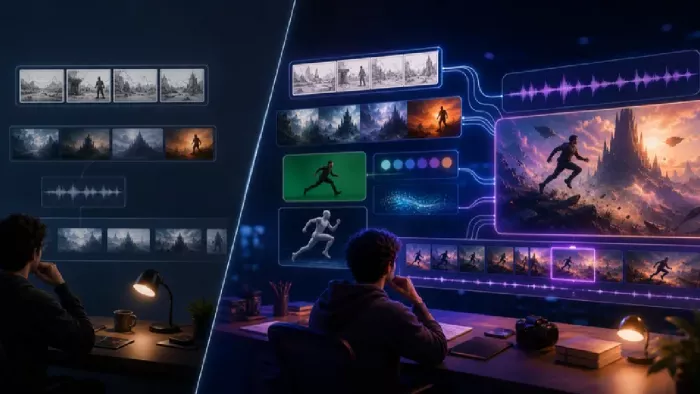
Most people who produce video at any real scale hit the same wall even...
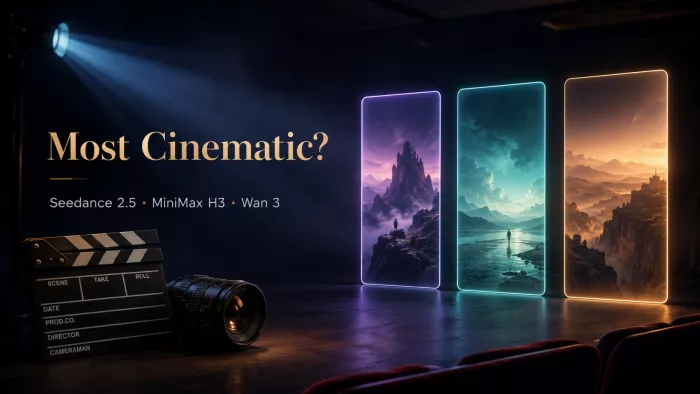
A cinematic AI video needs more than realistic skin, dramatic lighting...

Have you noticed how difficult it is not to watch spoilers of a sporti...
Discussion