


Instead of breaking tools into isolated categories, it is more useful to understand where each one fits in real workflows and where it starts to struggle.
If you are building a structured marketing system with CRM alignment, HubSpot Marketing Hub often comes up first. It combines CRM, email automation, landing pages, and analytics into one ecosystem. Pricing typically starts around $45 per month but scales quickly into higher tiers. Ratings are around 4.4 to 4.5 on platforms like G2.
It works best for businesses that want everything in one place. The challenge is cost. As your contact list grows and you unlock advanced features, pricing increases significantly. For smaller teams, it often feels heavier than necessary.
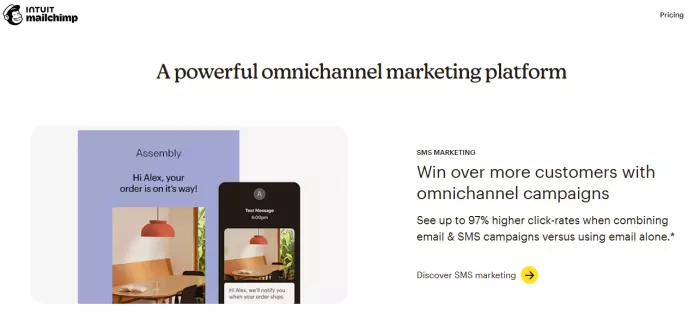
A more flexible and cost-efficient alternative is ActiveCampaign. Pricing usually ranges from $19 to $145 per month depending on features and contacts. It holds strong ratings around 4.5 to 4.6 on G2.
ActiveCampaign stands out for its automation depth. You can build complex workflows based on user behavior, scoring, and conditions. It is powerful for email-driven funnels and lifecycle marketing. The trade-off is complexity. It takes time to set up properly, and beginners often underutilize it.
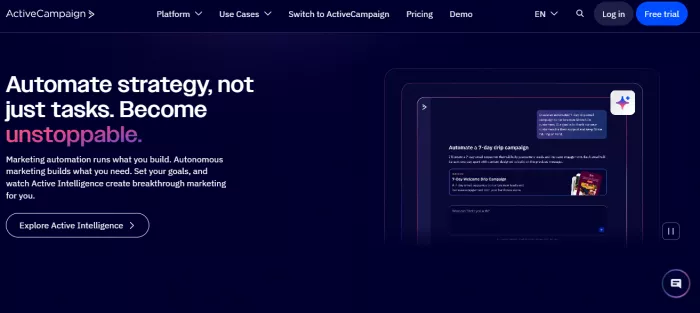
For simpler email-first workflows, Mailchimp still remains widely used. Pricing starts around $20 per month, with ratings around 4.3 to 4.5 across review platforms.
Mailchimp is easy to use and integrates well with many platforms. It works well for newsletters and basic automation. The limitation appears when you try to scale personalization or build complex journeys. It starts to feel restrictive.
Brevo offers an interesting middle ground. Pricing begins around $25 per month and is often based on email volume rather than contacts. Ratings are typically around 4.5 on G2.
It supports email, SMS, and basic automation in a single platform. This makes it useful for businesses that want multi-channel communication without high costs. However, its automation capabilities are not as deep as ActiveCampaign, which becomes noticeable as workflows grow.
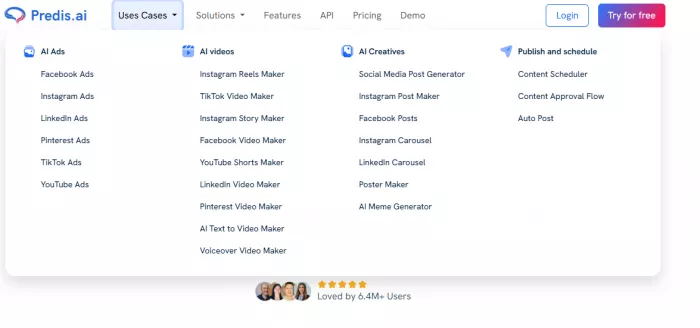
When content and social automation become part of the workflow, tools like Predis.ai start to matter. It has pricing between $15 and $60 per month and ratings around 4.8 across platforms.
Predis.ai focuses on generating content, captions, and ad creatives alongside scheduling. It is not a full marketing automation platform, but it complements campaigns by reducing content creation effort. The limitation is that it does not replace CRM-driven automation systems.
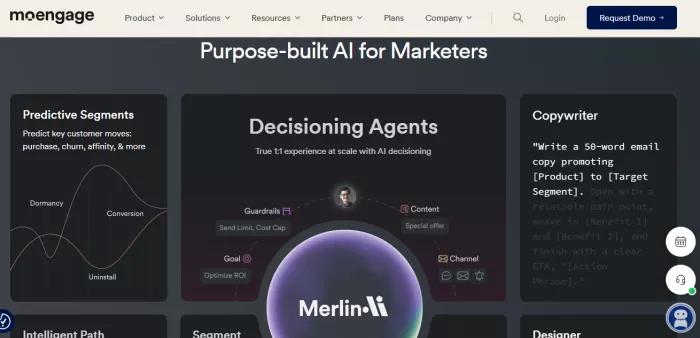
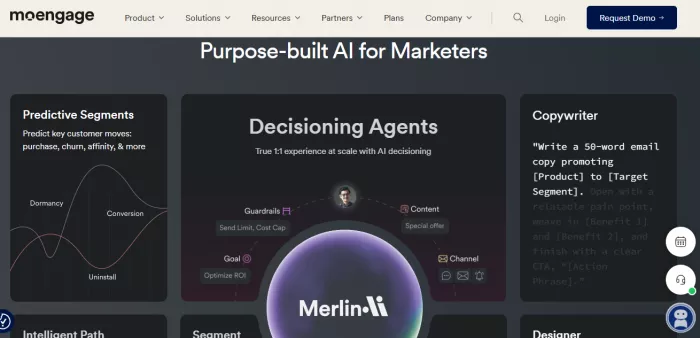
For product-led businesses and apps, MoEngage and WebEngage operate in a different layer. They focus on user engagement across email, push notifications, SMS, and in-app messaging.
MoEngage pricing varies based on usage, typically starting in the mid-tier range, with ratings around 4.5. It works well for lifecycle automation, especially for mobile apps and SaaS products. The complexity can be high, and setup requires careful planning.
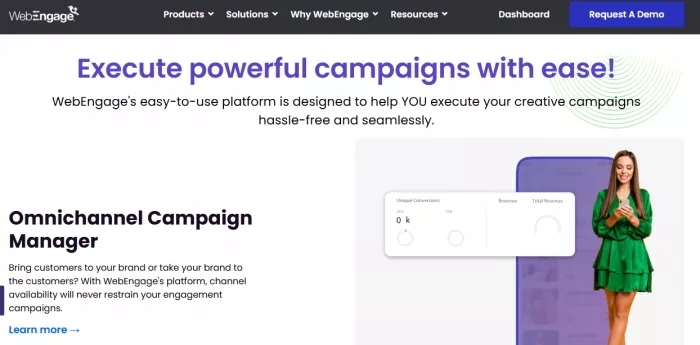
WebEngage follows a similar model, with strong ratings around 4.6. It is particularly effective for behavior-driven campaigns and retention strategies. The downside is that it requires a structured data setup to deliver value. Without proper tracking, it becomes difficult to use effectively.
| Tool | Best For | Pricing Range | Rating | Key Limitation |
| HubSpot Marketing Hub | All-in-one marketing + CRM | $45+/month | ~4.5 (G2) | Expensive as you scale |
| ActiveCampaign | Advanced automation workflows | $19 to $145/month | ~4.6 (G2) | Complex setup |
| Mailchimp | Email marketing + basic automation | $20+/month | ~4.4 (G2) | Limited automation depth |
| Brevo | Multi-channel on budget | $25+/month | ~4.5 (G2) | Less advanced workflows |
| Predis.ai | Content + ad automation | $15 to $60/month | ~4.8 | Not a full automation system |
| MoEngage | App and lifecycle automation | Custom mid-tier | ~4.5 | Requires strong data setup |
| WebEngage | Retention and engagement flows | Custom mid-tier | ~4.6 | Learning curve |
Choosing the right tool depends largely on how mature your marketing system already is.
For teams at an early stage, Mailchimp or Brevo provides a practical starting point. Both platforms offer enough automation capability to build basic workflows without adding unnecessary complexity or cost pressure.
As marketing becomes more structured and performance-driven, ActiveCampaign starts to make more sense. It offers deeper control over workflows and segmentation, making it suitable for building funnels that actually respond to user behavior rather than just sending scheduled campaigns.
Content-heavy strategies require a different approach. Predis.ai fits well here by supporting content creation and distribution alongside campaigns. It does not replace a full automation system, but it reduces the workload around creatives and social execution.
At the scaling stage, requirements change significantly. Tools like HubSpot, MoEngage, and WebEngage become more relevant because they support multi-channel journeys, deeper data tracking, and CRM alignment. That said, these platforms only deliver value when there is enough structure and volume to justify their complexity.
Another pattern worth noting is the rise of tools that promise instant automation with minimal setup. In most cases, these lead to generic messaging and poor engagement. Without proper strategy and segmentation, automation tends to amplify inefficiencies rather than fix them.
The decision ultimately comes down to fit. A tool that aligns with your workflow and helps you execute faster will outperform one that simply offers more features on paper.
Marketing automation starts working when it supports decision-making, not when it replaces it.

Marketing teams often need images before a product is ready for a phot...

Creating a logo that will grab customers' attention is one of the main...

Enterprise software has a well-known failure mode. The demo goes great...

Most people who produce video at any real scale hit the same wall even...

A cinematic AI video needs more than realistic skin, dramatic lighting...

Have you noticed how difficult it is not to watch spoilers of a sporti...
Discussion