


Committing to a six-month product cycle forces hard decisions about resources. Edtech platforms need hundreds of visual assets for course modules, student dashboards, landing pages, and email campaigns. Hiring a freelance illustrator involves writing detailed briefs, waiting for initial sketches, and managing endless feedback loops. You just pray final files arrive before your developers need them.
Shipping fast means you can't wait two weeks for an empty state graphic. Startups often pivot to pre-made illustration libraries instead. Our product team spent the last several weeks testing Ouch by Icons8. We wanted to see if an off-the-shelf library could actually replace a dedicated freelance contract for our platform's visual identity.
Wednesday night before a major sprint review. Product manager Darius reviews a new interactive math module. He spots a blank error screen for network failures. It looks completely broken.
Relying on a freelancer means submitting a request and waiting days for a response. Missing the sprint review isn't an option. Instead, Darius opens Ouch. Filtering by our brand's simple line style, he searches for "error." Finding a layered vector graphic takes seconds. Using the Mega Creator tool online, he swaps a character's shirt to our primary purple. Just like that, the file is ready to download. Ten minutes later, our developer drops that asset into the staging environment.
That kind of speed changes how product teams operate. Illustrations stop being precious, expensive centerpieces. They become functional UI components you deploy on demand.
Mapping out the student portal UX flow was our first major test. Learning platforms demand vast arrays of functional screens. We needed graphics for login pages, password resets, and empty states for new accounts. Achievement unlocked modals and checkout flows for premium courses all needed visual support.
Stock libraries often create a Frankenstein effect. Stitching together graphics from different artists makes your app look like a cheap collage. Ouch fixes that through strict style categorization. You get over 101 distinct illustration styles ranging from minimal monochrome to vivid surrealism.
Picking one specific style built complete visual continuity across our entire UX flow. Sourcing vector illustrations that actually match across fifty screens requires massive asset volume within a single family. Ouch houses over 23,000 technology and 28,000 business graphics. We rarely hit dead ends when searching for specific functional metaphors.
Visual disconnects between apps and marketing materials plague many startups. Marketing teams regularly buy separate stock vectors for newsletters. Clicking from an email into the platform creates a jarring user experience.
Enforcing brand continuity across both departments became our priority. Pre-made flat scenes aren't very useful here. Breaking graphics down into tagged, searchable objects lets marketing extract individual elements easily.
Launching a new science curriculum proved this model works perfectly. Our marketing manager took a complex laboratory scene used on the main landing page. She isolated beaker and microscope elements using Mega Creator. Rearranging them gave her standalone PNGs for visual breaks in a long-form blog post. Accompanying email blasts featured animated Lottie JSON versions of those same assets. Users see one cohesive visual language from promotional emails straight through to course completion screens.
Relying entirely on a library does have strict boundaries. Highly specific curriculum concepts often break generic asset models.
Explaining quantum entanglement or specific historical battles requires bespoke artwork. Accurate representations just don't exist in stock repositories. You must settle for general educational metaphors like books, graduation caps, generic classrooms, and abstract technology shapes.
Brand identity poses another tough constraint. Freelance illustrators often design proprietary mascots that become the recognizable face of your company. Adopting an Ouch character as your exclusive mascot fails because thousands of competitors access those exact same files.
Pricing and licensing demand close attention. Ouch offers free downloads, but that tier restricts formats to PNG and mandates an Icons8 backlink. Professional product environments require the Pro upgrade. Getting SVG access lets you scale graphics cleanly on high-resolution mobile displays. It also lets designers edit vector paths directly in their chosen software.
Testing several other popular repositories helped us make a final decision before committing our workflow.
● unDraw: Defaulting to this free repository appeals to many developers seeking instant color customization. Ubiquity ruins the appeal. Overused unDraw graphics make a product look like a cheap template. Style variety falls severely short compared to competitors.
● Freepik: Unmatched volume defines this platform containing millions of files. Finding matching assets for complete UX flows turns into an absolute nightmare. Hours vanish trying to match empty states with success screens drawn by the same artist with identical line weights.
● Blush: Customization options for character illustrations shine brilliantly here. Swapping heads, arms, and props takes mere seconds. Total library size feels much smaller, though. Sourcing non-character assets like server architecture or abstract background elements proved incredibly difficult.
Replacing a custom illustration pipeline with stock libraries requires specific workflows to save hours of frustration.
● Install the Pichon App: Skip the web interface for daily design work. Pichon's desktop app holds all illustrations locally. Drag and drop assets directly onto your Figma or Sketch canvas without breaking focus.
● Use 3D Formats: Incorporating 3D elements means tapping into 44 different professional styles. Download FBX formats instead of relying on flat PNG renders. Teams can manipulate lighting and camera angles inside dedicated 3D software for premium results.
● Roll Over Your Credits: Paid plans operate on a credit system with monthly rollover. Build your core UI during month one. Bank those remaining credits for marketing campaigns launching later in the quarter.
● Edit Before Exporting: Layered files offer massive flexibility. Complex scenes don't fit well on mobile screens. Delete distracting background elements using the online editor before downloading a simplified version tailored for smaller viewports.
Operating without an in-house illustrator forces startups to be incredibly resourceful. Treat a massive asset library as a modular toolset rather than a compromise. You maintain a professional, cohesive visual identity while shipping vital product updates exactly on schedule.

Marketing teams often need images before a product is ready for a phot...
Creating a logo that will grab customers' attention is one of the main...

Enterprise software has a well-known failure mode. The demo goes great...
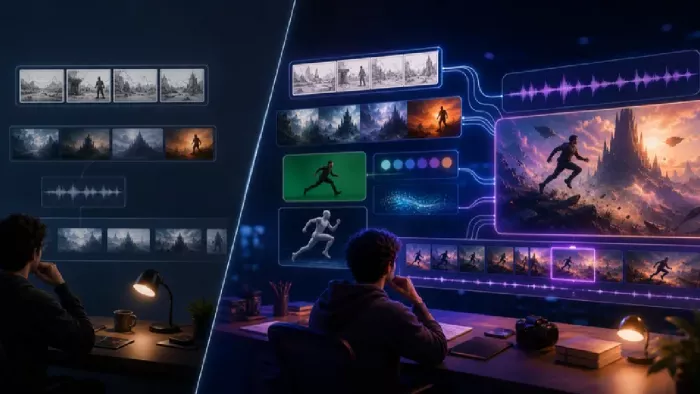
Most people who produce video at any real scale hit the same wall even...
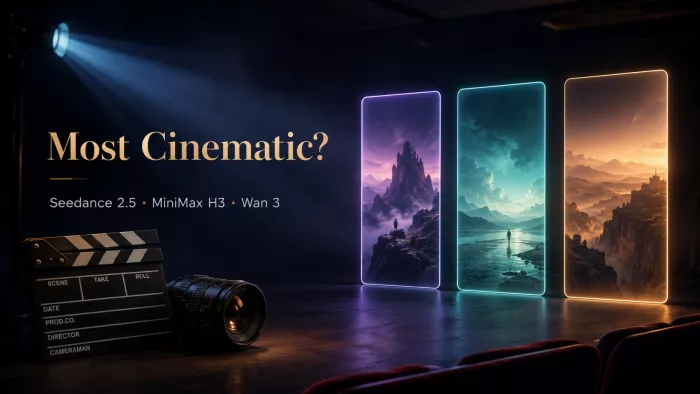
A cinematic AI video needs more than realistic skin, dramatic lighting...

Have you noticed how difficult it is not to watch spoilers of a sporti...
Discussion