
HubSpot is not a bad platform. In fact, for a certain profile of company — one scaling rapidly from startup to mid-market with a need for tightly integrated marketing, sales, and service tools — HubSpot is genuinely excellent. The problem is cost. As your contact database grows, as your team adds users, and as you need features beyond the Starter tier, HubSpot's pricing structure becomes increasingly difficult to justify against a market that has caught up in capability while staying significantly leaner on price.
This guide does not chase SEO keywords. It is a rigorous, category-by-category evaluation of the seven most compelling HubSpot alternatives available today — each assessed on product depth, real-world performance, pricing honesty, and documented user experience. Whether you are actively evaluating a switch or simply pressure-testing your current stack, the analysis here is designed to give you a clear, defensible answer.
The platforms covered are: Salesforce Sales Cloud, ActiveCampaign, Zoho CRM, Pipedrive, Keap, Brevo, and Monday Sales CRM. Each serves a meaningfully different buyer profile, and the right choice will depend on where your organization sits on the axes of scale, technical maturity, and primary use case.
| Platform | Best For | Starting Price | CRM Depth | Automation | Overall |
|---|---|---|---|---|---|
| Salesforce | Enterprise Sales | $25/user/mo | ★★★★★ | ★★★★½ | ★★★★☆ |
| ActiveCampaign | Email Automation | $15/mo | ★★★☆☆ | ★★★★★ | ★★★★½ |
| Zoho CRM | Value + Stack | $14/user/mo | ★★★★☆ | ★★★★☆ | ★★★★☆ |
| Pipedrive | Sales Teams | $14/user/mo | ★★★★☆ | ★★★½☆ | ★★★★½ |
| Keap | Small Business | $249/mo flat | ★★★☆☆ | ★★★★☆ | ★★★★☆ |
| Brevo | Email + SMS | Free / $25/mo | ★★½☆☆ | ★★★½☆ | ★★★★☆ |
| Monday CRM | Visual/Ops Teams | $12/user/mo | ★★★½☆ | ★★★★☆ | ★★★★☆ |
Ratings reflect aggregate scoring across usability, features, pricing, and support depth.
Salesforce Sales CloudThe Undisputed Enterprise Heavyweight |
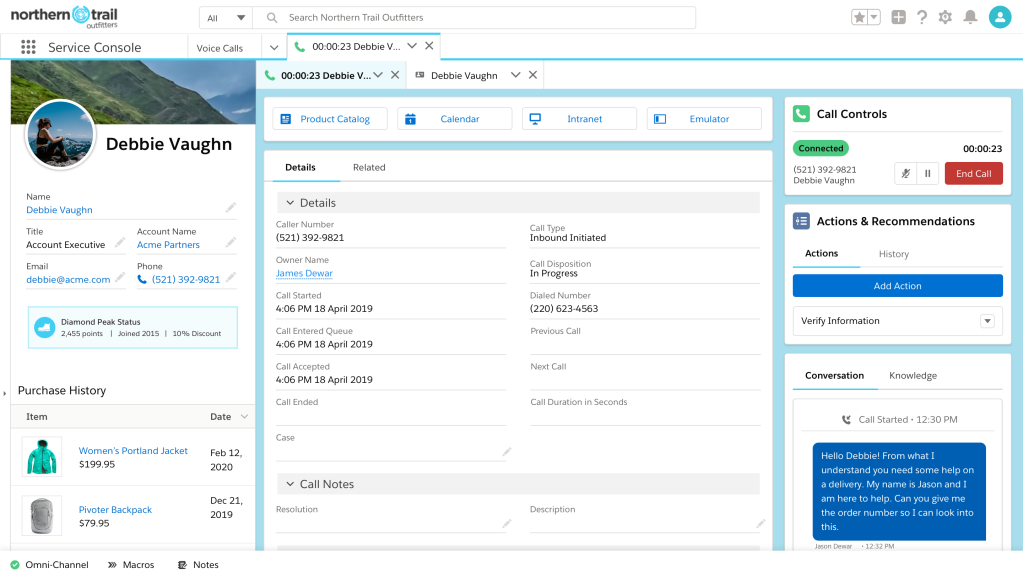
Salesforce Sales Cloud is the benchmark against which every CRM is measured. Built for complexity at scale, it offers a level of configurability that no competitor has yet matched. Every pipeline stage, every field, every automation rule can be sculpted to match your exact business logic. The tradeoff is real: Salesforce demands investment — in money, in onboarding time, and often in dedicated admin talent. For mid-market and enterprise teams, however, that investment compounds into a competitive advantage. The Einstein AI layer adds predictive scoring, deal health indicators, and forecasting accuracy that genuinely changes how sales managers run their pipelines. Slack integration, territory management, and native CPQ round out an ecosystem that operates as a genuine business operating system rather than a simple contact database.
Fig: Salesforce Sales Cloud — Dashboard Interface Overview
| Plan | Price | Key Capabilities |
|---|---|---|
| Starter Suite | $25/user/mo | Basic CRM, email integration |
| Professional | $80/user/mo | Full automation, forecasting |
| Enterprise | $165/user/mo | AI features, advanced analytics |
| Unlimited | $330/user/mo | Full Einstein AI, 24/7 support |
• Einstein AI predictive lead and deal scoring
• Territory and quota management at enterprise scale
• Flow-based automation engine (no-code + pro-code)
• AppExchange: 3,000+ native integrations
• Real-time pipeline and revenue intelligence dashboards
• Native CPQ (Configure, Price, Quote) capability
• Slack-first collaboration integrated with CRM records
| ✅ Strengths | ⚠️ Limitations |
| • Deepest customization of any CRM on the market | • Steep learning curve — onboarding takes weeks, not days |
| • World-class reporting and analytics depth | • Pricing scales aggressively; costs surprise growing teams |
| • AI-powered forecasting reduces guesswork | • Requires dedicated Salesforce admin for full utilization |
| • Massive ecosystem and certified partner network | • Mobile app lags behind the desktop experience |
| • Handles global operations with multi-currency, multi-language | • Contract lock-ins can feel inflexible for fast-changing teams |
| Usability | ★★★½☆ | 3.5 / 5.0 |
| Performance | ★★★★½ | 4.8 / 5.0 |
| Value for Money | ★★★☆☆ | 3.0 / 5.0 |
| Support Quality | ★★★★½ | 4.5 / 5.0 |
| Overall Score | ★★★★☆ | 4.2 / 5.0 |
| "We switched from HubSpot Enterprise to Salesforce when our sales team crossed 80 reps. The pipeline visibility alone justified the cost — our forecast accuracy improved from 58% to 81% in the first quarter." — VP of Sales, SaaS company, 450 employees |
| Large sales organizations (50+ reps), companies with complex deal structures, CPQ requirements, or those needing deep ERP/finance integrations. Not ideal for lean teams or budget-conscious startups. |
ActiveCampaignWhere CRM Meets World-Class Email Automation |
ActiveCampaign occupies a fascinating niche: it is simultaneously a marketing automation platform, a CRM, and a customer experience engine. Where HubSpot charges a premium for combining these capabilities, ActiveCampaign delivers comparable automation depth at a fraction of the cost. Its visual automation builder is genuinely best-in-class — teams can construct multi-branch behavioral flows with conditional logic, dynamic content, and predictive sending windows that would require HubSpot Marketing Hub Professional or higher to replicate. The CRM component, while not as feature-rich as Salesforce or Pipedrive, is well-integrated with marketing data, meaning sales reps see a contact's full behavioral history — pages visited, emails opened, webinars attended — before making a call. For businesses where marketing and sales pipelines are deeply intertwined, this is a decisive advantage.
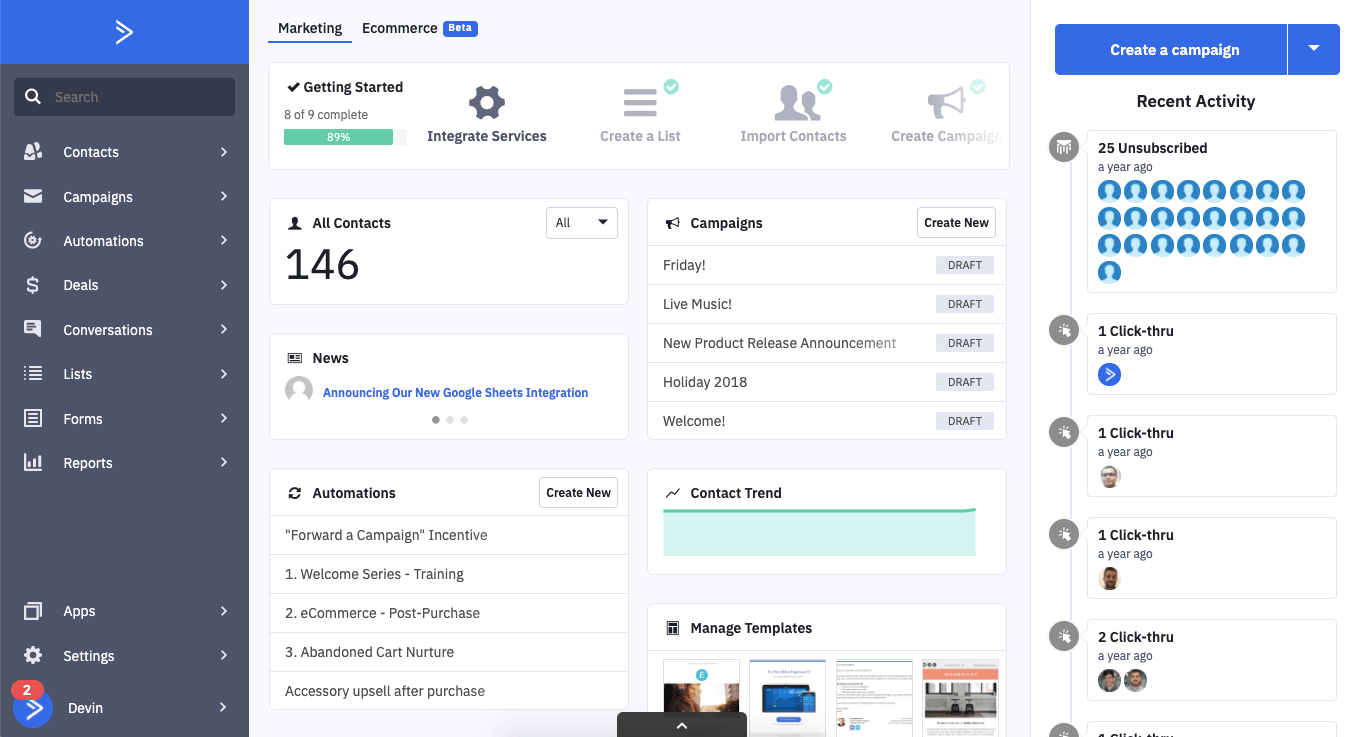
Fig: ActiveCampaign — Dashboard Interface Overview
| Plan | Price | Key Capabilities |
|---|---|---|
| Starter | $15/mo (1,000 contacts) | Email marketing, basic automation |
| Plus | $49/mo | CRM, landing pages, lead scoring |
| Professional | $79/mo | Predictive sending, win probability AI |
| Enterprise | Custom | Custom reporting, SSO, dedicated support |
• Visual drag-and-drop automation builder with 900+ triggers
• Predictive sending and predictive content personalization
• Lead scoring with composite behavioral and demographic rules
• Built-in SMS marketing alongside email sequences
• Full CRM with deal pipelines and task automation
• Dynamic content blocks for hyper-personalized emails
• Site tracking, event tracking, and attribution reporting
| ✅ Strengths | ⚠️ Limitations |
| •Automation builder is the most intuitive in the market | •CRM is functional but not built for complex B2B sales cycles |
| •Significantly cheaper than HubSpot for email + CRM combo | •Reporting dashboard can feel cluttered at high contact volumes |
| •Native SMS and email in one workflow without add-ons | •No built-in landing page A/B testing on lower tiers |
| •Excellent contact segmentation with granular behavioral data | •The interface has a learning curve for non-technical marketers |
| •Strong deliverability rates backed by dedicated IP options | •Customer support response times vary by plan tier |
| Usability | ★★★★☆ | 4.1 / 5.0 |
| Performance | ★★★★☆ | 4.4 / 5.0 |
| Value for Money | ★★★★½ | 4.7 / 5.0 |
| Support Quality | ★★★★☆ | 4.0 / 5.0 |
| Overall Score | ★★★★☆ | 4.4 / 5.0 |
| "We ran HubSpot Marketing Hub Pro for 18 months and could not justify the renewal at $3,200/month for our 35,000-contact list. ActiveCampaign Professional gives us 90% of the same features at $149/month. The ROI was immediate." — Marketing Director, B2B SaaS |
| SMBs and mid-market companies where marketing automation is the primary use case. Ideal for e-commerce brands, digital agencies, and any business with complex email nurture journeys. Less suited for large enterprise sales teams who need Salesforce-level CRM depth. |
Zoho CRMMaximum Value Across the Entire Business Stack |
Zoho CRM is arguably the most underrated platform in this comparison. It quietly delivers enterprise-grade features at pricing that makes HubSpot's cost structure look difficult to defend. Zia, Zoho's AI assistant, delivers predictive analytics, anomaly detection, and conversation intelligence that rivals features found only in Salesforce's top tiers. What separates Zoho from competitors is its ecosystem: Zoho One bundles 45+ business applications — from accounting and HR to marketing and help desk — into a single integrated stack at $37 per user per month. For companies looking to consolidate their tool stack, the value proposition is extraordinary. Canvas, Zoho's drag-and-drop CRM interface designer, lets teams completely redesign the CRM UI without a developer — a feature truly unique in the market.

Fig: Zoho CRM — Dashboard Interface Overview
| Plan | Price | Key Capabilities |
|---|---|---|
| Free | $0 (3 users) | Basic CRM, leads, contacts |
| Standard | $14/user/mo | Workflows, scoring, mass email |
| Professional | $23/user/mo | Blueprints, webhooks, inventory |
| Enterprise | $40/user/mo | Zia AI, Canvas, multi-user portals |
| Ultimate | $52/user/mo | Advanced BI, enhanced storage |
• Zia AI: predictions, anomaly alerts, email intelligence
• Canvas drag-and-drop UI customization — no-code
• Blueprint for structured sales process enforcement
• CommandCenter for cross-department journey orchestration
• Native integration with Zoho's 45+ application ecosystem
• Advanced segmentation with multi-condition scoring
• Omnichannel: email, phone, chat, social, and in-app
| ✅ Strengths | ⚠️ Limitations |
| •Best price-to-feature ratio of any CRM in this review | •Interface feels dated on some modules despite Canvas |
| •Zoho One offers unrivaled stack consolidation value | •Mobile app inconsistency across the Zoho product suite |
| •Canvas feature gives complete UI control — unique in market | •Steep learning curve when deploying advanced workflows |
| •Blueprint ensures sales process compliance at scale | •Third-party integrations weaker than Salesforce AppExchange |
| •Zia AI rivals Einstein at 10x lower cost | •Support quality varies significantly by region |
| Usability | ★★★½☆ | 3.8 / 5.0 |
| Performance | ★★★★☆ | 4.3 / 5.0 |
| Value for Money | ★★★★½ | 4.9 / 5.0 |
| Support Quality | ★★★½☆ | 3.8 / 5.0 |
| Overall Score | ★★★★☆ | 4.3 / 5.0 |
| "After running a three-way comparison against HubSpot and Salesforce, Zoho Enterprise won on both features and value. We replaced five separate tools with Zoho One and cut our SaaS spend by 61% in year one." — CTO, Mid-Market Logistics Company |
| Budget-conscious SMBs and growing mid-market companies that want enterprise AI features without enterprise pricing. Also ideal for companies already in or willing to adopt the broader Zoho ecosystem. Complex-requirement enterprises may still need Salesforce. |
PipedriveBuilt by Salespeople, for Salespeople |
Pipedrive was designed with a single-minded focus on what sales reps actually do all day: manage deals, make calls, and move opportunities through a pipeline. This clarity of purpose makes it the most usable CRM in this comparison for pure sales activity management. The Kanban-style pipeline view is visually clean and deeply functional — reps can drag deals between stages, log calls inline, and see their entire quota attainment at a glance without touching a settings menu. Where HubSpot adds complexity through its marketing and service layers, Pipedrive strips it away to expose only what drives revenue. Its AI sales assistant provides context-aware suggestions, flagging deals at risk and recommending next actions based on historical win-rate patterns. For sales-led organizations that do not need heavy marketing automation, Pipedrive's focused approach reduces noise and increases rep productivity.

Fig: Pipedrive — Dashboard Interface Overview
| Plan | Price | Key Capabilities |
|---|---|---|
| Essential | $14/user/mo | Pipeline management, activity reminders |
| Advanced | $29/user/mo | Automations, email sequences, scheduler |
| Professional | $49/user/mo | AI insights, revenue forecasting |
| Power | $64/user/mo | Project management, phone integration |
| Enterprise | $99/user/mo | Unlimited custom fields, priority support |
• Visual drag-and-drop Kanban pipeline with deal rotting alerts
• AI Sales Assistant with predictive deal risk scoring
• Smart email tracking with open, click, and reply detection
• Workflow automation builder with 300+ app triggers
• Activity-based selling with built-in calling and video
• Revenue forecasting with scenario modeling
• LeadBooster add-on: chatbots, web forms, prospector
| ✅ Strengths | ⚠️ Limitations |
| • Fastest time-to-value — teams are productive within hours | • Marketing automation is limited compared to HubSpot or ActiveCampaign |
| • Cleanest sales pipeline UI in the CRM market | • Reporting depth lacks for multi-team enterprise operations |
| • Affordable entry pricing without crippling feature cuts | • Service/ticketing features are basic or require integrations |
| • Excellent mobile app for field sales teams | • Custom objects are absent — limits B2B enterprise adoption |
| • Transparent, predictable pricing with no hidden add-ons | • LeadBooster and other key features are paid add-ons |
| Usability | ★★★★½ | 4.7 / 5.0 |
| Performance | ★★★★☆ | 4.3 / 5.0 |
| Value for Money | ★★★★½ | 4.5 / 5.0 |
| Support Quality | ★★★★☆ | 4.1 / 5.0 |
| Overall Score | ★★★★½ | 4.5 / 5.0 |
| "Pipedrive gave our 12-person sales team what HubSpot Sales Pro couldn't: simplicity. Every rep adopted it within a week. Our pipeline hygiene score went from 44% to 89% in 60 days because the UI doesn't punish you for entering data." — Head of Sales, Series B startup |
| Sales-led SMBs and growth-stage companies with 5–100 sales reps. Perfect for companies that want a high-adoption CRM without complex marketing automation overhead. Less suitable for demand generation teams or enterprise organizations needing custom objects. |
Keap (formerly Infusionsoft)The All-in-One Engine for Small Business Growth |
Keap targets a specific buyer with near-perfect precision: the small business owner who needs automation but cannot afford a dedicated marketing operations team. The platform bundles CRM, email marketing, landing pages, invoicing, appointment scheduling, and payment processing into a single monthly fee — making it one of the most complete all-in-one solutions for businesses under 25 employees. Keap's automation, while not as sophisticated as ActiveCampaign's, is genuinely approachable. The campaign builder uses a visual flowchart metaphor that non-technical users adopt with minimal training. What makes Keap particularly compelling versus HubSpot is its inclusion of invoicing and payment features, which HubSpot requires Commerce Hub and payment integrations to replicate. For service businesses — coaches, consultants, agencies, medical practices — this native revenue management capability is a meaningful differentiator.
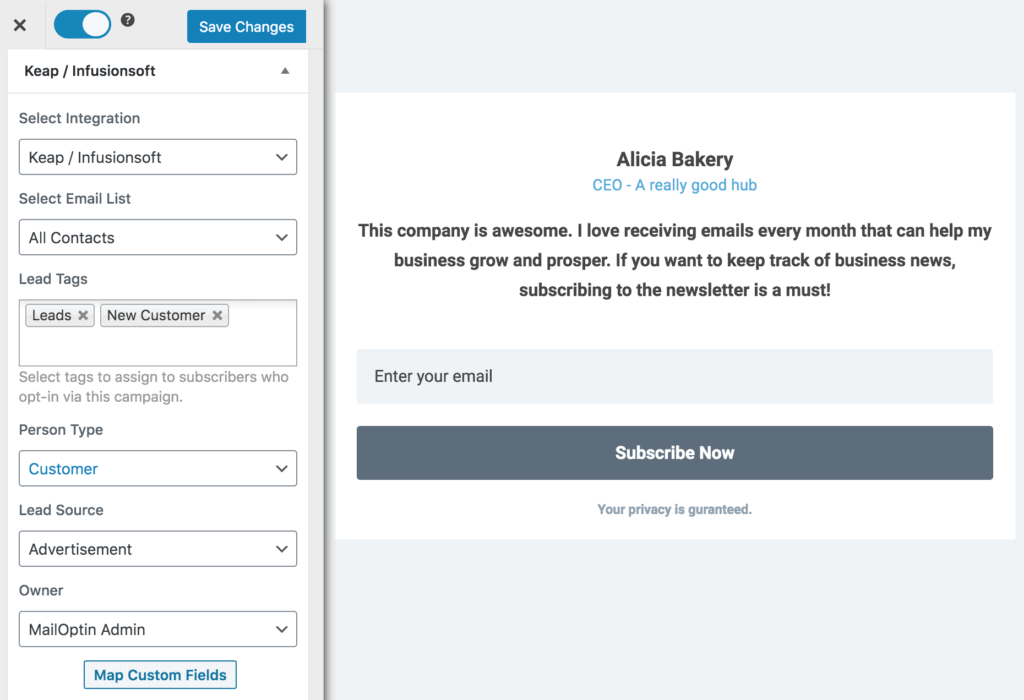
Fig: Keap (formerly Infusionsoft) — Dashboard Interface Overview
| Plan | Price | Key Capabilities |
|---|---|---|
| Keap Pro | $249/mo (2 users) | CRM, automation, email, payments, scheduling |
| Keap Max | $329/mo (3 users) | Advanced automation, landing pages, A/B testing |
| Max Classic | Custom | Full Infusionsoft feature set, enterprise support |
• Visual campaign automation builder with easy branching logic
• Built-in invoicing, recurring billing, and payment processing
• Appointment scheduling with calendar sync and reminders
• Pipeline management with automated follow-up sequences
• Dedicated phone line and text message marketing
• E-commerce features with order forms and upsells
• Personalized onboarding and dedicated coaching support
| ✅ Strengths | ⚠️ Limitations |
| • Truly all-in-one: no separate invoicing or scheduling tools needed | • Pricing per-account (not per-user) becomes expensive as teams grow |
| • Built for non-technical business owners — minimal learning curve | • Automation is powerful but less flexible than dedicated platforms |
| • Included payments and e-commerce capability at base price | • Reporting lacks the depth needed for data-driven teams |
| • Onboarding support is hands-on and genuinely helpful | • UI feels less modern compared to Pipedrive or ActiveCampaign |
| • SMS marketing included without additional per-message fees | • Integration library is smaller than HubSpot or Salesforce |
| Usability | ★★★★☆ | 4.2 / 5.0 |
| Performance | ★★★½☆ | 3.9 / 5.0 |
| Value for Money | ★★★½☆ | 3.7 / 5.0 |
| Support Quality | ★★★★☆ | 4.4 / 5.0 |
| Overall Score | ★★★★☆ | 4.1 / 5.0 |
| "As a solo consultant scaling to a 6-person team, Keap replaced my CRM, email tool, scheduling app, and invoicing software. I cancelled four subscriptions. The automation handles 80% of my follow-up without me touching it." — Independent Business Consultant |
| Solo operators, freelancers, service businesses, and small teams under 25 people who need an integrated CRM + payments + automation solution. Not suitable for product companies, enterprise sales organizations, or teams that need advanced reporting. |
Brevo (formerly Sendinblue)Email Marketing Meets CRM at a Price That Makes Sense |
Brevo, which completed its rebranding from Sendinblue in 2023, has evolved from a transactional email service into a surprisingly capable full-stack marketing and CRM platform. Its differentiating proposition is direct: exceptional email and SMS deliverability infrastructure combined with CRM and automation capabilities, all accessible at price points that are genuinely accessible for small businesses. Brevo's free tier — which includes unlimited contacts and up to 300 emails per day — is the most generous in this comparison and in the broader market. The platform's strength lies in multichannel marketing: email, SMS, WhatsApp Business, push notifications, and live chat can all be managed from a single dashboard. For companies whose primary growth lever is email marketing with a CRM overlay, Brevo delivers value that HubSpot's Starter tier cannot match at comparable pricing.
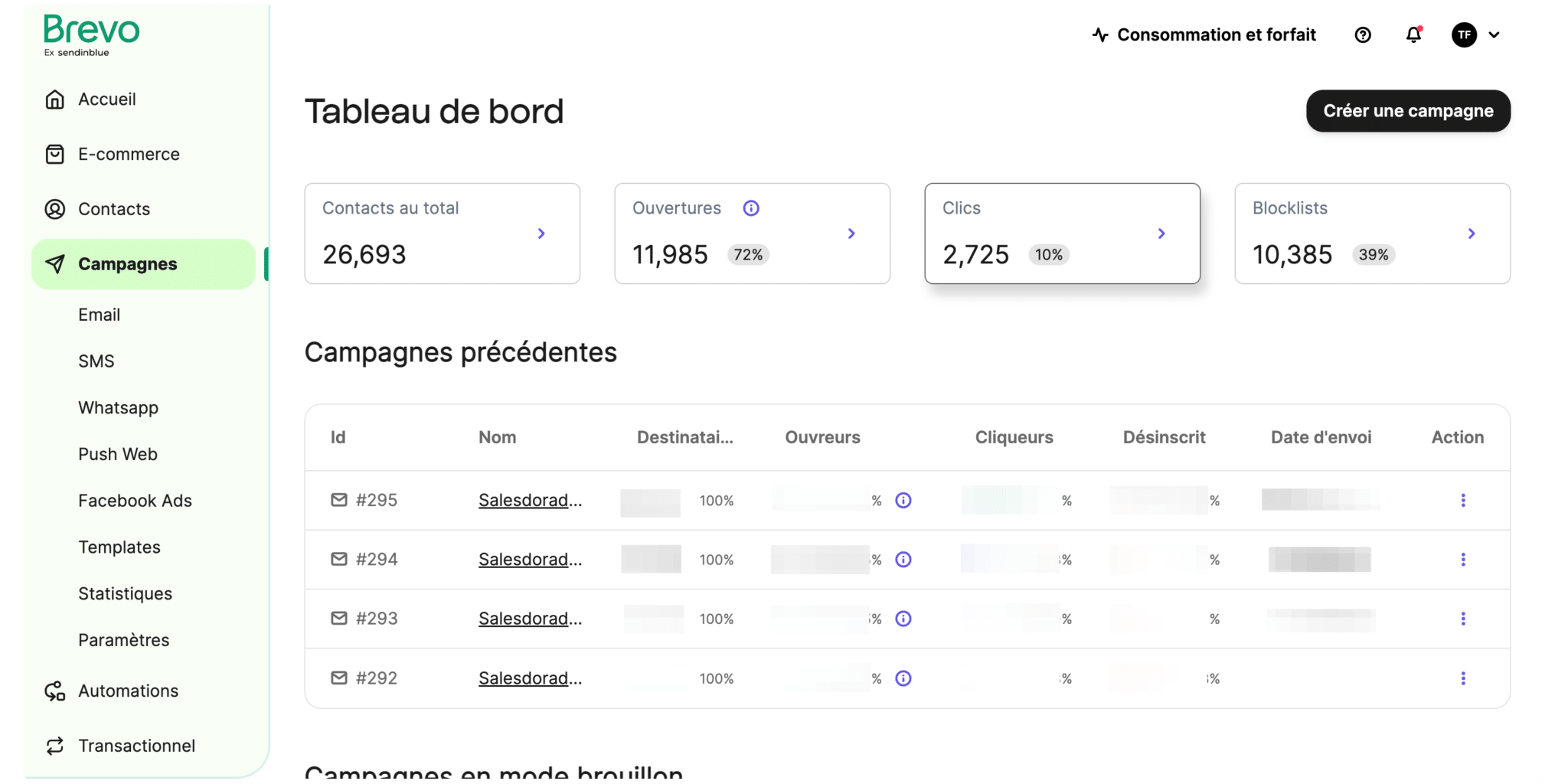
Fig: Brevo (formerly Sendinblue) — Dashboard Interface Overview
| Plan | Price | Key Capabilities |
|---|---|---|
| Free | $0 | Unlimited contacts, 300 emails/day, basic CRM |
| Starter | $25/mo | 20,000 emails/mo, no daily limit, no Brevo logo |
| Business | $65/mo | Marketing automation, A/B testing, advanced stats |
| Enterprise | Custom | Dedicated IP, SSO, custom onboarding, SLA |
• Email marketing with best-in-class transactional deliverability
• SMS, WhatsApp Business, and push notification campaigns
• Marketing automation with visual workflow builder
• Built-in CRM with deals pipeline and contact scoring
• Landing page builder and embedded form tools
• Transactional email (SMTP/API) for product teams
• Real-time conversation inbox: email, chat, and phone
| ✅ Strengths | ⚠️ Limitations |
| • Most generous free tier in the market — unlimited contacts | • CRM is functional but lacks depth for complex B2B sales |
| • Best-in-class email deliverability with dedicated IP options | • Automation builder less powerful than ActiveCampaign |
| • Multichannel in one platform — email, SMS, WhatsApp, push | • Reporting could be more granular at campaign level |
| • Pricing based on email volume, not contact count — scales fairly | • Limited native integrations compared to HubSpot's marketplace |
| • Transactional email API quality rivals Mailgun and SendGrid | • Phone support only available on Enterprise plan |
| Usability | ★★★★☆ | 4.3 / 5.0 |
| Performance | ★★★★☆ | 4.2 / 5.0 |
| Value for Money | ★★★★½ | 4.8 / 5.0 |
| Support Quality | ★★★½☆ | 3.9 / 5.0 |
| Overall Score | ★★★★☆ | 4.3 / 5.0 |
| "Brevo's pricing model is the most logical in the industry — you pay for emails sent, not contacts stored. We have 95,000 contacts and pay $65/month. HubSpot wanted $800/month for the same list. The automation does everything we need." — E-Commerce Growth Lead |
| Small businesses, e-commerce brands, and digital marketers whose primary use case is email and SMS marketing with a lightweight CRM layer. Excellent for transactional email use cases. Not ideal for complex B2B sales pipelines or enterprise CRM requirements. |
Monday Sales CRMVisual Work Management Meets Modern Sales Pipeline |
Monday Sales CRM is the natural choice for teams that already live inside Monday.com's work management ecosystem and want their sales pipeline to feel like a natural extension of how they track everything else. The platform's visual column-based approach — which made Monday.com famous as a project tool — translates unexpectedly well to CRM workflows. Deal stages become column statuses. Activities become timeline items. Forecasts become dashboard widgets. What differentiates Monday Sales CRM from Pipedrive or HubSpot is its flexibility as a data layer: sales leaders can build custom views, boards, and automations without touching a line of code, and can connect sales data to operational workflows in ways that siloed CRMs simply cannot. Its AI-powered email composition and automated status updates reduce manual data entry — a persistent pain point in CRM adoption across industries.
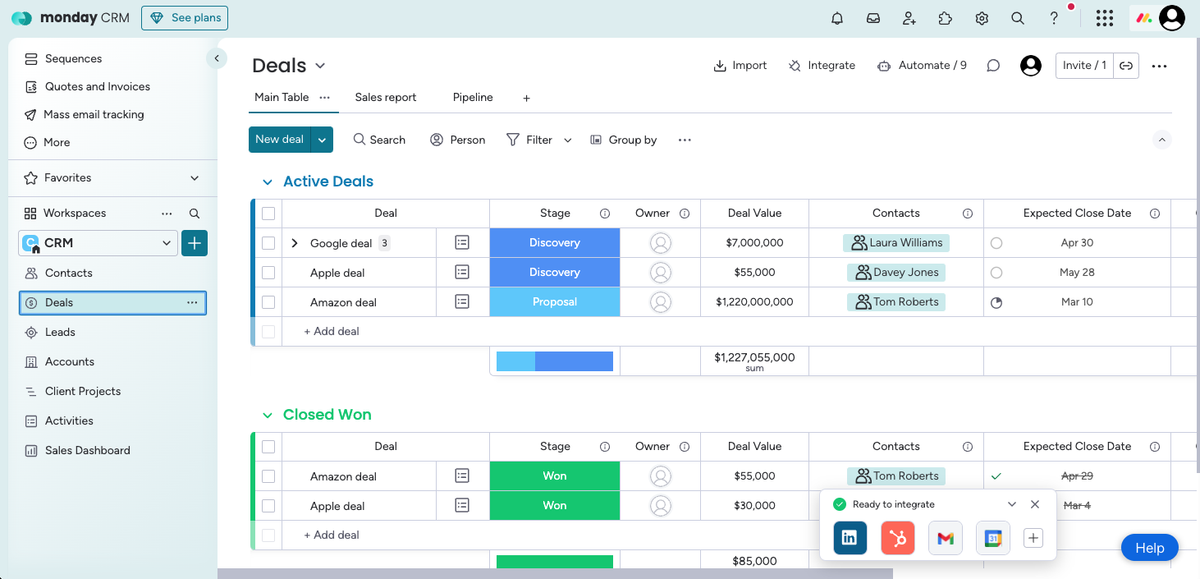
Fig: Monday Sales CRM — Dashboard Interface Overview
| Plan | Price | Key Capabilities |
|---|---|---|
| Basic CRM | $12/user/mo | Pipeline, contacts, basic automations (3 seats min) |
| Standard | $17/user/mo | Email sync, advanced automations, AI assist |
| Pro | $28/user/mo | Forecasting, goal tracking, advanced integrations |
| Enterprise | Custom | HIPAA, advanced security, audit log, SSO |
• Fully customizable column-based pipeline and board views
• AI email writer and automated activity logging
• Cross-board automation to connect sales and operations
• Advanced dashboards with drag-and-drop widget builder
• Native time tracking and workload management
• Deep integration with the full Monday.com product suite
• Custom CRM views: Kanban, Timeline, Map, Calendar
| ✅ Strengths | ⚠️ Limitations |
| • Most flexible data structure — build CRM exactly as needed | • Email marketing and automation lag behind dedicated platforms |
| • Seamless with project and operations workflows in Monday | • Minimum 3-seat requirement increases cost for micro-teams |
| • Beautiful, modern UI with the lowest learning curve in this review | • Native telephony and dialer features are limited |
| • Strong automation engine with 200+ integrations | • Advanced reporting requires Pro or Enterprise tier |
| • Excellent for teams that need CRM + project management in one | • Not purpose-built for CRM — some sales-specific features feel secondary |
| Usability | ★★★★½ | 4.6 / 5.0 |
| Performance | ★★★★☆ | 4.1 / 5.0 |
| Value for Money | ★★★★☆ | 4.2 / 5.0 |
| Support Quality | ★★★★☆ | 4.2 / 5.0 |
| Overall Score | ★★★★☆ | 4.3 / 5.0 |
| "Monday CRM bridged a gap we had between our sales and delivery teams. We now run deals and project onboarding on the same platform. HubSpot never connected those dots for us — we were copy-pasting deal data into Asana after every close." — Operations Manager, Agency (80 employees) |
| Teams already using Monday.com for project or operations management. Ideal for agencies, consultancies, and hybrid sales-ops teams that need their CRM to interact with project delivery workflows. Less ideal for high-volume outbound sales teams or email-heavy marketers. |
The market has evolved. HubSpot no longer holds a monopoly on the combination of CRM depth, automation capability, and polished UX. The seven platforms reviewed here collectively represent a stronger, more cost-effective alternative for every meaningful buyer persona in the market.
If you are running a large enterprise sales organization with complex deal structures and global operations, Salesforce Sales Cloud remains the category leader — no other platform matches its configurability at scale. If marketing automation is your primary lever and you're tired of paying HubSpot's contact-based scaling fees, ActiveCampaign delivers 90% of the same capability at a fraction of the cost. For teams that want extraordinary value across an integrated business stack, Zoho CRM and Zoho One represent the most compelling total-cost-of-ownership story in the market today.
Sales-led organizations that prioritize pipeline hygiene, rep productivity, and simplicity should look seriously at Pipedrive — it consistently delivers the highest adoption rates of any CRM in this comparison. Small service businesses will find Keap's all-in-one approach to CRM, invoicing, and scheduling eliminates entire categories of per-tool SaaS spend. Brevo's volume-based pricing model makes it definitively the most rational choice for email-heavy marketing operations. And Monday Sales CRM solves a real problem that no other platform in this review addresses: the disconnect between closing a deal and delivering on it.
The question is not whether HubSpot is worth what it costs. For some organizations, it absolutely is. The question is whether it is worth what it costs for your specific use case, team size, and growth trajectory. Based on the evidence assembled here, for a significant majority of companies currently on HubSpot's platform, the answer is that a better-fit, more cost-effective alternative exists — and it is worth taking the time to find it.

Marketing teams often need images before a product is ready for a phot...

Creating a logo that will grab customers' attention is one of the main...

Enterprise software has a well-known failure mode. The demo goes great...

Most people who produce video at any real scale hit the same wall even...

A cinematic AI video needs more than realistic skin, dramatic lighting...

Have you noticed how difficult it is not to watch spoilers of a sporti...

Discussion