


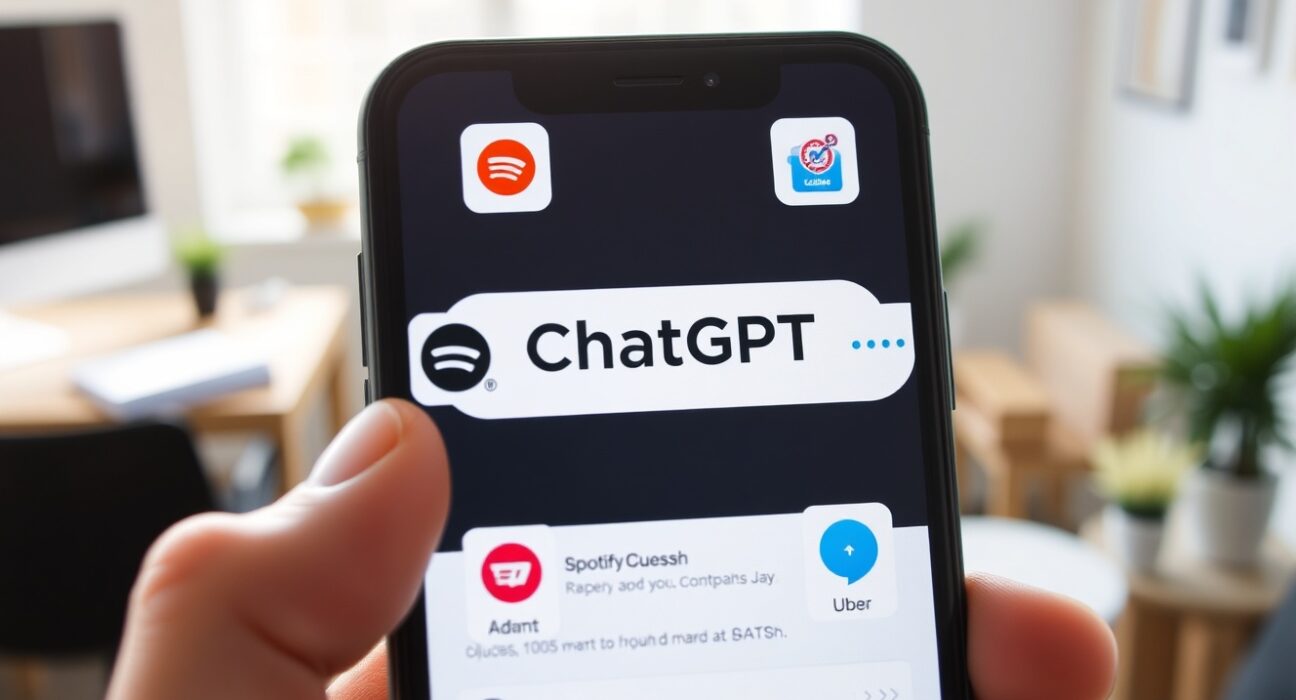
OpenAI has begun rolling out a major upgrade to ChatGPT that turns the assistant into what analysts are calling a “universal app remote.” Instead of switching between apps, users can now connect services like Spotify, Uber, DoorDash, and Booking.com and have ChatGPT perform actions directly inside them.
The shift marks a significant change in how ChatGPT is positioned. It is no longer just a conversational interface for answers and content generation. It is increasingly acting as a control layer that sits on top of other apps, translating natural language into real-world actions.
The new integrations allow ChatGPT to link with a range of widely used platforms, including Spotify, Uber, DoorDash, Canva, Expedia, Coursera, and others. Once connected, the assistant can execute tasks like creating playlists, booking rides, ordering food, or starting design projects without requiring users to manually navigate each app.
The feature is currently rolling out primarily in the United States and Canada, with availability across ChatGPT plans. Paid tiers are expected to receive early or expanded access as the rollout continues.
Users can connect apps to ChatGPT in two main ways. The fastest method is through prompts. Typing a request such as “Spotify, create a workout playlist” or “DoorDash, plan a vegan dinner” triggers a connection flow where users log into the respective service and grant permissions.
Alternatively, users can manage connections through the Settings menu under “Apps & Connectors,” where they can browse supported services, authorize access, and control permissions. This includes the ability to disconnect apps or modify what data ChatGPT can access at any time.
Once linked, ChatGPT can handle multi-step requests without needing explicit app mentions in every prompt.
The practical use cases highlight how the feature moves beyond simple automation into orchestration.
With Spotify, users can generate playlists based on mood, duration, or past listening habits. With DoorDash, ChatGPT can assemble meal plans and automatically populate a shopping or delivery cart. Uber integration allows users to request rides based on timing and preferences, translating conversational instructions into booking-ready options.
Travel integrations like Expedia and Booking.com enable users to search for flights and hotels using natural language filters. Canva allows design creation from a text brief, while platforms like Coursera and Quizlet support learning workflows such as course discovery and flashcard generation.
The result is a system where a single request can trigger actions across multiple apps.
One of the more notable capabilities is how ChatGPT handles compound tasks.
A prompt like planning a movie night can lead to multiple coordinated actions: building a food order through DoorDash, generating a playlist in Spotify, and arranging a ride via Uber. Similarly, planning a business trip could involve searching flights and hotels while also preparing local transportation options.
This orchestration suggests a move toward AI acting as an operational layer rather than a standalone tool.
The integrations rely on OAuth, meaning users log into third-party services through their official authentication pages and explicitly grant access permissions. These permissions can include data such as playlists, order history, travel details, or addresses.
OpenAI emphasizes that ChatGPT can only access data within the scope granted by the user. However, analysts note that users should review permissions carefully, particularly when connecting services that involve personal or financial information.
Access can be revoked at any time either within ChatGPT’s settings or through the connected app’s own security controls.
This update represents a broader shift in how AI systems are evolving. Instead of functioning as isolated tools, they are increasingly becoming intermediaries between users and digital services.
By integrating directly with widely used apps, ChatGPT reduces the need for app-switching and manual coordination. The assistant effectively translates intent into execution, which aligns with a larger industry trend toward AI-driven automation layers.
OpenAI and its partners have indicated that more integrations are on the way, including services like PayPal, Walmart, OpenTable, and additional retail and utility platforms through 2026.
If the ecosystem continues to expand, ChatGPT could move closer to functioning as a central interface for everyday digital tasks, similar to an operating system layer built on natural language.
For now, the rollout is still early. But the direction is clear.
ChatGPT is no longer just answering questions. It is starting to do things on behalf of users, across the apps they already use.

Marketing teams often need images before a product is ready for a phot...
Creating a logo that will grab customers' attention is one of the main...

Enterprise software has a well-known failure mode. The demo goes great...

Most people who produce video at any real scale hit the same wall even...

A cinematic AI video needs more than realistic skin, dramatic lighting...
Have you noticed how difficult it is not to watch spoilers of a sporti...
Discussion