

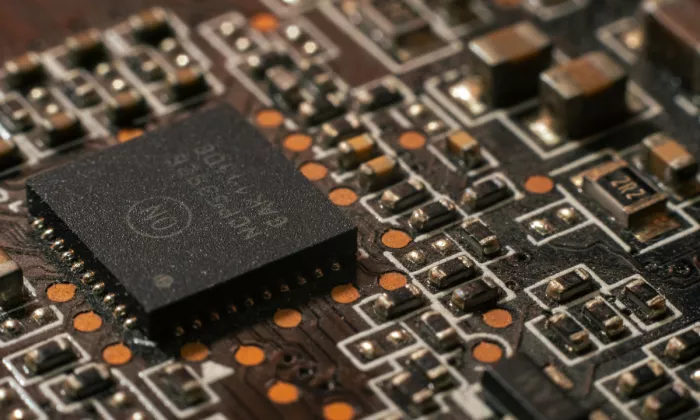
In Silicon Valley and beyond, a striking shift is underway within venture capital circles: backers of technology startups are increasingly redirecting capital toward hardware and “physical AI” at a time when generative artificial intelligence threatens to commoditize traditional software businesses. According to The Wall Street Journal, firms once focused on SaaS and cloud services are now placing large bets on infrastructure, robotics, custom chips, and other tangible systems, a pivot that reflects changing assumptions about where value will accrue in the AI era.
Historically, venture capital has favored software because of its capital‑light economics and rapid scalability. But as AI models such as ChatGPT and Claude replicate many software functions, from content generation to data analytics, investors are recalibrating. AI’s disruptive impact appears to be shrinking the market differentiation once offered by traditional applications, prompting capital to flow instead toward problems “closer to the metal,” from specialized chips and data‑center infrastructure to autonomous machines and robotics.
Industry data supports the narrative of a broad strategic rotation. A major OECD report covering 2025 shows that VC investment in AI firms accounted for $258.7 billion globally, more than 60% of all venture capital activity, up sharply from the early 2010s, and that infrastructure‑centric AI firms are capturing a growing share of that spend. Notably, investment in areas like compute infrastructure and hosting reached $109.3 billion in 2025, outpacing other categories by a wide margin.
This reallocation is visible in headline‑making funding rounds, chip design startups, and the emergence of new funds and platforms devoted to hardware, robotics, and deep physical systems. The backers behind these bets include well‑known venture firms that historically bet on software but are now expanding into capital‑intensive domains that require long time horizons and operational expertise.
One factor driving interest in hardware is the massive underlying demand for AI compute and infrastructure. Companies at every scale from hyperscalers to startups building autonomous systems, are seeking chips, networking gear, and robotics platforms that can support next‑generation AI workloads. Equipment companies and chip designers that help meet this demand are attracting strong interest, and even traditional design software vendors, such as Synopsys, recently raised their revenue forecasts as demand for AI chip design tools surged.
At the same time, hardware engineers have become some of the most sought‑after talent in the tech sector. Salaries for hardware design and systems engineers are reportedly growing two to three times faster than those of software engineers, as companies scramble to hire the expertise needed to build next‑generation AI chips, data‑center systems, and autonomous machines.
Investors and entrepreneurs alike are coining the term “physical AI” to describe this broad class of startups and technologies that extend intelligent systems into the real world, from robotics and autonomous hardware to AI‑optimized chips and energy‑efficient deep‑learning processors. Venture capital players are increasingly positioning themselves to be early backers of companies that can deliver these capabilities.
This trend also has geopolitical and economic implications. As hardware becomes central to AI performance, control over semiconductor supply chains, fabrication capacity, and robotics platforms could become as strategically important as software ecosystems once were. Governments and public‑sector actors in multiple regions are drafting national AI hardware strategies, and startups across the U.S. and Europe are drawing funding to vie for leadership in next‑generation compute.
Despite the enthusiasm, veteran investors caution that hardware and deep infrastructure bets are riskier and more capital‑intensive than typical software ventures. Unlike software startups, which can scale quickly with limited upfront costs, hardware requires longer development cycles, supply‑chain coordination, and high capital expenditures, and returns can take years to materialize. That has led some VCs to call for a blended approach, combining deep tech hardware investments with software and services that can deliver nearer‑term revenue.
Still, the shift is palpable: hardware, once the more staid side of tech investing, is becoming a cornerstone of the next generation of AI‑powered innovation, even as software grapples with existential questions about differentiation and defensibility.

Marketing teams often need images before a product is ready for a phot...

Creating a logo that will grab customers' attention is one of the main...

Enterprise software has a well-known failure mode. The demo goes great...

Most people who produce video at any real scale hit the same wall even...

A cinematic AI video needs more than realistic skin, dramatic lighting...

Have you noticed how difficult it is not to watch spoilers of a sporti...
Discussion