

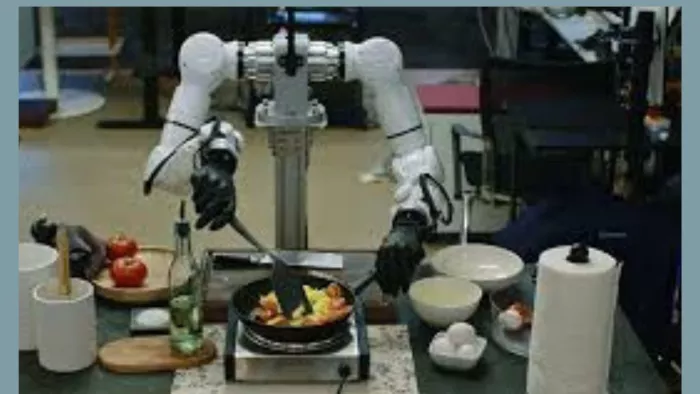
Robotics startup Genesis AI is moving beyond the typical “AI model only” strategy and positioning itself as a full-stack robotics company, combining its own AI brain, robotic hands, training hardware, simulation systems, and data collection infrastructure into one tightly integrated ecosystem. The company’s latest demonstrations suggest it is trying to solve one of the hardest problems in robotics: human-level manipulation.
The startup recently unveiled its first robotics foundation model called GENE-26.5 alongside a series of demos showing robotic hands performing highly delicate tasks. In recorded demonstrations, the robots were seen cracking eggs with one hand, chopping tomatoes, wiring cables, solving a Rubik’s Cube, and even playing piano pieces at roughly 130 beats per minute.
What makes the demos notable is not just the complexity of the actions, but the speed and coordination. Genesis AI says the systems operate autonomously and in real time rather than through direct human teleoperation. CEO Zhou Xian described the current performance level as roughly 60% to 70% of human capability in certain manipulation tasks.
Most robotics startups focus on either software or hardware. Genesis AI is trying to control both.
The company is developing its own AI models, robotic hands, simulation engines, and motion-capture gloves used for collecting training data. Its robotic hand reportedly contains 20 motors and 20 degrees of freedom designed to mirror human hand movement more closely than traditional industrial grippers.
That full-stack strategy is becoming central to the company’s identity. Genesis AI believes tightly integrating hardware and software allows it to train robots more efficiently and optimize systems around real-world tasks rather than isolated benchmarks.
One of the startup’s biggest technical focuses is simulation.
According to the company, the largest bottleneck in robotics model development is evaluation speed. Genesis AI says its in-house simulation environment allows faster testing and iteration compared with relying entirely on physical robots.
This matters because robotics training is far slower and more expensive than training text-based AI systems. Every failed movement in the physical world costs time, energy, and hardware wear. Simulation lets the company rapidly test behaviors across thousands of virtual environments before transferring them to real robots.

Marketing teams often need images before a product is ready for a phot...
Creating a logo that will grab customers' attention is one of the main...
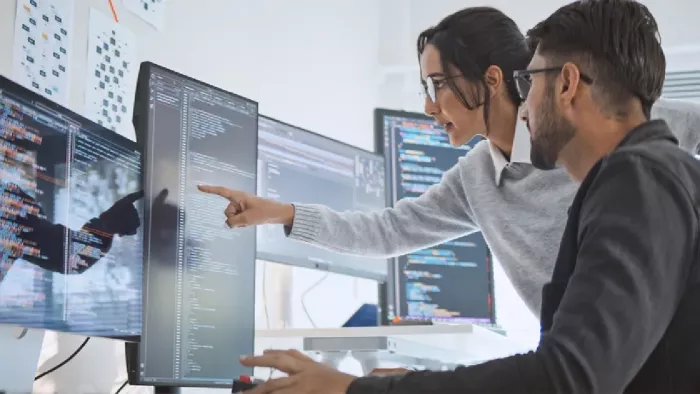
Enterprise software has a well-known failure mode. The demo goes great...
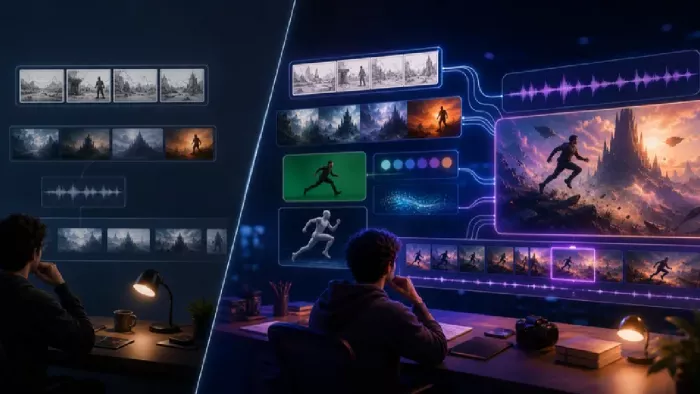
Most people who produce video at any real scale hit the same wall even...

A cinematic AI video needs more than realistic skin, dramatic lighting...
Have you noticed how difficult it is not to watch spoilers of a sporti...
Discussion