


Comparing behavioral health EHR systems for a working practice looks very different from reading product pages. A practice owner sitting through three demos in a week tends to stop asking which platform has the longest feature list and starts asking which one a clinician will actually tolerate on a Friday afternoon with six unsigned notes waiting.
Valant.io earns its place in that conversation. It is built specifically for mental and behavioral health, with clinical documentation, intake, scheduling, billing, claims management, and reporting designed around behavioral health operations rather than retrofitted from a general medical platform. For many mental health and behavioral health organizations, that specialization is the whole point.
It does not fit every clinic, though. Some practices want simpler and more predictable pricing. Others need faster onboarding, stronger solo-provider workflows, cleaner client portal experiences, deeper insurance billing support, more capable group practice tools, or a more flexible telehealth setup. Those gaps are where the seven alternatives in this guide come in.
One point worth keeping in front of the whole decision: choosing an EHR is not only about features. The choice shapes documentation speed, claims accuracy, the client experience, provider adoption, reporting quality, and long-term practice operations. A system that demos well can still slow a practice down if the billing workflow fights the way claims are actually submitted. The comparison below is organized around those realities, and the primary keyword for this guide, Valant.io alternatives, is treated as a practice decision rather than a shopping list.
Before weighing alternatives, it helps to frame what Valant.io sets out to do. This snapshot is deliberately brief and exists only to anchor the comparisons that follow.
Behavioral health focus: the platform is purpose-built for mental and behavioral health rather than adapted from general medical software
Practice management support: scheduling, intake, and operational workflows are bundled with the clinical record
Intake and scheduling workflows: designed to move a client from referral through booking inside one system
Billing and claims management: claims handling and revenue workflows aimed at behavioral health billing patterns
Reporting and operational visibility: dashboards and reports oriented toward running a behavioral health organization
Specialty suitability: positioned for mental health and behavioral health organizations rather than general primary care
Rankings in this guide follow practical behavioral health practice needs rather than popularity or marketing reach. The PracticeFit assessment scores each platform against the factors below, and each factor carries a question worth raising in a live demo so a buyer can confirm rather than assume.
| Evaluation Factor | Reason It Matters | Question to Ask During Demo |
| Behavioral health documentation fit | Generic note tools slow behavioral health charting | Are there behavioral health note types and diagnosis support out of the box? |
| Treatment plan and note workflow | Plans and notes drive most clinician time | Can a treatment plan carry into progress notes without re-entry? |
| Client intake and portal experience | Intake friction shows up in no-shows and missing data | Can clients complete intake and consent before the first session? |
| Scheduling and reminders | Calendar friction multiplies across providers | How are recurring appointments and reminders handled per provider? |
| Insurance billing and claims support | Claims errors directly affect revenue | Which clearinghouses and payers are supported, and how are ERAs posted? |
| Telehealth workflow | Video must fit the session, not interrupt it | Is telehealth built in, and are there session or participant limits? |
| Psychiatry and e-prescribing support | Prescribers need eRx including controlled substances | Is EPCS supported, and is it included or an add-on? |
| Group practice management | Multi-provider control prevents chaos | How are roles, supervision, and shared calendars managed? |
| Reporting and analytics | Operators need visibility to run the practice | Which financial and clinical reports are standard? |
| Ease of onboarding | Slow setup delays revenue and adoption | What does a typical implementation timeline look like? |
| Pricing transparency | Hidden add-ons distort the real cost | What is the all-in monthly cost including required add-ons? |
| Compliance and security documentation clarity | Behavioral health data is sensitive YMYL data | Are BAA, audit logs, and access controls documented and available? |
| Customer support quality | Support gaps stall billing and clinical work | What are support hours, channels, and response expectations? |
| Migration support | Poor migration risks records and revenue | What data can be imported, and who performs the migration? |
| Long-term scalability | Outgrowing a tool forces a second migration | How does the platform handle added providers and locations? |
The summary below sets up the detailed reviews. Use it to spot the two or three platforms that match the practice profile, then read those sections in full. The Valant.io alternatives worth a demo usually narrow quickly once practice size and billing model are clear.
| Tool | Best For | Main Strength | Main Limitation | Best-Fit Practice |
| SimplePractice | Solo and small therapy practices | Polished, easy clinician experience | Lighter clinical depth for complex cases | Solo and small group therapy |
| TherapyNotes | Notes plus insurance billing | Structured notes and claims workflow | Less enterprise-style operational tooling | Insurance-based therapy |
| TheraNest | Counseling groups on a budget | Simpler, lower-cost practice management | Fewer advanced or enterprise features | Counseling and small teams |
| Jane App | Client booking experience | Clean scheduling and front office | Behavioral health billing depth to verify | Appointment-heavy and multidisciplinary |
| Tebra | EHR plus revenue cycle | Billing and operations breadth | Behavioral health fit must be tested | Billing-focused practices |
| CarePaths EHR | Behavioral-health-specific EHR | Outcomes and measurement-based care focus | Smaller brand footprint | Mental health providers of any size |
| AdvancedMD | Larger practices and organizations | Broad infrastructure and analytics | Heavier than solo practices need | Large or multi-location practices |
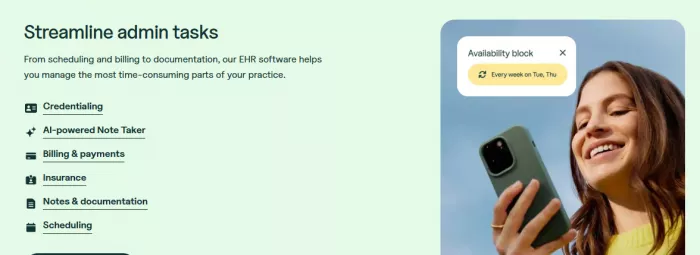
SimplePractice is a therapy-focused practice management and EHR platform that has built its reputation on being easy to live with. It bundles scheduling, documentation, billing, a client portal, telehealth, payments, and intake forms into an interface that most clinicians can navigate without formal training.
The platform fits solo therapists and small group practices that want a modern, low-friction system. Custom intake forms with e-signatures, an integrated client portal, and a built-in therapist directory cover the common front-office needs of an independent practice without bolt-on tools.
• Plan tiers and which features sit behind the higher plans
• Insurance billing and claims capabilities on the chosen plan
• Per-clinician costs and add-on fees for e-prescribe and AI note tools
• Telehealth terms and any session or participant limits
• Client portal, intake form logic, and payment processing rates
For a practice that wants a simpler, more modern, therapist-friendly workflow with minimal setup, SimplePractice is often easier to adopt than a heavier behavioral health operations platform. Independent clinicians tend to reach full daily use quickly.
Valant.io may still be stronger for larger behavioral health organizations or operationally complex needs, where structured treatment plan building, standardized outcome measures, and enterprise reporting matter more than interface polish.
Confirm BAA availability, audit logging, and access controls directly with the vendor. Note that platforms differ on formal interoperability certification, so practices that require it should verify certification status before committing.
Best-fit practice type: Solo therapists and small private therapy practices that value usability.
Main limitation: Clinical depth for complex behavioral health cases is lighter than specialized platforms.
Reviewer verdict I keep recommending SimplePractice to first-time practice owners because adoption is rarely the problem. The honest caveat is that as a practice grows past a handful of clinicians or leans hard on structured outcome measurement, some teams start to feel the ceiling. Demo it with a real intake-to-note-to-claim cycle before deciding. |
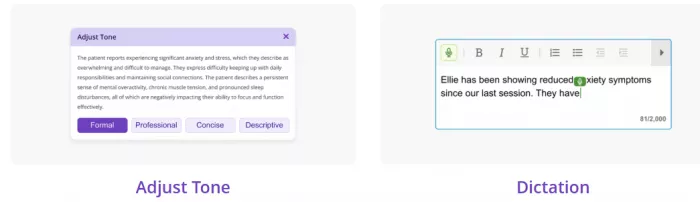
TherapyNotes is a behavioral health EHR built around structured clinical documentation and insurance billing. It pairs therapy-specific note formats with scheduling, a client portal, telehealth, claims handling, and practice management in one focused package.
It suits insurance-based therapy practices that submit claims regularly and want notes, scheduling, and billing tied together. The structured note formats are designed for behavioral health rather than adapted from general medicine, which tends to speed up documentation for therapists.
• Per-clinician pricing and any minimum seat requirements
• Claims submission, ERA posting, and clearinghouse support
• Telehealth inclusion and any added cost
• Client portal features and intake handling
• Reporting available for billing and operations
For practices seeking a focused therapy EHR with structured notes and a dependable billing workflow, TherapyNotes can be a stronger day-to-day fit than a broader operations platform, particularly where claims volume is steady.
Valant.io may still be stronger for organizations that need broader behavioral health operational dashboards, more complex multi-program reporting, or wider practice management beyond core therapy billing.
Verify the BAA, audit logs, role-based access, and data retention terms with the vendor, along with which clearinghouses and payers are supported for the practice mix.
Best-fit practice type: Insurance-based therapy practices that document heavily and bill consistently.
Main limitation: Operational tooling is less enterprise-oriented than larger platforms.
Reviewer verdict TherapyNotes is my default suggestion when billing accuracy is the thing keeping an owner up at night. It does the unglamorous parts well. Where it can disappoint is the practice expecting deep, configurable operational dashboards, so confirm reporting against your actual KPIs in the demo. |
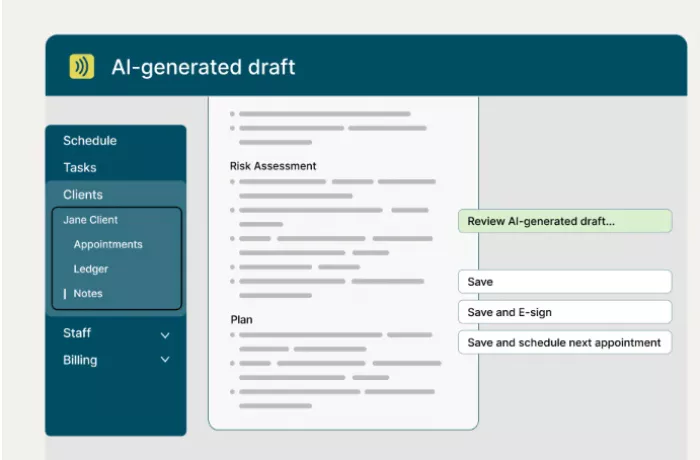
TheraNest is a practice management and EHR option aimed at counseling practices and smaller teams. It covers notes, scheduling, billing, telehealth, a client portal, and reporting, and it often draws practices looking for a simpler or more affordable entry point.
It fits counseling practices and small teams that want competent core functionality without the weight or cost of an enterprise system. Client-based pricing can appeal to practices with manageable active caseloads.
• Pricing tiers and how client-count based pricing scales
• Provider and user limits on each tier
• Claims tools and any billing service options
• Telehealth availability and cost
• Support channels and response expectations
When a practice wants lower-cost or simpler therapy practice management and does not need advanced operational features, TheraNest can be a more comfortable fit than a heavier behavioral health platform.
Valant.io tends to be stronger for advanced workflows or enterprise-level needs, where deeper operational tooling and reporting justify the additional cost and setup.
Confirm BAA availability, audit logging, access controls, and data export terms with the vendor, and verify claims and clearinghouse support for the payer mix.
Best-fit practice type: Counseling practices and smaller teams that want simpler, cost-aware management.
Main limitation: Advanced and enterprise-level capabilities are more limited than larger platforms.
Reviewer verdict TheraNest earns its spot for cost-conscious counseling groups, and the client-based pricing can be friendly at smaller caseloads. The watch-out is scaling: model the cost at the caseload you expect in two years, not today, and check that the claims workflow matches how your biller actually works. |
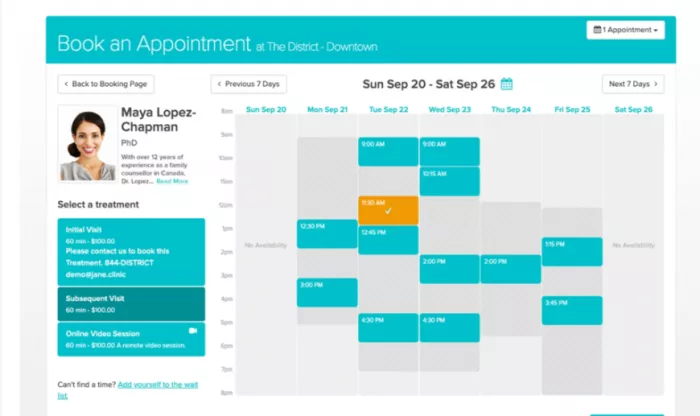
Jane App is known for a clean booking and front-office experience across health and wellness disciplines. It offers online booking, scheduling, charting, telehealth, payments, reminders, and multidisciplinary support in a polished interface.
It fits appointment-heavy clinics and multidisciplinary practices that value the client booking experience and a tidy front office. For practices where scheduling volume and client self-service matter most, Jane often feels purpose-built.
• Behavioral health note depth and documentation fit
• Insurance billing depth, claims, and superbill generation
• Telehealth terms and any limits
• Online booking, reminders, and payment processing details
• How multidisciplinary charting handles behavioral health workflows
For appointment-heavy clinics that want a polished front-office flow and strong online booking, Jane App can outshine Valant.io on client experience and scheduling simplicity.
Valant.io may be stronger for behavioral-health-specific billing and reporting complexity, and for practices that need deep mental health documentation rather than broad multidisciplinary charting.
Verify BAA availability, audit logs, and data handling with the vendor, and confirm whether insurance billing depth meets the practice's claims needs, since front-office strength does not guarantee billing depth.
Best-fit practice type: Appointment-heavy and multidisciplinary clinics that prioritize client booking.
Main limitation: Behavioral health billing and documentation depth must be verified carefully.
Reviewer verdict Jane is the one clients themselves tend to compliment, which matters more than people expect. My reservation for behavioral health is always billing and note depth, so if you accept a lot of insurance, pressure-test the claims and superbill workflow hard before you commit. |

Tebra combines EHR, practice management, billing, patient communication, and growth tools into a broader operational package. It tends to attract practices that care as much about claims and administrative operations as about clinical notes.
It fits practices that want EHR and revenue cycle support together, especially those running medical-practice-style operations where billing and patient communication are central. Behavioral-health-specific fit is the part that needs deliberate testing.
• Behavioral health specialty templates and documentation
• E-prescribing including controlled substances if needed
• Claims, clearinghouse support, and any billing service tiers
• Patient communication and growth tools included
• All-in pricing including billing service costs
For broader medical-practice-style operations and stronger revenue cycle support, Tebra can be stronger than Valant.io depending on practice type, particularly where billing operations dominate.
Valant.io tends to be stronger on behavioral-health-specific clinical workflows and reporting, since Tebra spans general practice operations rather than focusing solely on mental health.
Confirm BAA, audit logs, access controls, and data retention with the vendor, and verify that behavioral health documentation and e-prescribing meet clinical requirements.
Best-fit practice type: Practices that prioritize billing, claims, and administrative operations.
Main limitation: Behavioral-health-specific fit must be tested rather than assumed.
Reviewer verdict Tebra makes the most sense when the revenue cycle is the center of gravity and behavioral health is one of several needs. If your practice is purely therapy or psychiatry, spend extra demo time confirming the clinical side genuinely fits before the billing strengths win you over. |
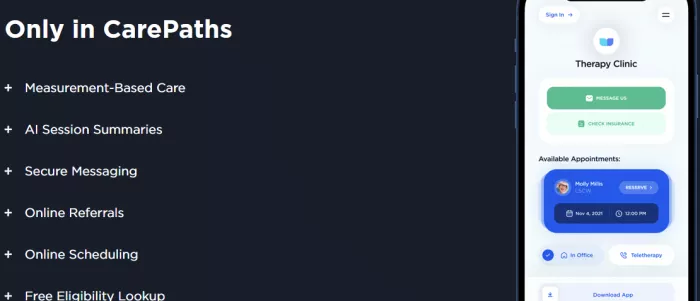
CarePaths EHR is positioned specifically for behavioral health, with clinical documentation, scheduling, billing, outcomes tracking, telehealth, and patient engagement built around mental health work. Its measurement-based care tooling is a defining characteristic.
It fits mental health providers who want a behavioral-health-specific alternative with strong outcomes monitoring. Practices that value standardized assessments and visual progress tracking as part of routine care often find the focus appealing.
• Onboarding process and implementation timeline
• Support availability and channels
• Reporting and analytics depth
• Claims workflow, eligibility checks, and ERA posting
• E-prescribing including controlled substances and any psychiatry pricing tier
When a practice specifically wants another specialized mental health EHR to compare against Valant.io, CarePaths offers a behavioral-health-native option with outcomes and measurement-based care at its core.
Valant.io may still appeal to practices that prefer its particular operational reporting and established footprint, so the two are best compared head to head on onboarding, support, reporting, and claims workflow.
Confirm BAA, audit logs, and access controls with the vendor. The platform is described as meeting formal interoperability certification, which practices needing certification should verify directly before committing.
Best-fit practice type: Mental health providers of any size who want a behavioral-health-native platform.
Main limitation: Smaller brand footprint than the most widely marketed competitors.
Reviewer verdict CarePaths is the one I most often add to a shortlist that already includes the big names, precisely because its outcomes focus is genuinely behavioral-health-native. Compare it side by side with Valant.io on the parts that matter to you, since the right pick between two specialized tools comes down to workflow feel, not brand recognition. |
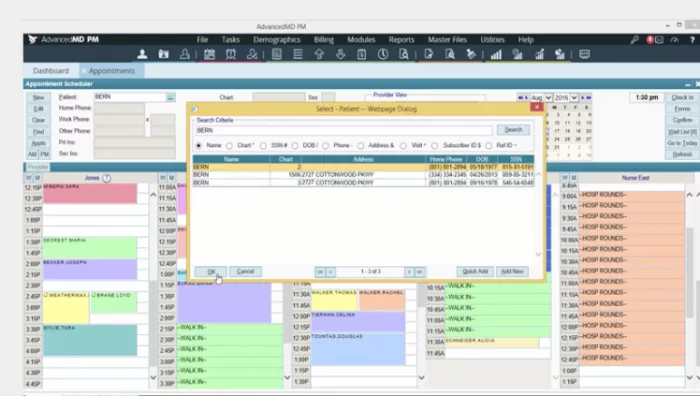
AdvancedMD is a broad EHR and practice management platform with billing, scheduling, patient engagement, telehealth, and analytics aimed at larger or more complex organizations. It offers more administrative and revenue cycle infrastructure than most therapy-focused tools.
It fits larger practices or organizations that need robust medical-practice infrastructure, layered roles, and deeper analytics. Multi-location groups and practices with substantial administrative complexity are the natural audience.
• Behavioral health templates and psychiatry workflow support
• E-prescribing including controlled substances
• Billing, claims, clearinghouse support, and revenue cycle options
• Implementation scope, timeline, and training
• Total cost of ownership across modules
For teams needing broader administrative and revenue cycle capabilities, AdvancedMD can be stronger than Valant.io on infrastructure breadth, roles, and analytics across a larger organization.
Valant.io may be a better fit for practices wanting a behavioral-health-specific system without the weight of general medical infrastructure, since AdvancedMD spans far beyond mental health.
Confirm BAA, audit logs, access controls, and data retention with the vendor, and verify that behavioral health templates and psychiatry e-prescribing meet clinical needs.
Best-fit practice type: Larger practices and organizations needing broad infrastructure and analytics.
Main limitation: Can feel heavier than necessary for solo therapists or small counseling practices.
Reviewer verdict AdvancedMD is built for organizations that have outgrown lighter tools, and it shows. For a solo clinician or a three-person counseling group it is usually overkill. For a multi-location group juggling billing complexity, it is exactly the category of platform to evaluate, with implementation effort planned for honestly. |
This table pairs each capability area with a strong alternative and a practical takeaway. The alternative named is a representative strong option for that area, not the only choice.
| Feature Area | Valant.io | Strong Alternative | Practical Takeaway |
| Solo therapist workflow | Capable but operations-oriented | SimplePractice | Solo clinicians often prefer the lighter, faster interface |
| Group practice management | Built for multi-provider operations | TherapyNotes | Both handle groups; match to billing and reporting needs |
| Behavioral health specialization | Native behavioral health focus | CarePaths EHR | Compare two specialized tools on workflow feel |
| Insurance billing | Behavioral health claims handling | TherapyNotes | Verify clearinghouses and ERA posting for the payer mix |
| Client portal | Integrated portal | SimplePractice | Portal polish can drive client satisfaction |
| Telehealth | Behavioral health video | Jane App | Confirm session terms and any limits |
| Psychiatry workflows | Behavioral health prescriber support | CarePaths EHR | Confirm EPCS and psychiatry templates |
| E-prescribing | Available, verify scope | AdvancedMD | Confirm controlled-substance e-prescribing |
| Intake forms | Digital intake to chart | SimplePractice | Test conditional logic and e-signature flow |
| Outcome tracking | Reporting and outcomes | CarePaths EHR | Measurement-based care depth varies; verify |
| Reporting | Operational dashboards | AdvancedMD | Match report types to your actual KPIs |
| Pricing transparency | Custom quotes | SimplePractice | Published pricing eases budgeting and comparison |
| Implementation complexity | Operations-grade onboarding | TheraNest | Lighter tools can launch faster |
| Scalability | Scales for organizations | AdvancedMD | Confirm provider and location scaling paths |
Positioning by practice scale and billing complexity. Confirm fit per practice in a demo.
Direct recommendations follow. Treat each as a starting shortlist, then verify the points raised in the criteria section.
• SimplePractice: for solo therapists and small private practices that want usability first
• TherapyNotes: for therapy practices that rely heavily on insurance billing
• TheraNest: for counseling practices that want simpler practice management
• Jane App: for clinics that prioritize scheduling and client booking experience
• Tebra: for practices that need stronger billing and operations support
• CarePaths EHR: for a behavioral-health-focused EHR comparison with outcomes tracking
• AdvancedMD: for larger practices needing broader infrastructure
• Stay with Valant.io: if a behavioral-health-specific system with practice management, reporting, billing, and growth-focused workflows already fits
This checklist turns a demo into an evaluation. For each area, ask the vendor question and watch for the dealbreaker signal that should give a practice pause.
| Decision Area | Question to Ask Vendor | Dealbreaker Signal |
| Clinical documentation | Are behavioral health note types built in? | Only generic medical templates |
| Treatment plans | Do plans flow into progress notes? | Plans live separately with re-entry |
| Assessments | Are standardized assessments supported and scored? | No structured assessment support |
| Intake forms | Can forms use logic and e-signatures? | Static forms with manual filing |
| Client portal | What can clients do in the portal? | Portal is read-only or limited |
| Scheduling | How are recurring and multi-provider bookings handled? | Calendar cannot model the practice |
| Telehealth | Is video built in, with what limits? | Telehealth is a fragile add-on |
| Insurance billing | How are claims created and tracked? | Manual, error-prone claim entry |
| Claims management | How are denials and resubmissions handled? | No denial workflow |
| Clearinghouse support | Which clearinghouses and payers connect? | Required payers unsupported |
| E-prescribing | Is EPCS supported, included or added? | No controlled-substance eRx when needed |
| Outcome tracking | How are outcomes captured over time? | No measurement-based care option |
| Reporting | Which standard reports exist? | Cannot report on key KPIs |
| Provider permissions | How granular are roles and supervision? | All-or-nothing access |
| Audit logs | Are access and changes logged? | No accessible audit trail |
| BAA | Is a BAA available and standard? | No BAA offered |
| Data migration | What imports, and who does it? | No import path for records |
| Training | What training is included? | Self-serve only for complex setup |
| Support | What are hours, channels, and response times? | Slow or limited support |
| Total cost | What is the all-in monthly cost? | Required add-ons hidden from quote |
The ranking reflects general fit for the broadest set of behavioral health practices comparing Valant.io alternatives. The best choice for a specific practice can differ, which is why use case and trade-off are listed alongside each rank.
| Rank | Alternative | Best Use Case | Strongest Advantage | Biggest Trade-Off |
| 1 | SimplePractice | Solo and small therapy practices | Ease of use and adoption | Lighter clinical depth at scale |
| 2 | TherapyNotes | Insurance-based therapy practices | Structured notes and billing | Less enterprise tooling |
| 3 | CarePaths EHR | Behavioral-health-native needs | Outcomes and measurement-based care | Smaller brand footprint |
| 4 | Jane App | Appointment-heavy clinics | Booking and client experience | Billing depth to verify |
| 5 | TheraNest | Budget-conscious counseling groups | Simpler, cost-aware management | Fewer advanced features |
| 6 | Tebra | Billing-focused operations | Revenue cycle breadth | Behavioral fit to test |
| 7 | AdvancedMD | Larger organizations | Infrastructure and analytics | Heavier than small practices need |
Speaking as a behavioral health software reviewer advising a practice owner, the best Valant.io alternative depends on practice size, billing model, provider type, documentation needs, and growth plans far more than on any single feature.
SimplePractice and TherapyNotes suit many smaller therapy practices, with SimplePractice leaning toward usability and TherapyNotes toward structured notes and insurance billing. TheraNest appeals to counseling groups that want simpler, cost-aware workflows. Jane App works well for appointment-heavy practices that care about booking and client experience. Tebra and AdvancedMD fit practices that need broader operations and billing infrastructure, with AdvancedMD aimed at larger organizations. CarePaths EHR is worth considering whenever a practice wants a behavioral-health-specific platform with outcomes tracking to compare directly against Valant.io.
Practical Closing Advice – Do not choose a Valant.io alternative from a feature list alone. – Book demos and walk a full intake-to-note-to-claim cycle in each one. – Test note templates with real session types, not sample data. – Verify billing and claims workflows against the actual payer mix. – Review security documents and confirm BAA availability. – Check migration support for records, claims, and templates. – Ask clinicians and billers to score the system before signing a contract. |

Marketing teams often need images before a product is ready for a phot...

Creating a logo that will grab customers' attention is one of the main...

Enterprise software has a well-known failure mode. The demo goes great...

Most people who produce video at any real scale hit the same wall even...

A cinematic AI video needs more than realistic skin, dramatic lighting...

Have you noticed how difficult it is not to watch spoilers of a sporti...
Discussion