


In modern data analytics, a major factor in effectiveness is not only the capacity to interpret data, but also the ability to obtain it quickly and reliably. Analysts are increasingly working with disparate sources. These include CRM systems alongside marketing platforms, as well as internal databases and SaaS services. It is here that data connectors come to the forefront. These tools ensure seamless data integration into a unified analytics ecosystem. OpenClaw positions itself as a flexible solution for working with data. In this context, choosing the right connectors becomes critically important for analysts. Especially those who prioritize speed, accuracy, and scalability. Let’s move on to the three best OpenClaw data connectors that truly help analysts. Thanks to them, analysts can optimize workflows and gain valuable insights without unnecessary technical barriers.
Before moving on to specific tools, you need to understand that a high-quality data connector is not just a “bridge” between systems. It is a tool that:
● Ensures data automation and up-to-date accuracy;
● Minimizes the risk of errors.
In this context, be sure to pay attention to the capabilities offered by OpenClaw integrations. They allow you to:
⮚ Connect various data sources to analytical tools without complex coding;
⮚ Use ready-made synchronization scripts.
This means that analysts can focus on analysis rather than the technical details of data transfer. Thanks to support for popular services and the ability to automatically update data, such integrations significantly simplify the creation of stable data pipelines.
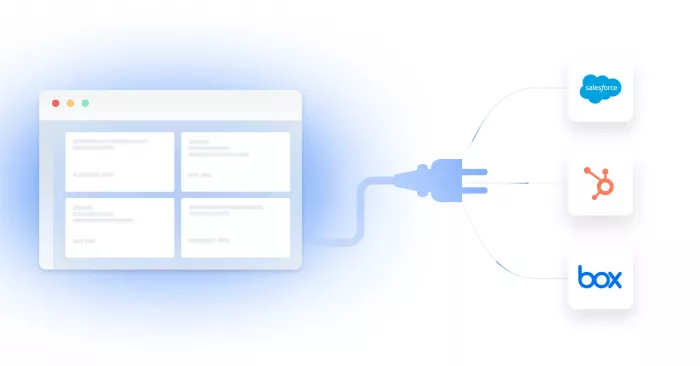
These connectors are one of the most common methods of data integration. They allow you to retrieve data directly from the source via an Application Programming Interface. This ensures a high degree of flexibility and control over the process. For OpenClaw, that means the ability to work with virtually any service that has an open API. That is, from marketing platforms to financial systems.
The main advantage of API connectors is access to up-to-date data in real time. Analysts can configure the update frequency and filter the necessary fields. They can also build custom queries. Additionally, API connectors allow you to:
● Work with large volumes of data;
● Avoid data duplication;
● Integrate non-standard or niche services.
API connectors are best suited for complex analytical task. Those that require flexibility and precision. These may include integration with a company’s internal systems or building custom dashboards.
Despite the development of complex systems, spreadsheets remain one of the most popular tools for working with data. Spreadsheet connectors allow you to integrate data from Google Sheets or Excel. For OpenClaw, this means the ability to connect quickly without any technical configuration.
This type of connector is particularly valuable for small teams or fast-paced projects. It allows you to:
● Import data quickly;
● Easily share results;
● Work without deep technical knowledge.
Coupler.io complements OpenClaw’s spreadsheet connectors by automatically syncing data from OpenClaw to Google Sheets, Excel, or BI tools like Looker Studio. Analysts can keep reports updated in real-time without manual imports. Additionally, many analysts are already familiar with spreadsheets, which lowers the barrier to entry.
At the same time, keep the following limitations in mind:
● Risk of errors due to manual editing;
● Difficulty working with large volumes of data;
● Limited automation.
Therefore, use spreadsheet connectors for prototyping or small analytical tasks.
They allow you to connect directly to databases. We’re talking about PostgreSQL, MySQL, or other SQL-compatible systems. This is one of the most reliable ways to work with data, especially in large organizations. In the OpenClaw environment, these connectors provide direct access to structured data. Moreover, without the need to export or transform them.
The main advantage is stability. Data is stored in a centralized repository. Analysts can be confident in its integrity.
Key benefits:
● High query processing speed.
● Ability to work with historical data.
● Support for complex SQL queries.
They are ideal for financial analytics, BI reporting, and any tasks where data accuracy and completeness are critical. They also integrate well with BI tools. This makes them a versatile choice for analytics teams.
Choosing the right data connector in the OpenClaw environment is a strategic decision that directly impacts the quality of analytics. API-based connectors provide flexibility and scalability. Spreadsheet connectors offer simplicity and speed of implementation. Meanwhile, database connectors ensure stability and performance. The best approach for analytics is not to limit yourself to a single type, but to combine them depending on the task. With this approach, you can create a reliable, efficient, and adaptive data processing system. The kind that meets modern business requirements. By combining OpenClaw’s connectors with Coupler.io’s automated integrations, analysts can streamline data workflows, ensure accuracy, and focus on deriving actionable insights, not manual updates. We live in a world where data is the foundation of decision-making. Therefore, proper integration is not just a technical detail, but a competitive advantage.
Q1: What is a data connector, and why is it important for analysts?
A data connector is a tool that links different systems and platforms, enabling seamless data transfer. For analysts, high-quality connectors reduce manual data handling, ensure accuracy, and allow them to focus on insights rather than technical integration challenges.
Q2: Which OpenClaw connectors are most useful for analysts?
The top three OpenClaw connectors are:
1. API-based connectors – Offer flexibility and control for custom workflows and integration with almost any service with an open API.
2. Spreadsheet connectors – Provide simplicity and speed, ideal for small teams or rapid prototyping in Google Sheets or Excel.
3. Database connectors – Ensure stability and high performance when connecting directly to databases like PostgreSQL or MySQL.
Q3: Can I automate OpenClaw data transfers without coding?
Yes. Tools like Coupler.io provide pre-built OpenClaw integrations that automatically sync data from multiple sources to spreadsheets, BI tools, and databases. This allows analysts to keep dashboards and reports up-to-date without writing scripts or manually exporting data.
Q4: When should I use API connectors versus spreadsheet or database connectors?
● API connectors: For complex, custom workflows requiring real-time updates or integration with niche services.
● Spreadsheet connectors: For quick analysis, prototyping, or small-scale reporting.
● Database connectors: For large datasets, historical analytics, and high-performance BI reporting.
Q5: Can I combine multiple types of OpenClaw connectors in my workflow?
Absolutely. Many analysts combine API, spreadsheet, and database connectors depending on the task. Using Coupler.io alongside OpenClaw connectors can automate updates across multiple platforms, creating a flexible and reliable analytics ecosystem.

Marketing teams often need images before a product is ready for a phot...

Creating a logo that will grab customers' attention is one of the main...

Enterprise software has a well-known failure mode. The demo goes great...

Most people who produce video at any real scale hit the same wall even...

A cinematic AI video needs more than realistic skin, dramatic lighting...

Have you noticed how difficult it is not to watch spoilers of a sporti...
Discussion