

The demand for tech education continues to grow, and programs like the Institute of Data attract students who want a structured path into data science, artificial intelligence, cybersecurity, or software engineering. Search interest for an institute of data review has increased because prospective learners want clarity before committing to a program that costs around twelve thousand dollars. This review brings together publicly available provider information, verified student feedback, and independent early stage learner accounts to offer a realistic picture of what the Institute of Data delivers and where it falls short.
The Institute of Data positions itself as a practical skills provider focused on fast training cycles. It offers intensive programs in data science and AI, cybersecurity, and software engineering. Students can study full time for twelve weeks or part time for twenty four weeks. Each program includes more than four hundred hours of training and project work. Delivery takes place online through live instruction, breakout rooms, digital whiteboards, and collaborative sessions. Some courses operate in partnership with universities, which strengthens the perception of institutional reliability.
Entry requirements remain accessible. A bachelor degree, English proficiency, and pre work modules are typically enough to begin. This structure appeals to career changers who want guided training rather than self directed study.
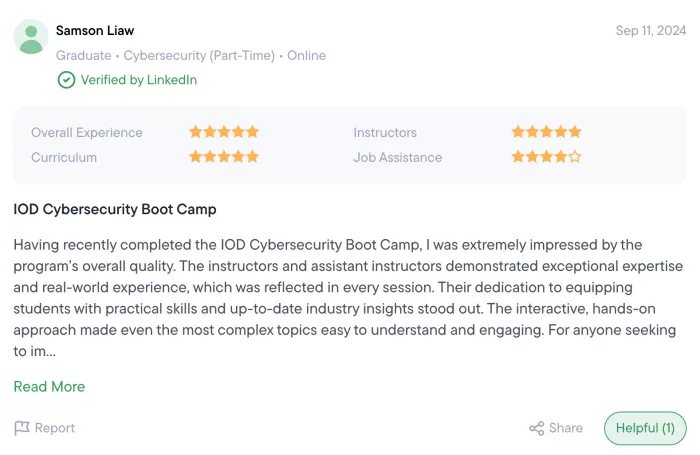
Across verified reviews, the most consistent strength highlighted is instruction quality. Students frequently describe instructors as knowledgeable, supportive, and experienced. The teaching style is often noted as clear, interactive, and suitable for beginners even in complex areas like cybersecurity or machine learning.
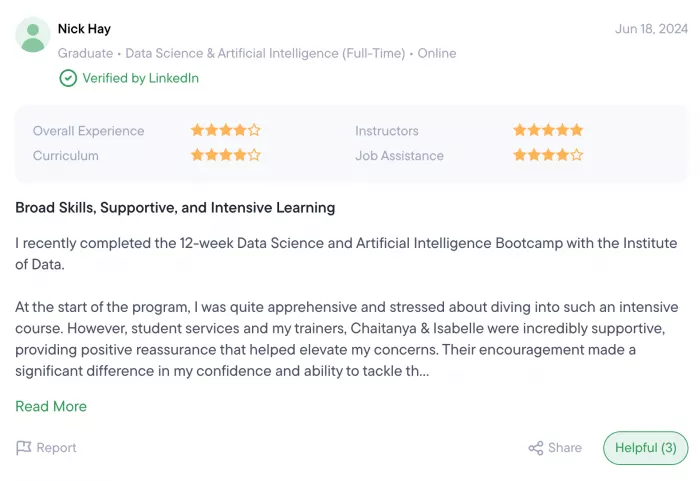
The hands on nature of the programs also receives strong praise. Live coding, weekly assignments, real world simulations, and collaborative projects appear throughout the curriculum. Although the pace is often described as intense, many learners say it remains manageable due to instructor guidance.
Small class sizes improve engagement. Students report that questions receive attention and that instructors provide assistance outside scheduled class hours.

Insights from early stage learners on public forums add useful perspective. These discussions typically highlight the following trends:
Comments from graduates reinforce this pattern. Many say the teaching quality is strong, but the job search process requires a significant amount of personal initiative.
Overall, the educational component appears consistently strong, while the career support component is more variable.
| Area | What Works Well | What Needs Caution |
| Instruction quality | High instructor expertise and strong student support | No major negatives reported in verified reviews |
| Curriculum | Practical focus with real projects and hands on labs | Some learners feel certain topics resemble free online content |
| Career support | Early career sessions and structured guidance | Job placement is not guaranteed and often depends on student effort |
| Accessibility | Beginner friendly with flexible study formats | High cost compared with free or low cost alternatives |
| Transparency | Clear program structure and university partnerships | Lack of published job placement statistics |
These insights show a reliable strength in teaching quality and an ongoing concern about employment outcomes and value for money.
With a cost of around twelve thousand five hundred dollars, the Institute of Data appeals most strongly to students who want structured learning, dedicated trainers, and accountability. For learners who prefer self directed study, the price may feel high, particularly given that some content overlaps with widely available free resources.
The absence of public alumni employment data makes it difficult to verify job placement outcomes. Students should view the career component as supportive rather than a guaranteed path to employment.
The bootcamp market is competitive, and the Institute of Data occupies a space between self paced learning platforms and formally accredited academic programs. It offers more structure and live mentorship than self learning, but it does not publish the robust employment statistics expected from fully accredited institutions.
Its strengths lie in instruction, guided practice, and beginner friendly frameworks. Its weaknesses relate to cost justification and career transparency.
For career changers who benefit from structure and personal guidance, it can be an effective path. For highly independent learners, alternatives may provide similar technical skills at a lower price.
The Institute of Data provides a strong learning environment with experienced instructors, a well structured curriculum, and hands on training suited to beginners entering the tech field. Satisfaction with instruction is consistently high across multiple independent review sources.
The main limitations relate to price, lack of published job placement statistics, and variable career support. Students should prioritise the program’s teaching quality rather than rely on implied employment outcomes.
The most accurate conclusion in an institute of data review is that the Institute of Data excels in education quality while offering average career support. It is most suitable for career changers who want accountability, live instruction, and a structured learning path, and it may feel expensive for learners who prefer a self directed approach.

Marketing teams often need images before a product is ready for a phot...

Creating a logo that will grab customers' attention is one of the main...

Enterprise software has a well-known failure mode. The demo goes great...

Most people who produce video at any real scale hit the same wall even...

A cinematic AI video needs more than realistic skin, dramatic lighting...

Have you noticed how difficult it is not to watch spoilers of a sporti...
Discussion